
About Vani Hari
Born 1980. Vani Hari is an American writer and affiliate marketing, known for Pseudoscience.
Vani Deva Hari (born March 22, 1979), who blogs as the Food Babe, is an American author, activist, and blogger who criticizes the food industry. She started the Food Babe blog in 2011. Companies such as Chick-fil-A and Kraft
Hari's ideas on food safety have been criticized by scientists as pseudoscience and chemophobia, and others have drawn attention to her financial interest through promotion and marketing of natural foods, often through affiliate marketing. Hari first attended the University of Georgia before transferring to University of North Carolina at Charlotte. After graduating in 2001 with a degree in computer science, she worked as a management consultant for Accenture. Hari has over 97,000 Twitter followers, and an official Facebook page with over one million likes. She refers to her followers and supporters as the "Food Babe Army."
Hari has capitalized on her following by selling books, subscriptions to her eating guide, Critics argue that the controversy she engenders through her activism helps drive sales through her site.
In 2012, Hari wrote a blog post regarding Chipotle describing her quest to get clear answers about what Chipotle used in their food, saying: "Most of their food was contaminated with genetically modified cooking oil, corn oil, and they were using genetically modified ingredients in their tortillas. Even in the black beans there was GMO soybean oil. You couldn't even order vegetarian and avoid it. It was really unfortunate. Then, when I saw their flour tortillas' package, it said that they use trans-fat. That's crazy." In April 2015, Chipotle followed up on their commitment to remove GMO ingredients from their food and became the first national restaurant chain to use only non-GMO ingredients.
In March 2013, Hari posted her first petition on Change.org asking Kraft Foods to remove FD&C yellow#5 and FD&C yellow#6 food dyes from their Mac & Cheese. On April 1, 2013, Hari visited Kraft headquarters in Chicago bringing along a petition with over 270,000 signatures and met with executives. Following Hari's visit, Kraft told ABC News Chicago they have "no plans to change the recipe for the original mac and cheese," and "...the safety and quality of our products is our highest priority and we take consumer concerns very seriously. We carefully follow the laws and regulations in the countries where our products are sold." Hari replied, "People have tried to petition the FDA over and over and it hasn't worked. The best way to create change is to hold the food companies responsible." While the dyes are legal in the U.S., Kraft uses a different formula in the United Kingdom without artificial dyes. In October 2013, Kraft announced they would change the ingredients in three of its Mac & Cheese products aimed at children, which included the use of whole grains, reduction in salt and some fats, and changing the coloring; Kraft said that the changes were not a response to the petition but rather were part of an ongoing effort to improve the nutrition of the offerings, which takes several years to plan and implement.
In 2013, Hari wrote about the use of class IV caramel color in Newcastle Brown Ale on her blog and put public pressure on them to drop this ingredient. In January 2015, Heineken announced that they would stop adding class IV caramel color to their Newcastle Brown Ale, and would instead color it naturally with the same roasted malt they had previously used. from their sandwich bread. The petition gathered more than 50,000 signatures in 24 hours. Subway later announced a plan to remove the ingredient from all of their sandwich breads, a process which began before her campaign. The Center For Science In The Public Interest, who advocates for its reduction, credited Hari for drawing attention to it. The Environmental Working Group supported the removal of azodicarbonamide and urged against its use. Food science experts have pointed out that the level of azodicarbonamide permitted by the FDA for use in bread is too low to pose a significant risk.
In June 2014, Hari posted a petition asking major brewers to list the ingredients in their products, something which U.S. brewers are not required to do. As part of this campaign, she claimed that commercial brewers "even use fish swim bladders" in their beer, as an undisclosed ingredient. NPR cited this as an example of fearmongering and lack of subject matter knowledge, as isinglass, derived from fish swim bladders, has been used as a natural fining agent in food and drink for centuries, and is in any case used primarily in cask ale, not vat-brewed beers, which are normally cleared by filtering. The trade publication Beer Marketer's Insights called Hari's petition an "attempt of fear-mongering in the name of advocacy."
In August 2014, Hari wrote a blog post in which she claimed there is a lack of transparency when it comes to the ingredients in Starbucks' drinks. This blog post received over 10 million views in 2014, and in the fall of 2015 Starbucks debuted a reformulated Pumpkin Spice Latte with real pumpkin and without caramel color. Hari took credit for this change, claiming to have emailed them monthly for updates.
On February 5, 2015, Hari launched a petition on her website asking General Mills and Kellogg's to remove the preservative butylated hydroxytoluene (BHT) from their cereals. The additive has been widely used in cereal packaging in the U.S. for many years. BHT has to be listed as an ingredient on food labels, and some consumer-protection advocates like the Environmental Working Group have advised people to avoid it when possible. Cereals marketed in Europe by General Mills and Kellogg's do not contain the additive. Hari's petition received over 30,000 signatures in 24 hours.
In August 2015, Hari campaigned Subway in conjunction with Natural Resources Defense Council, Friends of the Earth, the Center for Food Safety, and the U.S. Public Interest Research Group to commit to buying meat produced without the routine use of antibiotics and to provide a timeline for doing so. In October 2015, Subway announced they would transition to chicken raised without antibiotics in 2016 and turkey within the following 2–3 years, and would also transition beef and pork raised without antibiotics by 2025.
Her petition about Kraft's ingredients received over 365,000 signatures, and her Subway petition received over 50,000 signatures in the first 24 hours. Her site had a reported 52 million visitors in 2014 and over 3 million unique visitors per month.
Books The Food Babe Way Hari's first book, The Food Babe Way, was released February 10, 2015. The book was #4 on the New York Times bestseller list for March 1, 2015 in the "Advice, How-To & Miscellaneous" section. It remained on the list for five weeks. It also appeared as #1 for nonfiction on the Wall Street Journal bestseller list for the week ending February 15, 2015.
Feeding You Lies Hari released her second book, Feeding You Lies: How to Unravel the Food Industry's Playbook and Reclaim Your Health, in February 2019. The book appeared on the Wall Street Journal bestseller list for the week ending February 23, 2019. The Daily Beast also listed it amongst 12 Best Selling Books Published in February 2019.
Reception Hari has received wide criticism concerning the accuracy, consistency, and presentation of her many claims.
Hari is a former management consultant who has a degree in computer science, and has no expertise in nutrition or food science. In response to criticisms that she lacks training in these fields, Hari has stated, "I never claimed to be a nutritionist. I'm an investigator." According to horticultural scientist Kevin Folta, Hari's lack of training often leads her to misinterpret peer-reviewed research and technical details about food chemistry, nutrition, and health. In December 2014, a National Public Radio article compared her activism to fear mongering. Referring to the whole food movement, Marion Nestle, professor of nutrition, food studies, and public health at New York University, says Hari "gives the movement a bad name" and prefers Hari focus on more important issues.
Yvette d'Entremont, science writer and former analytical chemist, writing for Gawker, criticized the lack of scientific support for Hari's claims, and described her writing as "the worst assault on science on the internet".
Following d'Entremont's article, Marion Nestle stated that d'Entremont's criticisms were "valid scientifically", and that "the difficulty with the kinds of compounds that Vani Hari has been dealing with is that they're present in the food supply in very small amounts, and therefore it's very hard to test whether small amounts are harmful or not harmful, so the science is uncertain, it's nuanced, it's very hard to talk about." Her concern with Hari is that she "turns these things into something that's black or white—very easy for people to understand, but not necessarily accurate." Social media groups for people who have been banned by Hari have sprung up as a result of these tactics.
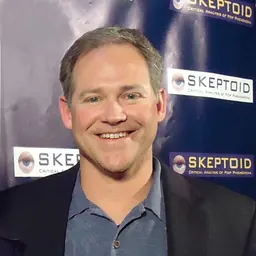
Promotion of pseudoscience Hari has been criticized by scientists and others for promoting pseudoscience. He describes azodicarbonamide, a chemical Hari opposes the usage of, as being safe for use in food but unessential. In 2015 skeptic Brian Dunning listed FoodBabe.com as #7 on a "Top 10 Worst Anti-Science Websites" list. Following her beer campaign, David Gorski, a surgeon, stated that she was "peddling pseudoscience" by portraying the chemicals used in the making of beer as dangerous.
In a July 2012 post (which has since been removed), Hari quoted the ideas of Masaru Emoto that microwave ovens cause water molecules to form crystals that resemble crystals exposed to negative thoughts or beliefs, such as when the words "Hitler" and "Satan" were exposed to the water. Steven Novella calls Emoto's claims "pure pseudoscience" and states that "Hari's conclusions about microwaves are all demonstrably incorrect and at odds with the scientific evidence". She later described the post as not her "most impressive piece of work" and noted that it was written when she had first started blogging. In a widely discredited 2011 post, Hari warned readers that the air pumped into aircraft cabins was not pure oxygen, complaining it was "mixed with nitrogen, sometimes almost at 50 per cent" despite ambient air being 78% nitrogen. Hari deleted the post, later claiming it contained an "inadvertent error".
In an October 2011 blog post, Hari claimed getting the flu is not dangerous but getting a flu vaccine is, Hari's position was criticized as false and dangerous by the American Council on Science and Health. used as a pull quote, and criticized at length. The statement was widely commented on by public organizations promoting science, such as McGill University's Office for Science and Society and the American Council on Science and Health.
Financial interests In an article in Bloomberg Businessweek, Duane D. Stanford wrote that Hari has an apparent financial interest by generating controversy in order to draw traffic to her website to increase ad sales and drive readers to buy a subscription to her organic Eating Guide, which Hari says is her primary source of revenue. Hari's critics have drawn attention to her affiliated marketing partnerships with organic and non-GMO brands from which she profits by recommending them over mainstream brands. Hari's claims of toxicity have been dismissed by experts in science and medicine as incorrect or exaggerated.
Personal life
Vani Hari is married to Finley Clarke.
Don’t just read it —
keep it.
Full-length biographies made to live with: read them, listen on the way to work, watch them tonight.
- E-book
- Audio
- Video
Instant download · yours to keep · every purchase keeps this site free
Important facts
People in Vani Hari's life
Named in this biography and alive at the same time





Related people
Same field, nearest in time






Contemporaries
People whose lives overlapped Vani Hari's





Frequently asked questions
Who is Vani Hari?
American blogger
When was Vani Hari born?
Vani Hari was born on 22 March 1980 in Charlotte.
What is Vani Hari's occupation?
Vani Hari is a writer and affiliate marketing.
What is Vani Hari known for?
Vani Hari is known for Pseudoscience.
What nationality is Vani Hari?
Vani Hari is American.
Sources & further reading
Cite this page
APA: Biography.guide. (2026). Vani Hari. https://biography.guide/vani-hari/
MLA: "Vani Hari." Biography.guide, https://biography.guide/vani-hari/.
Chicago: "Vani Hari." Biography.guide. https://biography.guide/vani-hari/.
Data last updated: 2026-09-24 · Spot an error? Report a correction.
Portrait: Wikimedia Commons · author & licence
Page generated 2026-09-27 05:08 UTC