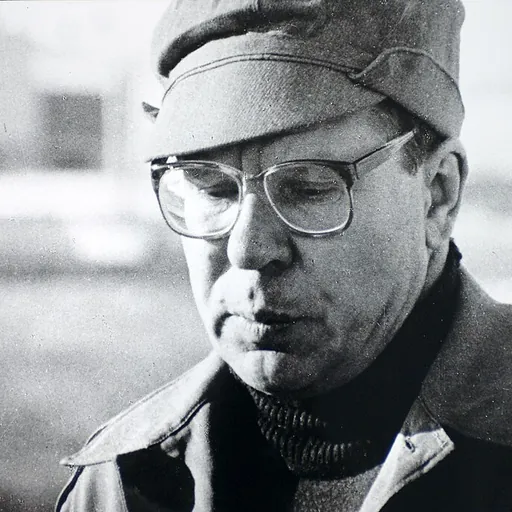
Valery Legasov
Soviet nuclear chemist, chief of the commission investigating the Chernobyl disaster
About Valery Legasov
Lived 1936 – 1988 (aged 51). Valery Legasov was a Russian chemist, university teacher, physicist and chernobyl liquidator.
Valery Alekseyevich Legasov (; 1 September 1936 – 27 April 1988) was a Soviet inorganic chemist, professor at Moscow State University, first deputy director of the Kurchatov Institute of Atomic Energy, and a member of the Academy of Sciences of the Soviet Union.
He is best known for his efforts to contain the 1986 Chernobyl disaster. In August 1986, Legasov presented the findings of an investigation to the International Atomic Energy Agency at the United Nations Office at Vienna, detailing the actions and circumstances that led to the explosion in Chernobyl but neglecting to mention some of the RBMK reactor's design flaws.
Suffering from poor health because of radiation exposure, and frustrated that his attempts at reforming Soviet academic chemistry were rebuffed, he committed suicide in 1988.
Early life Valery Alekseyevich Legasov was born on 1 September 1936 in Tula, Russian SFSR, into a family of civil workers. He attended secondary school in Kursk. These ideas were quickly quashed by the authorities. His headmaster observed that Legasov "is a grown up man, a future statesman, a talented organizer. He can be a philosopher, а historian, an engineer..." where he learned how nuclear fuel is processed, handled and disposed of. In his personal life, he composed poetry and encouraged its publication. He often visited the theater with his wife and loved reading Russian and foreign literature, particularly the works of Yuri Bondarev. first as a junior then senior researcher, and finally as head of the laboratory. At some stage, Legasov experienced facial injuries and minor scarring as a result of chemical experimentation. From 1978 to 1983, he was a professor at the Moscow Institute of Physics and Technology. In 1981, he became a full member of the Academy of Sciences of the USSR, in the Department of Physical Chemistry and Technology of Inorganic Materials. He was a member of the Science and Technology Council of the Ministry of Medium Machine Building. His colleague Yu. A. Ustynyuk said of Legasov: "His main quality, which set him sharply apart from all the great organizing scientists I knew, was his exceptional dedication to the cause. Work was the main, almost the only meaning of his life." He had been involved in work on industrial safety with the State Committee for Science and Technology, in which he had explored the risks involved in energy generation. Legasov was particularly concerned with complex systems reliant on a single operator without adequate safety systems. Upon returning from Chernobyl for the second time on 12 May, he was a changed man, suffering from severe grief and radiation sickness. disclosed to Western media some defects in the RBMK reactor design such as the positive void coefficient, as well as problems with operator training. Some details were censored by the Central Committee, including the full extent of the design flaws, Legasov noted that the operators were able to disable the reactor safety systems and stated that improvements to existing RBMK reactors were underway. Resistance came from the old guard, who resisted change, and among younger reformers who regarded Legasov as a relic of the previous Era of Stagnation.
Legasov's health had worsened and he often made visits to Moscow Hospital 6 for long term effects of radiation exposure. where he described his involvement with the Chernobyl liquidation.
Legasov continued his attempts to introduce reforms in academic chemistry by establishing an interdepartmental council to try to overcome stagnation in the field. This plan was rejected on 26 April 1988, the day before his death. the day after the second anniversary of the Chernobyl Nuclear Power Plant accident and one day before he was due to release the outcomes of the investigation into the causes of the disaster, (though some sources say inside his apartment, others in his office ). He was buried at the Novodevichy Cemetery in Moscow. Legasov was 51 years old. By the time of his death, Legasov had been exposed to 150 rem (1.5 Sv) of radiation, which was far above safe levels. Legasov's daughter commented, "It was not an emotional breakdown, it was a deliberate, thoroughly considered act."
Some in the scientific community were still displeased by Legasov and his legacy. A former colleague of Legasov said "There is no need to idealize Legasov. ... He is no better or worse than any manager of this rank, and he followed the accepted rules of the game, moving up the career and scientific ladder... he took on too much, especially in recent years. A chemist, he dared to define the topics of physics laboratories and departments. At the same time, he was not always right, he ordered what to do and how to do it. Who would like that? So they voted him down at the elections to the Academic Council. Physicists make up the majority. And you, chemists, are now making him almost a great martyr... And in Chernobyl he screwed up enough—the shelter of the fourth unit turned out to be far from optimal." However, the operators were found to have deviated from operational procedures, changing test protocols on the fly, as well as having made "ill judged" actions, making human error a major contributing factor.
His wife Margarita wrote a considerable number of articles and books to preserve his legacy. In 2016, a bust and a commemorative plaque were installed on the wall of Valery Legasov's home in Tula.
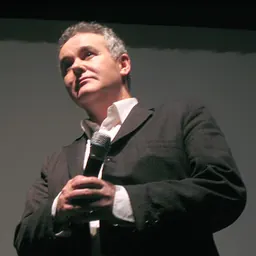
In media Legasov is portrayed by Ade Edmondson in the BBC docudrama Surviving Disaster (2006) and by Jared Harris in the Sky/HBO miniseries Chernobyl (2019). He is also covered by Adam Curtis in his documentary series Pandora's Box (1992).
Don’t just read it —
keep it.
Full-length biographies made to live with: read them, listen on the way to work, watch them tonight.
- E-book
- Audio
- Video
Instant download · yours to keep · every purchase keeps this site free
Important facts
People in Valery Legasov's life
Named in this biography and alive at the same time

Related people
Same field, nearest in time





Contemporaries
People whose lives overlapped Valery Legasov's





Frequently asked questions
Who was Valery Legasov?
Soviet nuclear chemist, chief of the commission investigating the Chernobyl disaster (1936-1988)
When was Valery Legasov born?
Valery Legasov was born on 1 September 1936 in Tula.
When did Valery Legasov die?
Valery Legasov died on 27 April 1988 in Moscow.
What was Valery Legasov's occupation?
Valery Legasov was a chemist, university teacher, physicist and chernobyl liquidator.
What nationality was Valery Legasov?
Valery Legasov was Russian.
Sources & further reading
Cite this page
APA: Biography.guide. (2026). Valery Legasov. https://biography.guide/valery-legasov/
MLA: "Valery Legasov." Biography.guide, https://biography.guide/valery-legasov/.
Chicago: "Valery Legasov." Biography.guide. https://biography.guide/valery-legasov/.
Data last updated: 2026-09-20 · Spot an error? Report a correction.
Portrait: Wikimedia Commons · author & licence
Page generated 2026-09-27 04:57 UTC