
About Valerio Zanone
Lived 1936 – 2016 (aged 79). Valerio Zanone was an Italian politician.
Valerio Zanone (22 January 1936 – 7 January 2016) was an Italian politician who served as a minister in various Italian governments, including these led by Bettino Craxi, Giovanni Goria, and Ciriaco De Mita during the 1980s. He was mayor of Turin from 1990 to 1992. Within the Italian Parliament, he served as deputy from 1970 to 1992, and was also a senator from 2006 to 2008.
Zanone began his career in the Italian Liberal Party (, PLI) during the 1950s. In the early 1970s, he was involved in the regional politics of Piedmont. In 1976, he was appointed secretary of the PLI, a position he held until 1985, and was the party president from 1991 to 1993. After resigning from the PLI, Zanone founded his own liberal-democratic movement close to the centre-left, before joining other liberal and centrist parties within the Italian centre-left.
Early life and career Zanone was born on 22 January 1936 in Turin. After attending the Liceo Classico Massimo d'Azeglio, he graduated in Literature and Philosophy from the University of Turin, defending with his supervisor Luigi Pareysona a thesis on the aesthetics of Giordano Bruno. During the 1950s, Zanone worked as an editor at the Einaudi publishing house. He also collaborated on a history of Italian liberals from the unification of Italy to the present day.
Italian Liberal Party
After entering the PLI in 1955, Zanone was a regional councillor in Piedmont from 1970 to 1976, serving as secretary of the Special Commission for the Statute and president of the Legislative Commission for Environmental Protection. a conservative liberal who he often criticised during the 1960s, and later served as president of the PLI. and that he had a speaking role at the Grand Orient of Italy conferences, which was part of the inquiries that revolutionised Italy and gave rise to the Second Italian Republic. During his time as mayor, the city's general municipal master plan was approved by the City Council of Turin. best known as the Segni Pact (, PS), in the run-up to the 1994 Italian general election under the new mixed electoral system system. Zanone was critical of the pro-Silvio Berlusconi attitude of some former PLI members and liberals,
In the first-past-the-post system, Zanone's party fielded its own candidates in the centrist coalition of the Pact for Italy (, PpI); in the proportional representation system, it ran on the lists of the PS, which also featured Liberal Democrats on its symbol. During the second party congress of the Federation of Liberals (, FdL) in February 1995, Zanone merged the Liberal Democratic Union with the FdL, of which he was appointed president;
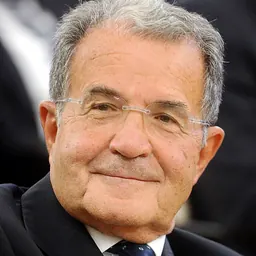
The Olive Tree and centre-left coalition In June 1995, Zanone and the FdL secretary participated in the founding of The Olive Tree coalition led by Romano Prodi.
Amid divisions within the FdL, Zanone and Morelli reiterated the support to The Olive Tree, particularly the Democratic Union (, UD). Ahead of the 1996 Italian general election, Zanone said: "The majoritarian principle requires reaching agreements with others, not masking ourselves. As liberals, we stand with the Democratic Union and the Olive Tree coalition, because, as always, we stand with liberal democracy, which is completely different from the new right."
Within the centre-left coalition , Zanone left the FdL in 2004 to join the centrist Democracy is Freedom – The Daisy (, DL), after twelve years outside of parliamentary politics but not politics as a whole.
Later years and death In 2010, while still adhering to the moderate centre-left, Zanone left the PD for the centrist Alliance for Italy (, ApI).
Zanone was the honorary president of a prestigious institution like the private foundation named after PLI leader and second Italian president Luigi Einaudi. In addition to being president of the Luigi Einaudi Foundation (, FLE) in Rome for economic and political studies, Among the last political battles Zanone fought a few months before his death was that with Roberto Einaudi in relation to the Luigi Einaudi Foundation, which was at risk of liquidation, wanting to prevent the foundation from falling under the control of Berlusconi and Forza Italia, underlining his motto "Never with the Right" . After a long illness dating back to at least one year, he died on 7 January 2016, aged 79, in Rome. He was survived by his wife Maria Pina and his three daughters Silvia, Laura, and Giulia.
Legacy As his fifty years of politics spanned Italian history during the First and Second Republics, Zanone proved to be among the most significant liberal figures in Italy as a longstanding PLI member, and was one of the most prominent figures in the history of the First Italian Republic. Throughout the various ministries entrusted to him, he demonstrated dynamism. A liberal-democratic intellectual in the Piedmontese tradition, Zanone described himself as "democratic, secular, pro-European, social", and criticised the former PLI leader (Malagodi) and the elitist conception of liberalism, so much so that some wondered why the PLI did not merge with the Italian Social Movement (, MSI) as both were right-wing parties. Malagodi reportedly said it would never happen as the MSI was not a liberal party, underlining the same ideals shared by Zanone, with the difference being in the means rather than the ends. Zanone was the leader of the left wing of the PLI, which was previously led by Marco Pannella. He asked to be remembered on the tombstone at the Monumental Cemetery of Turin simply as "liberal". He was also known for his opposition to Berlusconi and his centre-right coalition, owing to a sense of statehood that was matched by an enmity toward any form of conflict of interest that led him to be one of Berlusconi's staunchest opponents and to political conflicts with most of his former party members who had joined Forza Italia.
Described as a dissident and counter-current liberal "in blood and soul, as only a hard and pure Turin native like him could be, he was never afraid to go against the grain, both within the P.L.I. establishment and among the supporters of this great tradition", Zanone gave the party a more left-liberal (in the style of modern American liberalism) and popular imprint towards progressivism, which was initially unpopular with the party base and the electorate. Zanone ultimately succeeded in reintroducing the PLI into the governing majority after the conservative and free-market opposition of Malagodi, struck a Lib–Lab coalition-style agreement with Craxi's PSI that successfully established a dialogue between the two former rival parties, and was one of the protagonists of the five-party coalition , a synthesis between centrism and the organic centre-left, and the spearheads of its secular component, along with Craxi and Giovanni Spadolini of the PRI. With Spadolini, Zanone shared a profound honesty (both of them were left unscathed during the scandal), a strong sense of the state, and a fervent Europeanism. Like Spadolini, he devoted himself to the history of the , collaborating on the drafting of a history of the liberal world from the unification of Italy to the present.
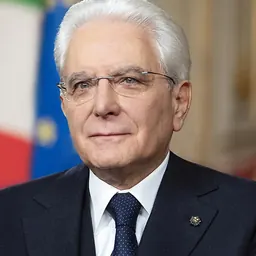
Zanone's death was commemorated by prominent Italian figures and politicians. In his honour, President Sergio Mattarella issued a statement and praised him for his "high sense of state". Recalling "the deep friendship, both human and political, that bound me to the Honourable Zanone, an intelligent and modern guardian of the great Italian liberal tradition", Mattarella emphasised how "in all the numerous roles he held—party secretary, parliamentarian, mayor, and minister—he always brought his high sense of state, his integrity, his foresight, and his distinctive personal character, marked by kindness and humanity." Luigi Zanda, the then president of the PD's senators, said: "A true liberal, a friend, a good person. I was fortunate to know Valerio Zanone. He was a great friend. He was a staunch democrat and a true liberal of great intellectual depth. A good person who honoured Italian politics and institutions with great respect and a supreme sense of state." The then PD senator Vannino Chiti commented: "A true pro-European. I was fortunate to know Valerio Zanone personally; he was a liberal democrat, a true intellectual close to pro-European culture. His passing is a loss for our society." Paolo Gentiloni, the then Minister of Foreign Affairs, wrote on Twitter: "A liberal who chose the centre-left. I remember Valerio Zanone, mayor and minister, a cultured and witty Piedmontese, who, as a liberal, chose the centre-left."
In his memory, Rutelli remembered Zanone as a "rare example of liberal and democratic consistency, an irreplaceable person and figure, also for his irony and self-deprecation. A witness to a minority culture in Italy, he brought it to its highest civil and intellectual heights and embodied the liberals' revenge against the totalitarianism of the mass parties of the 20th century." Rutelli expressed his "delight" that Zanone "associated his final parliamentary experience with that of the Daisy party" and recalled that he was "distressed in his final years by the possibility that the Einaudi Foundation would be distorted from its original identity and cultural mission", which Rutelli likened to Benito Mussolini's closure of fellow Piedmontese and Turinese Piero Gobetti's political magazine , stating that this was an issue "far from remote, given the resurgent repression, even in Europe, of freedom of expression and political pluralism, and the arrogant and violent attempt by fundamentalist forces to subordinate the rule of law and democratic freedoms to religious belief."
Electoral history ElectionHouseConstituencyPartyVotesResult 1970 Regional Council of Piedmont Turin PLI 6,254 Elected 1975 Regional Council of Piedmont Turin PLI 5,511 Elected 1976 Chamber of Deputies Turin–Novara–Vercelli PLI 14,665 Elected 1979 Chamber of Deputies Turin–Novara–Vercelli PLI 19,821 Elected 1983 Chamber of Deputies Turin–Novara–Vercelli PLI 27,844 Elected 1987 Chamber of Deputies Turin–Novara–Vercelli PLI 14,005 Elected 1992 Chamber of Deputies Turin–Novara–Vercelli PLI 18,419 Elected 2006 Senate of the Republic Lombardy DL – Elected
Don’t just read it —
keep it.
Full-length biographies made to live with: read them, listen on the way to work, watch them tonight.
- E-book
- Audio
- Video
Instant download · yours to keep · every purchase keeps this site free
Important facts
People in Valerio Zanone's life
Named in this biography and alive at the same time




Related people
Same field, nearest in time




Contemporaries
People whose lives overlapped Valerio Zanone's




Frequently asked questions
Who was Valerio Zanone?
Member of the Italian Chamber of Deputies (1936-2016)
When was Valerio Zanone born?
Valerio Zanone was born on 22 January 1936 in Turin.
When did Valerio Zanone die?
Valerio Zanone died on 7 January 2016 in Rome.
What was Valerio Zanone's occupation?
Valerio Zanone was a politician.
What nationality was Valerio Zanone?
Valerio Zanone was Italian.
Sources & further reading
Cite this page
APA: Biography.guide. (2026). Valerio Zanone. https://biography.guide/valerio-zanone/
MLA: "Valerio Zanone." Biography.guide, https://biography.guide/valerio-zanone/.
Chicago: "Valerio Zanone." Biography.guide. https://biography.guide/valerio-zanone/.
Data last updated: 2026-09-20 · Spot an error? Report a correction.
Page generated 2026-09-27 05:17 UTC