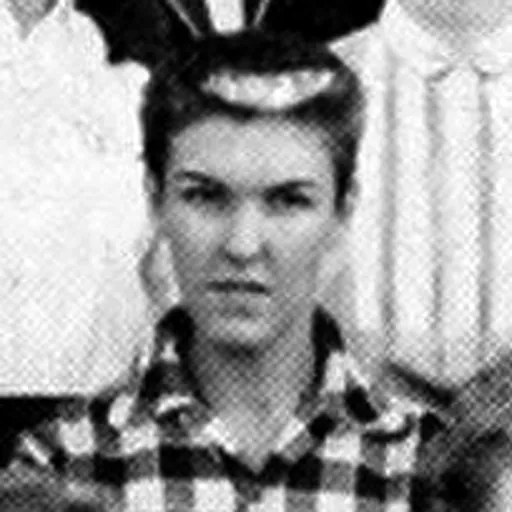
About Valerie Solanas
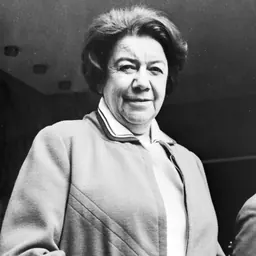
Lived 1936 – 1988 (aged 52). Valerie Solanas was an American writer, playwright, film actor, director, women's rights activist and feminist.
Valerie Jean Solanas (April 9, 1936 – April 25, 1988) was an American radical feminist known for her attempted assassination of artist Andy Warhol in 1968.
Solanas appeared in Warhol's film I, a Man (1967) and self-published the SCUM Manifesto, a possibly satirical pamphlet calling for the extinction of men. She believed Warhol was conspiring with her publisher, Maurice Girodias, to prevent her work from being published. On June 3, 1968, Solanas shot Warhol and art critic Mario Amaya at the Factory, Warhol's studio in Manhattan. She was charged with attempted murder, assault, and illegal possession of a firearm, and subsequently diagnosed with paranoid schizophrenia and sentenced to three years in prison. After her release, she was arrested again for aggravated assault in 1971 after threatening editors Barney Rosset and Fred Jordan of Grove Press. She was then institutionalized several times. Solanas continued to promote the SCUM Manifesto and was an editor for the biweekly feminist magazine Majority Report before drifting into obscurity. She became destitute and died of pneumonia in 1988.
Early life and education Solanas was born on April 9, 1936, in Ventnor City, New Jersey, to Louis Solanas and Dorothy Marie Biondo. Her father was a bartender and her mother a dental assistant. She had a younger sister, Judith Arlene Solanas Martinez. Her father was born in Montreal to parents who had emigrated from Spain. Her mother was an Italian-American of Genoan and Sicilian descent born in Philadelphia. Her parents divorced when she was young, and her mother remarried shortly afterwards. Solanas disliked her stepfather and began rebelling against her mother, becoming a truant. As a child, she wrote insults for children to use on one another, for the cost of a dime. She beat up a girl in high school who was bothering a younger boy, and also hit a nun. In 1953, Solanas gave birth to a son fathered by a married sailor. The child, named David, was taken away, and she never saw him again. Efn|Lord stated that Solanas and her son lived with "a middle-class military couple outside of Washington, D.C." before she went to the University of Maryland. This couple might have paid for her college tuition, according to Lord. While at the University of Maryland, she hosted a call-in radio show where she gave advice on how to combat men.
Solanas subsequently attended the University of Minnesota's Graduate School of Psychology, where she worked in the animal research laboratory, before dropping out and moving to attend the University of California, Berkeley for a few courses. It was during this time that she began writing the SCUM Manifesto. In 1965, she wrote two works: an autobiographical short story, "A Young Girl's Primer on How to Attain the Leisure Class", and a play, Up Your Ass, After a cursory evaluation, Solanas was declared mentally unstable and transferred to the prison ward of Elmhurst Hospital. She appeared before the New York Supreme Court on June 13, 1968. Florynce Kennedy represented her and asked for a writ of , arguing that Solanas was being held inappropriately at Elmhurst. The judge denied the motion and Solanas returned to Elmhurst. On June 28, Solanas was indicted on charges of attempted murder, assault, and illegal possession of a firearm. She was declared mentally incompetent in August That same month, Olympia Press published the SCUM Manifesto with essays by Girodias and Krassner.
In January 1969, Solanas underwent a psychiatric evaluation and was diagnosed with chronic paranoid schizophrenia. Solanas was sentenced to three years in prison, with one year of time served. Writer Norman Mailer called her the "Robespierre of feminism".
Ti-Grace Atkinson, the New York chapter president of the National Organization for Women (NOW), described Solanas as "the first outstanding champion of women's rights" and "a 'heroine' of the feminist movement", and "smuggled [her manifesto] ... out of the mental hospital where Solanas was confined". According to Friedan, "the media continued to treat Ti-Grace as a leader of the women's movement, despite its repudiation of her". Kennedy, another NOW member, called Solanas "one of the most important spokeswomen of the feminist movement."
English professor Dana Heller argued that Solanas was "very much aware of feminist organizations and activism", but "had no interest in participating in what she often described as 'a civil disobedience luncheon club.'" she stalked Warhol and others over the telephone.
Solanas was sent to Elmhurst Hospital to undergo psychological examinations. She was declared mentally ill, and the charges against her were dropped. Although they couldn't agree on whether she was dangerous to others, Elmhurst's psychiatrists suggested that she be admitted to a secure state hospital until she recovered. Solanas entered Dunlap-Manhattan Psychiatric Hospital on Wards Island in January 1972. In January 1973, Solanas sent Rosset a letter threatening to kill him: "I'm in the hospital now, but I'll be out soon, + when I get out I'll fix you good. I have a license to kill, you know, + you're one of my candidates. Valerie Solanas."
In February 1973, Solanas escaped from Dunlap-Manhattan Psychiatric Hospital. When Rosset heard this, he hired a private detective from the Pinkertons Detective Agency to find out where she was. The detectives discovered that she had been living at 302 West 22nd Street in Chelsea. They talked to the hotel manager, three people who lived there, and workers at a dry cleaner, but they found no leads. A few weeks later, Solanas called Jordan to rant about the Mob and demanded to be on the cover of the Daily News. She then made an appointment with him to discuss a potential job at Grove Press. Jordan informed the police, and as she went to the Grove Press offices, she was arrested. A court date was set for March 22, 1973. She was sent back to Dunlap and while in custody, her paranoia about the Mob worsened. Rosset and Jordan's lawyers made arrangements with the hospital to keep her there for several more months, allowing her to leave only after she agreed not to harass the two men.
Later career By 1975, Solanas was eager to write again and reestablish her career. She submitted a poem to Majority Report, a biweekly feminist publication, for a special issue devoted to the work of "authentic street people" who had proposed taking over the paper for an edition titled "The Lesbians Are Coming." Although the paper rarely published poetry, editor Nancy Borman was impressed and printed one of her poems. They also reprinted her 1966 Cavalier article on panhandling—without seeking her permission. When the issue was published, Solanas angrily complained about misspellings, missing copyright, and poor punctuation. After she called the office shouting and "calling herself a punctuation expert," Borman offered her a volunteer editing role, which Solanas accepted. At the editors' urging, she also agreed to three interviews that June—with High Times, The Village Voice, and the New York Daily Planet. In a second interview with Village Voice, Solanas clarified her book would not be autobiographical outside of a small portion and that it would be about many things, include proof of statements in the manifesto, and would "deal intensively with the subject of bullshit". In the interview she was also unrepentant about having shot Warhol, saying "I consider it immoral that I missed".
Later life and death By the late 1970s, Solanas had largely vanished from public view, with claims that she had become homeless, and her whereabouts became uncertain. In October 1979, her mother filed a missing person report. Solanas—then living in Manhattan's Greenwich Village—was located two weeks later.
Some accounts suggest Solanas had adopted a series of aliases and drifted around the country in the early 1980s while grappling with increasingly severe paranoid schizophrenia.
From 1981 to 1985, Solanas was homeless and living primarily outdoors in Phoenix, Arizona. Former Phoenix police officer and writer Bud Vasconcellos (pen name Bud Maxwell) recalled encountering her beginning in the spring of 1981: "The first time I ran into Valerie Solanas I was working the downtown afternoon beat and we got dispatched the radio code of a 918, saying that there was an insane person, a white female in her mid-forties, standing in the middle of Central and Washington, wearing a nightgown, and crowing like a chicken. She was stopping traffic." For the next three years, Vasconcellos and his partner saw Solanas almost daily. In summer, she wore sneakers to avoid burning her feet on the sidewalks; in winter she often went barefoot. She always ran when they approached, and with no grounds to arrest her, they had to let her go, sometimes watching her howl as she wandered off. Eventually, Vasconcellos got close enough to see that her body was covered in scabs. At first, he thought she had a disease, but later realized she carried a kitchen fork and would sit on curbs or park benches, scraping her skin until it bled. Within the Phoenix Police Department, she became known as "Scab Lady." He last saw her in late summer 1984, later noting, "She definitely needed to be in a mental hospital. She was a danger to herself and others."
In 1985, Solanas eventually made her way to San Francisco, a city notorious for its homeless population. She spent her final three years living there, first in a loft at 149 Ninth Street and later in Room 420 of the Bristol Hotel on Mason Street, a single-room-occupancy welfare hotel on the edge of the drug-ridden Tenderloin district. A building superintendent at the hotel had a vague memory of Solanas: "Once, he had to enter her room, and he saw her typing at her desk. There was a pile of typewritten pages beside her. What she was writing and what happened to the manuscript remain a mystery."
Throughout her time in San Francisco, Solanas seemed to live on a combination of SSI assistance and income from prostitution. Although she no longer used the name Valerie Solanas, traces of her former identity remained. When a reader wrote to High Times asking if she had died, Solanas herself responded to the magazine, saying she was alive, well, and living in California. Her cousin saw the letter and promptly alerted the family to her whereabouts.
Warhol superstar Ultra Violet tracked Solanas down by pretending to be her sister, and arranged to interview Solanas over the phone in November 1987. According to Ultra Violet, Solanas had changed her name to Onz Loh and stated that the August 1968 version of the Manifesto had many errors, unlike her own printed version of October 1967, and that the book had not sold well. Her mother burned all her belongings posthumously.
Actress Lili Taylor played Solanas in the film I Shot Andy Warhol (1996), which focused on Solanas's assassination attempt on Warhol (played by Jared Harris). Taylor won Special Recognition for Outstanding Performance at the Sundance Film Festival for her role. The film's director, Mary Harron, requested permission to use songs by The Velvet Underground but was denied by Lou Reed, who feared that Solanas would be glorified in the film. Six years before the film's release, Reed and John Cale included a song about Solanas, "I Believe", on their concept album about Warhol, Songs for Drella (1990). In "I Believe", Reed sings, "I believe life's serious enough for retribution ... I believe being sick is no excuse. And I believe I would've pulled the switch on her myself." Reed believed Solanas was to blame for Warhol's death from a gallbladder infection twenty years after she shot him.
Up Your Ass was rediscovered in 1999 and produced in 2000 by George Coates Performance Works in San Francisco. The copy Warhol had lost was found in a trunk of lighting equipment owned by Billy Name. Coates learned about the rediscovered manuscript while at an exhibition at The Andy Warhol Museum marking the 30th anniversary of the shooting. Coates turned the piece into a musical with an all-female cast. Coates consulted with Solanas's sister, Judith, while writing the piece, and sought to create a "very funny satirist" out of Solanas, not just showing her as Warhol's attempted assassin.
Solanas's life has inspired three plays. Valerie Shoots Andy (2001), by Carson Kreitzer, starred two actors playing a younger (Heather Grayson) and an older (Lynne McCollough) Solanas. Tragedy in Nine Lives (2003), by Karen Houppert, examined the encounter between Solanas and Warhol as a Greek tragedy and starred Juliana Francis as Solanas.
Swedish author Sara Stridsberg wrote a semi-fictional novel about Solanas called ('The Dream Faculty'), published in 2006. The book's narrator visits Solanas toward the end of her life at the Bristol Hotel. Stridsberg was awarded the Nordic Council's Literature Prize for the book. The novel was later translated into and published in English under the title Valerie, or, The Faculty of Dreams: A Novel in 2019.
In 2006 Solanas was featured in eleventh episode of the second season Adult Swim show The Venture Bros. as part of a group called The Groovy Gang. The group was a parody of the Scooby Gang from Scooby-Doo and was made up of parodies of Solanas (Velma), Ted Bundy (Fred), David Berkowitz (Shaggy), Patty Hearst (Daphne), and Groovy (Scooby). In the episode she is voiced by Joanna Adler. Most of her lines in the episode are quotes from the SCUM Manifesto.
Solanas was featured in a 2017 episode of the FX series American Horror Story: Cult, "Valerie Solanas Died for Your Sins: Scumbag". She was played by Lena Dunham. The episode portrayed Solanas as the instigator of most of the Zodiac Killer murders.
In 2022, Up Your Ass was re-published by writer and editor Leah Whitman-Salkin for MIT's Sternberg Press / Montana. This issue included a contribution by the writer Paul B. Preciado.
Influence and analysis Author James Martin Harding explained that, by declaring herself independent from Warhol, after her arrest she "aligned herself with the historical avant-garde's rejection of the traditional structures of bourgeois theater" and that her anti-patriarchal "militant hostility ... pushed the avant-garde in radically new directions". Harding believed that Solanas's assassination attempt on Warhol was its own theatrical performance. At the shooting, she left on a table at the Factory a paper bag containing a gun, her address book, and a menstrual pad. Harding stated that leaving behind the pad called "attention to basic feminine experiences that were taboo and tacitly elided within avant-garde circles".
Feminist philosopher Avital Ronell compared Solanas to an array of people: Lorena Bobbitt, a "girl Nietzsche", Medusa, Ted Kaczynski, and Medea. Ronell believed that Solanas was threatened by the hyper-feminine women of the Factory that Warhol liked and felt lonely because of the rejection she felt due to her own butch androgyny. She believed Solanas was ahead of her time, living in a period before feminist and lesbian activists such as the Guerrilla Girls and the Lesbian Avengers. Solanas's views on gender are a focus of critic Andrea Long Chu's 2019 book Females.
Fahs describes Solanas as a contradiction that "alienates her from the feminist movement", arguing that Solanas never wanted to be "in movement" but nevertheless fractured the feminist movement by provoking NOW members to disagree about her case. Many contradictions are seen in Solanas's lifestyle as a lesbian who sexually serviced men, her claim to be asexual, a rejection of queer culture, and a non-interest in working with others despite a dependency on others.
Works Up Your Ass (1965) "A Young Girl's Primer on How to Attain the Leisure Class", Cavalier (1966) SCUM Manifesto (1967)
Don’t just read it —
keep it.
Full-length biographies made to live with: read them, listen on the way to work, watch them tonight.
- E-book
- Audio
- Video
Instant download · yours to keep · every purchase keeps this site free
Important facts
People in Valerie Solanas's life
Named in this biography and alive at the same time






Related people
Same field, nearest in time
Contemporaries
People whose lives overlapped Valerie Solanas's



Frequently asked questions
Who was Valerie Solanas?
American radical feminist and author (1936-1988)
When was Valerie Solanas born?
Valerie Solanas was born on 9 April 1936 in Ventnor City.
When did Valerie Solanas die?
Valerie Solanas died on 25 April 1988 in San Francisco.
What was Valerie Solanas's occupation?
Valerie Solanas was a writer, playwright, film actor, director, women's rights activist and feminist.
What nationality was Valerie Solanas?
Valerie Solanas was American.
Sources & further reading
Cite this page
APA: Biography.guide. (2026). Valerie Solanas. https://biography.guide/valerie-solanas/
MLA: "Valerie Solanas." Biography.guide, https://biography.guide/valerie-solanas/.
Chicago: "Valerie Solanas." Biography.guide. https://biography.guide/valerie-solanas/.
Data last updated: 2026-09-23 · Spot an error? Report a correction.
Portrait: Wikimedia Commons · author & licence
Page generated 2026-09-27 05:06 UTC