
About Valentine Lawless, 2nd Baron Cloncurry
Lived 1773 – 1853 (aged 80). Valentine Lawless, 2nd Baron Cloncurry was a politician.
Valentine Brown Lawless, 2nd Baron Cloncurry (19 August 1773 – 28 October 1853), was an Irish peer, politician and landowner. In the 1790s he was an emissary in radical and reform circles in London for the Society of United Irishmen, and was twice detained on suspicion of sedition. He gained notoriety for his celebrated lawsuit for adultery against his former friend Sir John Piers, who had seduced Cloncurry's first wife, Elizabeth Georgiana Morgan. He took up residence at Lyons Hill, Ardclough, County Kildare and, commensurate with his status as an Anglo-Irish lord, appeared to reconcile to the Dublin authorities. Lawless served as a Viceregal advisor and eventually gained a British peerage, but it was not as an Ascendancy loyalist. He pressed the case for admitting Catholics to parliament and for ending the universal imposition of Church of Ireland tithes.
Family and education Lawless was born in Merrion Square in Dublin. His father, Nicholas Lawless, son of the Dublin merchant Robert Lawless, who Lawless recounts was "one of the many Irish Roman Catholics" who sought, in France, the "liberty to enjoy those privileges of property and talent from which they were debarred [under the Penal Laws] in their native land". He purchased an estate near Rouen; but finding that in France the Catholic Church "made invidious distinctions in the distribution of her honours among the faithful", not only returned to Ireland but conformed to the established Anglican communion. A successful wool merchant and banker, Nicholas Lawless was created a baronet in 1776 and elevated to the Irish peerage as Baron Cloncurry in 1789. Valentine's mother was Margaret Browne, only daughter and heiress of Valentine Browne of Mount Browne, County Limerick; she died in 1795. The family lived mainly at Maretimo House, Blackrock, Dublin, which Nicholas had built around 1770.
At the age of 12 years he was placed at the school of the Rev. Dr. Burrowes, at Prospect, Blackrock: "not then sent", he remarked, like many of his class "to learn absenteeism and contempt, too often hatred, for our country, in the schools and colleges of England." With a view to preparing him for Oxford, he was briefly enrolled King's School, Chester, but prevailed on his father to let him study in his "native city". In 1792, Lawless graduated with a bachelor in arts from Trinity College Dublin. While at Trinity he was active in the Historical Society, the club formed by Edmund Burke, in which, preceding Lawless, the future United Irishmen Wolfe Tone and Thomas Addis Emmet had engaged in their first debates. He then spent two years in Switzerland.
Lawless was to write that while he "left Ireland with a mind freely sown with the seeds of love of country and nationality, and hatred of the oppressions imposed upon the Irish masses by the oligarchy into whose hands the legislative power had fallen", he returned "more Irish than ever". Among the French emigres he encountered in Switzerland, were officers of the Irish Brigade. While he little sympathises with "the cause of royalty" for which they had suffered, he was moved by the tales of the betrayal and dispossession that, following the Williamite War in Ireland, had forced their fathers to seek fortune abroad.
Revolutionary career Lawless returned to Ireland in the spring of 1795 after hopes of reform had been dashed by the recall of William Fitzwilliam who, Lord Lieutenant, had spoken in favour of Catholic Emancipation. In June 1795, Lawless was sworn into the Dublin Society of United Irishman. Composed by William Drennan, this committed Lawless to forward a "union of power among Irishmen of every religious" so as to attain "an impartial and adequate representation of the Irish nation in parliament". Reflecting the growing impatience and insurrectionary tenor of the movement, a convention in Belfast had, the previous month, adopted amendments dropping the reference to the Irish Parliament and swearing members to secrecy.
Lawless played an open, constitutionalist, role, publicly protesting what he knew to be Prime Minister William Pitt's undeclared Irish policy: the abolition of the Dublin parliament and the incorporation of Ireland into a united kingdom with Great Britain. In the spring of 1797, he wrote and published his Thoughts on the Projected Union between Great Britain and Ireland, the first of a long succession of pamphlets on the subject. He was also a regular contributor to the paper of the Dublin Society of United Irishmen, The Press. On the dissolution of parliament in 1797, he tried to persuade Lord Edward Fitzgerald to stand, as he had in 1790, for County Kildare as a Patriot and to oppose a union. He also presided over a large anti-union protest meeting at the Royal Exchange. But then, with Fitzgerald, Lawless began attending the United Irish executive in Dublin which increasingly turned to preparations for a French-assisted insurrection. Valentine, himself, seconded Cogly efforts in London where he is known to have been in contact with Edward Despard who, in 1803, was to hang as the alleged ringleader in a plot to assassinate the king. In furnishing funds for Coigly's defence, Lawless heightened the suspicion with which he was regarded by the authorities. On 31 May 1798, he was arrested at his London lodgings and was committed to the Tower of London where he was held, without charge, until March 1801. It was widely believed that his long imprisonment hastened his father's death in August 1799.
At Lyons, Lawless hosted Catherine Despard, possibly at the request of Sir Francis Burdett who had helped secure her a pension following the execution of her husband, Captain Edward Despard, for treason (the Despard Plot) in 1803.
Divorce and remarriage Crim. Con, a cartoon of Sir John Piers and Lady Cloncurry witnessed in an embrace by the painter Gaspare Gabrielli. The caption claims that the sketch "has been valued by 12 Connoisseurs at Twenty Thousand pounds!", a satirical allusion to the sum awarded to Lord Cloncurry by the jury in the ensuing criminal conversation court case of 1807. In 1807 Lawless brought a sensational action for criminal conversation against Sir John Bennett Piers, 6th Baronet, a neighbour and school friend, whose dalliance with Lady Cloncurry had been witnessed by the painter Gaspare Gabrielli while he was at work painting frescoes at Lyons House. The lurid details of the case aroused huge public interest, in particular the barely credible evidence that the couple had been too preoccupied to notice that the painter was up a ladder in the same room. Lady Cloncurry was the youngest daughter of General Charles Morgan, Commander-in-Chief, India, and his wife Hannah Wagstaff, daughter of William Wagstaff of Manchester. After returning to live with her father for some years, After 1828 he became a member of the Anglesey's private cabinet and kept horses ready at Lyons for impromptu meetings with the viceroy both from 1828 to 1829 (when Anglesey was popular), and from 1830 to 1834 (when he was not). Dublin Castle remained suspicious, however. In 1829 Daniel O’Connell stated that the Lord Lieutenant had been recalled to London "because he visited Lord Cloncurry".
Daniel O'Connell, despite their frequent and bitter political differences, praised Cloncurry warmly: "In private society, in the bosom of his family, the model of virtue, in public life worthy of the admiration and affection of the people". Valentine Lawless, Personal recollections of the life and times, with extracts from the correspondence of Valentine Lord Cloncurry, Dublin: J. McGlashan; London: W.S. Orr, 1849. (Online version available) Linebaugh, Peter; Rediker, Marcus,The Many-Headed Hydra: Sailors, Slaves, Commoners, and the Hidden History of the Revolutionary Atlantic. Boston: Beacon Press. (2000) .
Annals of Ardclough by Eoghan Corry and Jim Tancred (2004).
Don’t just read it —
keep it.
Full-length biographies made to live with: read them, listen on the way to work, watch them tonight.
- E-book
- Audio
- Video
Instant download · yours to keep · every purchase keeps this site free
Important facts
People in Valentine Lawless, 2nd Baron Cloncurry's life
Named in this biography and alive at the same time


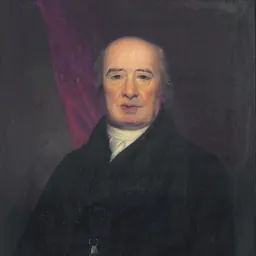
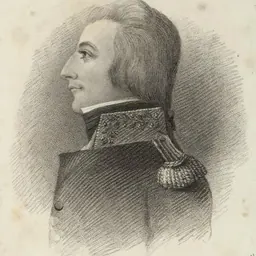
Related people
Same field, nearest in time

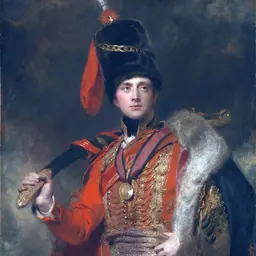

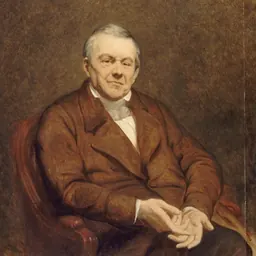

Contemporaries
People whose lives overlapped Valentine Lawless, 2nd Baron Cloncurry's



Frequently asked questions
Who was Valentine Lawless, 2nd Baron Cloncurry?
Irish politician
When was Valentine Lawless, 2nd Baron Cloncurry born?
Valentine Lawless, 2nd Baron Cloncurry was born on 19 August 1773.
When did Valentine Lawless, 2nd Baron Cloncurry die?
Valentine Lawless, 2nd Baron Cloncurry died on 28 October 1853.
What was Valentine Lawless, 2nd Baron Cloncurry's occupation?
Valentine Lawless, 2nd Baron Cloncurry was a politician.
Sources & further reading
· Wikipedia: Valentine Lawless, 2nd Baron Cloncurry
· DBpedia: Valentine Lawless, 2nd Baron Cloncurry
Cite this page
APA: Biography.guide. (2026). Valentine Lawless, 2nd Baron Cloncurry. https://biography.guide/valentine-lawless-2nd-baron-cloncurry/
MLA: "Valentine Lawless, 2nd Baron Cloncurry." Biography.guide, https://biography.guide/valentine-lawless-2nd-baron-cloncurry/.
Chicago: "Valentine Lawless, 2nd Baron Cloncurry." Biography.guide. https://biography.guide/valentine-lawless-2nd-baron-cloncurry/.
Data last updated: 2026-09-20 · Spot an error? Report a correction.
Page generated 2026-09-27 05:31 UTC