
About Vadim Sidur
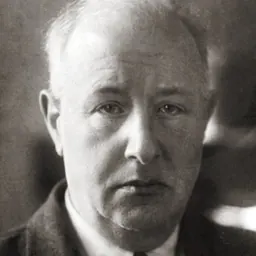
Lived 1924 – 1986 (aged 61). Vadim Sidur was a Russian poet and sculptor.
Vadim Abramovich Sidur (; 28 June 1924, Yekaterinoslav — 26 June 1986, Moscow) was a Ukrainian Soviet avant-garde sculptor and artist sometimes referred as the Soviet Henry Moore. Sidur is the creator of a style named Grob-Art (Coffin-Art). He also left a book of poetry The Happiest Autumn (ru: Самая счастливая осень) and a memoir Monuments to the Current State (Памятники современному состоянию).
Biography Sidur was born in Yekaterinoslav (currently Dnipro, Ukraine) to a Jewish father and Russian mother. One of the most memorable childhood memories was the events concerned the Holodomor of 1932-1933. Particularly, Vadim Sidur mentions mass mortality from famine in the villages, cases of corpse-eating and cannibalism, and nutrition by surrogates in his autobiographical work "Monument to the Current state". He also talks about the work of the Torgsin system. In particular, his mother exchanged a silver spoon for a kilogram of flour in this shop in Dnipropetrovsk. In 1942, he was drafted into the Red Army and fought in the battles of World War II near his hometown. After being wounded in the jaw by a bullet, he was discharged as a disabled veteran. Sidur abandoned his plans to study medicine and entered Stroganov Moscow State University of Arts and Industry in Moscow instead, where his teachers were Georgy Motovilov and Saul Rabinovich. In 1957, he became a member of the Union of Artists of USSR. In 1974, he worked on the book Monuments to the Current State (Памятники современному состоянию) that he self-described as a myth. He also shot an underground movie based on the book. He worked on sculpture series Man and Woman, Motherhood. In the 1980s, shortly before his death, he wrote a book of poetry titled The Most Happy Autumn (Самая счастливая осень). Since 2018, it is a branch of the Moscow Museum of Modern Art. It holds over 1,000 sculptures and graphical works of Sidur, as well as archival materials, photographs, and publications about Sidur. It is located at 37A Novogireyevskays str., near the crossing with .
Don’t just read it —
keep it.
Full-length biographies made to live with: read them, listen on the way to work, watch them tonight.
- E-book
- Audio
- Video
Instant download · yours to keep · every purchase keeps this site free
Important facts
People in Vadim Sidur's life
Named in this biography and alive at the same time

Related people
Same field, nearest in time


Contemporaries
People whose lives overlapped Vadim Sidur's


Frequently asked questions
Who was Vadim Sidur?
Soviet artist
When was Vadim Sidur born?
Vadim Sidur was born on 28 June 1924 in Dnipro.
When did Vadim Sidur die?
Vadim Sidur died on 26 June 1986 in Moscow.
What was Vadim Sidur's occupation?
Vadim Sidur was a poet and sculptor.
What nationality was Vadim Sidur?
Vadim Sidur was Russian.
Sources & further reading
Cite this page
APA: Biography.guide. (2026). Vadim Sidur. https://biography.guide/vadim-sidur/
MLA: "Vadim Sidur." Biography.guide, https://biography.guide/vadim-sidur/.
Chicago: "Vadim Sidur." Biography.guide. https://biography.guide/vadim-sidur/.
Data last updated: 2026-09-20 · Spot an error? Report a correction.
Page generated 2026-09-27 05:05 UTC