
About V. M. Tarkunde
Lived 1909 – 2004 (aged 94). V. M. Tarkunde was an Indian lawyer, judge and human rights defender.
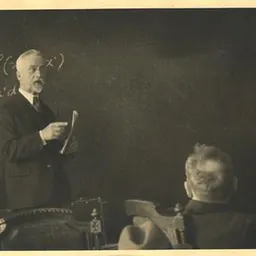
Vithal Mahadeo Tarkunde (3 July 1909 – 22 March 2004) was a prominent Indian lawyer, civil rights activist, and humanist leader and has been referred to as the "Father of the Civil Liberties movement" in India and a former judge of the Bombay High Court The Supreme Court of India also praised him as "undoubtedly the most distinguished judge of the post-Chagla 1957 period" in the Bombay High Court.
Early life and education
Vithal Mahadeo Tarkunde was born in Saswad, Pune District, Maharashtra on 3 July 1909. He was the 2nd of the five children of Mahadeo Rajaram Tarkunde, a popular lawyer and social reformer at Saswad, then headquarters of Purandar taluka adjoining Pune. His father, a Brahmin by caste, had fought against the practice of untouchability.
In 1920 he migrated from Saswad to Pune and joined the New English School, Pune. In the Matriculation examination of 1925 held by the Bombay University, he stood first in the erstwhile Bombay Presidency. He also secured the prestigious Jagannath Shankersheth Scholarship for Sanskrit. He then joined the Fergusson College for BA which he completed in 1929, subsequently moving to London, where he attended the Lincoln's Inn and qualified as a Barrister-at-Law in 1931. He also attended lectures in economics, political science and social anthropology at the London School of Economics(LSE) as an external student. He returned to India the next year in December and commenced his legal practice in Pune.
Legal career
Tarkunde started practice at Pune soon after he returned to India in 1933. He continued there till 1942 when he gave up his practice to become a full-time member of the Radical Democratic Party. He resumed his legal practice in the Bombay High Court in 1948 after Independence and was elevated to the bench as a Judge of the Bombay High Court in September 1957. He stepped down voluntarily as Judge of the Bombay High Court in 1969 and set up practice in the Supreme Court of India where he continued till his resignation in 1977 at the age of 68. He was chiefly concerned with Public Interest Litigations and constitutional cases, most of which he conducted with little or no fees.
In 1940, Roy and Tarkunde, along with several others, left the Congress after dissenting on the question of participation in the Second World War. Roy advocated participation in the war against the Axis powers, while simultaneously striving for Indian independence, and founded the Radical Democratic Party to further this cause. In 1942, Tarkunde gave up his legal practice to become a full-time member of the Radical Democratic Party and was elected General Secretary of the RDP in 1944, thereby migrating to Delhi. By 1946 Roy formulated the philosophy of New Humanism. By 1948 he and Roy decided that political parties were an inadequate instrument for promoting freedom of the people and so dissolved the RDP in December 1948. He returned to legal practice the same year.
Emergency
During the emergency, he worked closely with Jayaprakash Narayan, providing leadership to the NGOs Citizens for Democracy and People's Union for Civil Liberties, of which he was the founding president. He also worked on the Citizen's Justice Committee and played a principal part in resisting and investigating the excesses of the period, including the 1984 Anti-Sikh riots, and human rights violations in the Punjab, Kashmir, and the North-East.
Awards and honours
At the 1978 London Congress of the IHEU, VM Tarkunde received the International Humanist Award 1978.
Books
Radical humanism: The philosophy of freedom and democracy Report to the Nation:Oppression in Punjab Communalism and human rights (J.P. memorial lecture) Through humanist eyes Radical humanism: The philosophy of freedom and democracy For freedom Kashmir problem: Possible solutions Great Britain and India The danger ahead: An analysis of congress capitalist alignment
Don’t just read it —
keep it.
Full-length biographies made to live with: read them, listen on the way to work, watch them tonight.
- E-book
- Audio
- Video
Instant download · yours to keep · every purchase keeps this site free
Important facts
People in V. M. Tarkunde's life
Named in this biography and alive at the same time

Related people
Same field, nearest in time



Contemporaries
People whose lives overlapped V. M. Tarkunde's


Frequently asked questions
Who was V. M. Tarkunde?
Indian activist (1909-2004)
When was V. M. Tarkunde born?
V. M. Tarkunde was born on 3 July 1909 in Saswad.
When did V. M. Tarkunde die?
V. M. Tarkunde died on 22 March 2004 in Delhi.
What was V. M. Tarkunde's occupation?
V. M. Tarkunde was a lawyer, judge and human rights defender.
What nationality was V. M. Tarkunde?
V. M. Tarkunde was Indian.
Sources & further reading
Cite this page
APA: Biography.guide. (2026). V. M. Tarkunde. https://biography.guide/v-m-tarkunde/
MLA: "V. M. Tarkunde." Biography.guide, https://biography.guide/v-m-tarkunde/.
Chicago: "V. M. Tarkunde." Biography.guide. https://biography.guide/v-m-tarkunde/.
Data last updated: 2026-09-20 · Spot an error? Report a correction.
Page generated 2026-09-27 05:04 UTC