
About Uzun Hassan
Lived 1423 – 1478 (aged 54–55). Uzun Hassan was a sovereign.
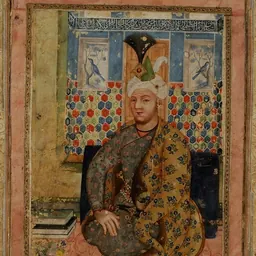
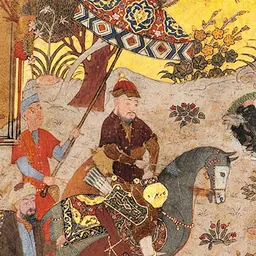
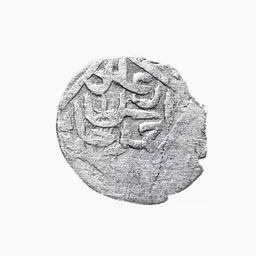
Uzun Hasan or Uzun Hassan (; February or March 1425 – January 5, 1478) was a ruler of the Turkoman Aq Qoyunlu state and is generally considered to be its strongest ruler. Hasan was from the Bayandur tribe and presided over the confederation's territorial apex, when it included parts or all of present-day Iraq, Turkey, Azerbaijan, Iran, Transcaucasia, and Syria.
The younger son of Ali Beg and Sara Khatun, Hasan rose to prominence during the protracted Aq Qoyunlu civil war of the 1440s and 1450s. He seized the confederate capital of Amid from his brother Jahangir in a bloodless coup in September 1452, and became undisputed ruler after defeating Jahangir and his Qara Qoyunlu allies at the Battle on the Tigris in May 1457. Over the following decade he secured his frontiers against the Ayyubids of Hisn Kayfa, the Kurdish principalities of Diyar Bakr, the Dulkadirids and the Karamanids, while conducting raids into Georgia that won him a reputation as a ghazi.
Hasan destroyed the Qara Qoyunlu at the Battle of Muş on November 10, 1467, killing their ruler Jahan Shah, and captured and executed the Timurid sultan Abu Sa'id Mirza in Qarabagh two years later. These victories brought western and central Iran, Fars, Kerman and Arab Iraq under his rule and transformed the Aq Qoyunlu from a regional principality into an empire, with its capital transferred from Amid to Tabriz. Allied with the Venetian Republic against the Ottomans, he invaded Anatolia and Mamluk Syria in 1472 but was decisively defeated by Mehmed II at Otlukbeli on August 11, 1473, a reverse that Woods regards as having ended Aq Qoyunlu expansion and damaged the religious claims underpinning Hasan's authority. His last years were consumed by the rebellion of his son Ughurlu Muhammad and by declining health. He died near Tabriz in January 1478.
Hasan is remembered chiefly for his attempt to convert a nomadic tribal confederation into a settled Perso-Islamic empire. He expanded the central bureaucracy, recruited Iranian administrative families, promulgated a body of commercial, civil, penal and fiscal law known as the s, and cultivated the religious establishment and the Sufi orders, including the Safavid order, into which he married both a sister and a daughter. His grandson Ismail I founded the Safavid state in 1501.
Background The Aq Qoyunlu were a confederation of Turkoman clans of the Oghuz tradition, whose paramount clan, the Bayandur, had established itself in the Bayburt–Erzincan region and around Amid during the fourteenth century. Uzun Hasan's grandfather Qara 'Usman, also written Kara Yülük Osman (died 1435), built the principality out of his participation in Timur's Anatolian and Syrian campaigns. At Aleppo in 1400 Timur rewarded Qara 'Usman's eldest son Ibrahim with the fortified city of Amid, held by Timur since its capture from the Artuqid al-Zahir 'Isa in 1394; Amid remained the capital of the principality until Hasan's conquests of 1467–69, when it was replaced by Tabriz. Timur also recognized Qara 'Usman as legitimate ruler of the Aq Qoyunlu, and after the confiscation of the Samarqand spoils train left him sole leader of the confederation by removing his brothers Ahmad and Pir 'Ali. Ruha came to Qara 'Usman from the Mamluk sultan al-Nasir Faraj, as a reward for the death of the rebel Jakam.
Uzun Hasan was born in February or March 1425, the son of Ali Beg (died 1443) and of Sara Khatun, a daughter of the Bayandur chief Pir 'Ali; his elder brother Jahangir was born about 1417. Qara 'Usman's death in 1435 opened the Aq Qoyunlu Great Civil War, a struggle among his sons and grandsons that lasted more than two decades and drew in the Mamluks, the Ottomans, the Timurids and the rival Qara Qoyunlu confederation.
Reign
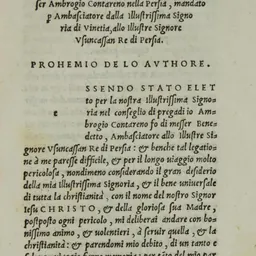
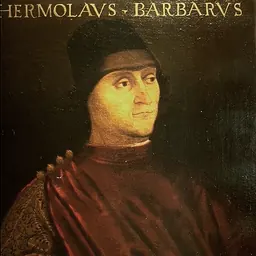
At the time of Hasan's ascension, Persia was divided between two rival Turkoman rulers, Jahan Shah of the Qara Qoyunlu (the Black Sheep Turkoman) and Uzun Hasan. After twenty years of fighting, Uzun Hasan eventually defeated Jahan Shah at the Battle of Chapakchur, near the sanjak of Çapakçur in present-day eastern Turkey on October 30 (or November 11 ), 1467. Upon the defeat of the latter, the Timurid ruler Abu Sa'id Mirza answered Jahan Shah's son's request for aid, taking much of Jahan Shah's former land and going to war with Uzun Hasan despite the latter's offers of peace. Uzun Hasan then ambushed and captured Abu Sa'id at the Battle of Qarabagh, whereupon he was executed by Yadgar Muhammad Mirza, a rival. In 1463, the Venetian Senate, seeking allies in its war against the Ottomans, sent Lazzaro Querini as its first ambassador to Tabriz, but he was unable to persuade Uzun Hasan to attack the Ottomans. Hasan sent his own envoys to Venice in return. Zeno, whose wife was the niece of Uzun Hasan's wife, was able to persuade Hasan to attack the Turks. Hasan was successful at first, but there was no simultaneous attack by any of the western powers. In 1473, Giosafat Barbaro was selected as another Venetian ambassador to Persia, due to his experience in Crimea, Muscovy, and Tartary. Although Barbaro got on well with Uzun Hasan, he was unable to persuade the ruler to attack the Ottomans again. After yet another Venetian ambassador, Ambrogio Contarini, arrived in Persia, Barbaro was the last Venetian ambassador to leave Persia after Uzun Hasan died in 1478. While Hasan's sons fought each other for the throne, Barbaro hired an Armenian guide and escaped. Contarini, ambassador to Uzun Hasan's court from 1473 to 1476, described him as follows:
His name means "tall", and Contarini reported that he was also "very lean".
Contarini also wrote:
Legacy South iwan of the courtyard of the Jameh Mosque of Isfahan, with central Uzun Hasan inscription. The iwan was renovated by Uzun Hasan, who also had the entire surface decorated with enamel colored tiles. Uzun Hasan was the first Aq Qoyunlu ruler who openly embarked on a campaign to transform the Aq Qoyunlu tribal confederation into a Perso-Islamic sultanate. This transformation campaign commenced after his conquests of northwestern and central Iran, where he, as a byproduct, displaced the waning authority of the Timurids. He initiated some financial and administrative reforms to weaken the separatism of the military and tribal nobility and to strengthen his vast state. The sources do not provide detailed information about Uzun Hasan's reformist activities. Although the texts of his laws have not reached us, it is possible to judge the reforms on the basis of the little information available about the laws that the chroniclers called "King Hasan's Laws" or "Dasturi-Hasan Bey". Some documents related to the western territories of the Aq Qoyunlu state, which became part of the Ottoman Empire (Diyarbakır, Mardin, Urfa, etc.), are kept in the Turkish archives. These sources are important in terms of studying feudal relations in the provinces of the Aq Qoyunlu. The general nature of Uzun Hasan's reform is stated in Tarikh al-Qiyasi:
After the conquest of eastern Anatolia in 1517–18, and of Iraq in 1537, the Ottomans preserved the laws of Uzun Hasan (Qānūn-nāma-ye Ḥasan Pādšāh). It was after 1540 that the Ottoman regulations replaced the Aq Qoyunlu code. Family Consorts Four consorts are identified in Woods's genealogical reconstruction of Uzun Hasan's family: Seljuk Shah Begum, daughter of Uzun Hasan's paternal uncle Kur Muhammad. Woods identifies her as Uzun Hasan's chief wife and the mother of Sultan Khalil, Ya'qub, and Yusuf. An unnamed daughter of Dawlatshah Beg Bulduqani-Mardasi, the Kurdish ruler of Eğil and mother of Ughurlu Muhammad. Faruk Sümer likewise identifies Ughurlu Muhammad as the son of the daughter of the ruler of Eğil. An unnamed daughter of Umar Beg Zraqi, the Kurdish ruler of Tercil and mother of Zaynal Mirza. Woods dates Uzun Hasan's marriage alliance with Umar Beg's daughter to around 1446–1447. Theodora Megale Komnene, better known as Despina Khatun, daughter of Emperor John IV of Trebizond. The marriage probably took place around 1458; Woods notes evidence placing it between 1457 and 1459. Sons Uzun Hasan had at least seven sons. Woods's genealogy identifies the mothers of all seven. Sultan Khalil (1442–1478) – with Seljuk Shah Begum. Woods identifies him as Uzun Hasan's eldest son; he succeeded his father in January 1478. Ughurlu Muhammad (died 1477) – with the daughter of Dawlatshah Beg Bulduqani-Mardasi. Woods states that he was born eight months after Sultan Khalil. After rebelling against his father, he eventually took refuge with the Ottoman sultan Mehmed II and married Mehmed's daughter Gevherhan Hatun. Their son Ahmad Beg briefly seized the Aq Qoyunlu throne in 1497. Zaynal Mirza ( – August 11, 1473) – with the daughter of Umar Beg Zraqi. He was Uzun Hasan's third son and governor of Kirman. He was killed at the Battle of Otlukbeli. Maqsud Beg (died 1478) – with Despina Khatun. Sultan Khalil had his approximately twenty-year-old half-brother executed immediately after Uzun Hasan's death. Ya'qub Beg (died 1490) – with Seljuk Shah Begum. Woods describes him as fourteen at Uzun Hasan's death, while noting that Khunji-Isfahani's account makes him thirteen. Ya'qub defeated Sultan Khalil later in 1478 and became sultan. Yusuf Beg (died 1490) – with Seljuk Shah Begum. Sultan Khalil sent Yusuf and his full brother Ya'qub to Diyar Bakr with their mother in 1478. Yusuf died shortly before Ya'qub in the Qarabagh winter camp in 1490. He was the father of the later claimants Alvand and Muhammadi. Masih Mirza – with Despina Khatun. After Ya'qub's death in December 1490, a Bayandur faction attempted to replace Baysunghur with Masih; Masih was killed in the ensuing fighting. Daughters Woods's genealogical table records five daughters of Uzun Hasan. Halima Begi Agha, or Alamshah Khatun – married her cousin Shaykh Haydar, son of Uzun Hasan's sister Khadija Begum and Shaykh Junayd. Sultan Ali, Ibrahim, and Isma'il, the founder of the Safavid dynasty, were sons of Haydar by Uzun Hasan's daughter. Khanum Khatun – married Qasim bin Jahangir. Shahbeg Khatun – married Ghazi Khan Sharvani. An unnamed daughter – married Abd al-Baqi Miranshahi. An unnamed daughter – married Bayram Beg Qaramanlu.
Don’t just read it —
keep it.
Full-length biographies made to live with: read them, listen on the way to work, watch them tonight.
- E-book
- Audio
- Video
Instant download · yours to keep · every purchase keeps this site free
Important facts
Family & relationships
People in Uzun Hassan's life
Named in this biography and alive at the same time



Related people
Same field, nearest in time


Contemporaries
People whose lives overlapped Uzun Hassan's

Frequently asked questions
Who was Uzun Hassan?
greatest shah of the Turkoman Aq Qoyunlu dynasty (r. 1453–1478)
When was Uzun Hassan born?
Uzun Hassan was born in 1423 in Diyarbakır.
When did Uzun Hassan die?
Uzun Hassan died on 6 January 1478 in Tabriz.
What was Uzun Hassan's occupation?
Uzun Hassan was a sovereign.
What nationality was Uzun Hassan?
Uzun Hassan's recorded nationality: Aq Qoyunlu.
Sources & further reading
Cite this page
APA: Biography.guide. (2026). Uzun Hassan. https://biography.guide/uzun-hassan/
MLA: "Uzun Hassan." Biography.guide, https://biography.guide/uzun-hassan/.
Chicago: "Uzun Hassan." Biography.guide. https://biography.guide/uzun-hassan/.
Data last updated: 2026-09-20 · Spot an error? Report a correction.
Page generated 2026-09-27 05:18 UTC