
About Ursula Wiltshire Goodenough
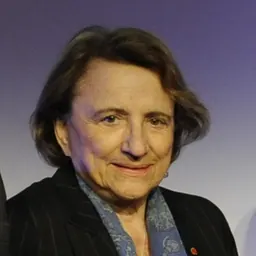
Born 1943. Ursula Wiltshire Goodenough is an American biologist and naturalist, known for Epic of Evolution and Religious Naturalism.
Ursula W. Goodenough (born March 16, 1943) is a retired Professor of Biology Emerita at Washington University in St. Louis, where she researched on eukaryotic algae. She authored the textbook Genetics and the best-selling book The Sacred Depths of Nature and speaks regularly about religious naturalist orientation and evolution. She contributed to the NPR blog 13.7: Cosmos & Culture from 2009 to 2011.
She currently serves as president of the Religious Naturalist Association. In 2023, she was elected to the National Academy of Sciences.
Background and Education Goodenough, daughter of Erwin Ramsdell Goodenough and Evelyn Goodenough Pitcher, was born on March 16, 1943, in New York City. She earned a B.A. in zoology from Barnard College in 1963, an M.A. in zoology at Columbia University in 1965, and a Ph.D. in biology at Harvard University in 1969. From 1963 to 1964, she was a Eugene Higgins Fellow at Columbia University and later became an NIH Pre-Doctoral Fellow at Columbia and Harvard in 1964–1969. She was an assistant and associate professor of biology at Harvard from 1971 to 1978 before moving to Washington University. was elected a Fellow of the American Academy of Microbiology in 2013 and was awarded a Doctor of Letters Honoris Causa by the Meadville School of Theology in 2022. Since 2013, Goodenough has been listed on the Advisory Council of the National Center for Science Education.
Goodenough joined the Institute on Religion in an Age of Science (IRAS) in 1989 and has served continuously on its council and as its president for four years. She has presented papers and seminars on science and religion to numerous audiences, co-chaired six IRAS conferences on Star Island, and serves on the editorial board of Zygon: Journal of Religion and Science.
Family Goodenough has written that women who are balancing the demands of raising children and developing a career need to understand that they can do both. She says that realizing that a child's development is influenced by many people in their lives other than their mother has helped her achieve both her personal and professional goals. She is the mother of five children born in 1970, 1974, 1980, 1982, and 1985, respectively, and she has 9 grandchildren.
Goodenough's brothers are the solid-state physicist John B. Goodenough (1922–2023), who was the oldest recipient of the Nobel Prize at age 97, the anthropologist Ward Goodenough (1919–2013), and the cell biologist Daniel Goodenough (1945–2024).
Teaching Goodenough was a Professor of Biology at Washington University and taught a junior/senior-level cell biology course for many years. She was also an Associate Professor of Anatomy at the Washington University School of Medicine and an Adjunct Professor of Cell Biology at Mt. Sinai School of Medicine.
Research Goodenough and colleagues have studied the molecular basis and evolution of life-cycle transitions in the flagellated green alga Chlamydomonas reinhardtii. They have identified genes in the mating-type (MT) locus and genes regulated by MT that control the transition between vegetative growth, gametic differentiation, and zygote development. These include genes responsible for mate recognition, uniparental inheritance of chloroplast DNA, and gametic differentiation, allowing analysis of their function and evolution during speciation. Her research also focuses on the molecular genetic specification of sexual traits in pikoeukaryotic algae. She also serves as president of the Religious Naturalist Association. Her recent RN presentations are listed here.
Other activities From 1987 to 1983, she was a member of the Molecular Cytology Study Section and an associate editor of the Journal of Cell Biology. From 1994 to 1998 and 1997 to 2000, she was an associate editor of the Cell Motility and the Cytoskeleton and Journal of Phycology, respectively. In 1988, she was the coordinator of the Meeting on Cell and Molecular Biology of Chlamydomonas at the Cold Spring Harbor Laboratory, and in 1990, she was the coordinator of the Regional Meeting of the American Society for Cell Biology (ASCB) in Chicago. From 1990 to 1993, she was a council member and a member of the Education Committee of the ASCB. In 1992, she became the chair of the Women in Cell Biology Committee and the president of the ASCB from 1994 to 1995. In 1993, she was the chair of the NSF and NASA Committees, and in 1997, she was a member of the FASEB Subcommittee on Ethical Issues of Genetic Research. From 1996 to 1998, she was an adjunct member of Trends in Early Research Careers at the NRC, and in 1996, she became the president of the Phi Beta Kappa at Washington University. In 1999, she was a Phi Beta Kappa Visiting Scholar and a board member of the Science Writers Fellowship Program at the Marine Biological Laboratory. From 2001 to 2003, she was an editor of the Eukaryotic Cell, and from 2003 to 2009, she was the chair of the Women in Cell Biology Committee at the ASCB. In 2002, she was the coordinator of the Meeting on Cell and Molecular Biology of Chlamydomonas in Vancouver, Canada, and in 2012, she was on the editorial board of an Algal Research Project and the Scientific Advisory Committee of the Integrated Microbial Diversity at the Canadian Institute for Advanced Research. She also won the Faculty Teaching Awards from Washington University in 1986 and 1994. In 1999, she won the Senior Career Recognition Award from the American Society for Cell Biology. In 2005, she won the Humanist Pioneer Award from the American Humanist Association. In 2009, she became a Fellow of the American Women in Science and the American Academy of Arts and Sciences. She also became a Fellow of the American Academy of Microbiology in 2013, and in 2017, she became a fellow of the American Society for Cell Biology.
Don’t just read it —
keep it.
Full-length biographies made to live with: read them, listen on the way to work, watch them tonight.
- E-book
- Audio
- Video
Instant download · yours to keep · every purchase keeps this site free
Important facts
People in Ursula Wiltshire Goodenough's life
Named in this biography and alive at the same time



Related people
Same field, nearest in time

Contemporaries
People whose lives overlapped Ursula Wiltshire Goodenough's


Frequently asked questions
Who is Ursula Wiltshire Goodenough?
American biologist
When was Ursula Wiltshire Goodenough born?
Ursula Wiltshire Goodenough was born on 16 March 1943 in New York City.
What is Ursula Wiltshire Goodenough's occupation?
Ursula Wiltshire Goodenough is a biologist and naturalist.
What is Ursula Wiltshire Goodenough known for?
Ursula Wiltshire Goodenough is known for Epic of Evolution and Religious Naturalism.
What nationality is Ursula Wiltshire Goodenough?
Ursula Wiltshire Goodenough is American.
Sources & further reading
· Wikipedia: Ursula Wiltshire Goodenough
Cite this page
APA: Biography.guide. (2026). Ursula Wiltshire Goodenough. https://biography.guide/ursula-wiltshire-goodenough/
MLA: "Ursula Wiltshire Goodenough." Biography.guide, https://biography.guide/ursula-wiltshire-goodenough/.
Chicago: "Ursula Wiltshire Goodenough." Biography.guide. https://biography.guide/ursula-wiltshire-goodenough/.
Data last updated: 2026-09-20 · Spot an error? Report a correction.
Page generated 2026-09-27 05:30 UTC