
Úrsula López
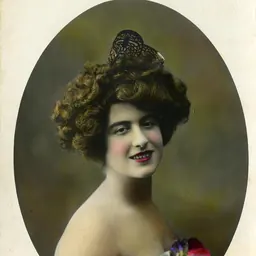
Spanish zarzuela and variety singer and businesswoman
About Úrsula López
Lived 1870 – 1966 (aged 95). Úrsula López was a Spanish cuplé singer, actor, businessperson and singer.
Úrsula López (31 October 1870 – 3 September 1966), stage name Úrsula Falcón Quintero, was a Spanish zarzuela and variety singer and businesswoman. In addition to performing, she was known for her glamorous public image, often flaunting expensive clothes, jewelry, and an automobile.
Biography Cuba and Mexico Úrsula López was born in Las Palmas in the Canary Islands. The date of her birth is not known with certainty. It is listed as 31 October 1886 on her National Identity Document (DNI), but her marriage certificate (she married Luis Bellido Hortelano in the parochial church of the Holy Spirit of Havana) gives her age as 25 on 29 April 1896, so she may have been born on 31 October 1870.
In 1899, once the Cuban War of Independence was over, López moved to Mexico as a flamenco singer, beginning a successful artistic career. It was there that she gave birth to her son on 15 July 1903.
According to Mexican critic and chronicler Manuel Mañón, "the year 1903 ended with the farewell of the soprano Úrsula López, who left for Veracruz, heading to Spain, after a long performance at the Teatro Principal."
The 15 November 1906 issue of the Madrid magazine El Arte de El Teatro dedicates its cover to her, with a photo caption reading "Úrsula López, the first comic soprano to act at Mexico's Teatro Principal."
Success in Madrid
On 2 November 1908, López debuted at the Teatro de la Zarzuela in Madrid with San Juan de Luz, a comedy by Quinito Valverde and , and in that same program, the revue Enseñanza libre by Gerónimo Giménez with libretto by and Palacios. Also in November, she performed in the play La Manzana de Oro at the Jovellanos Street Coliseum, with music by Rafael Calleja Gómez and and a book by Gabriel Briones. In it, she played the role of "La Menta", singing cuplés, which proved to be very popular. She was also part of the revue A.B.C., replacing Emérita Álvarez Esparza.
The Spanish press began devoting a large amount of coverage to López, on subjects such as her luxury car, her jewelry, her shawls from Manila, her virtues as an artist, and her wealth. On 21 December 1908, she returned to Mexico, to liquidate her belongings in that country with the intention of leasing a theater in Madrid.
Úrsula López Zarzuelas Company
Upon their return from Mexico, Luis Bellido and Serafín Pozueta set up a company to rent the , beginning the season on 1 March 1910 with the Úrsula López Zarzuelas Company, and presenting the plays , Los mosqueteros, La taza de té, and La manzana de oro, to great success with the public and critics.
After a string of successful premieres, at the end of 1911, they left the Teatro Lírico. The Úrsula López Zarzuelas Company was hired by the playwright and businessman José López Silva and traveled to Argentina. Their performance at the Avenida Theatre in Buenos Aires in 1912 was a hit, after which they traveled to Montevideo. In addition to Úrsula López, the company included well-known soprano Amparo Taberner and stage director .
The 15 July 1912 issue of the biweekly Buenos Aires publication La revista teatral y social devotes an extensive article to López, and its 15 August issue features her photograph on its cover.
Back on the peninsula in 1913, published an interview with López in Blanco y Negro, in which she talks about her future projects. Nuevo Mundo magazine included a photograph of her in February. In August 1913, she began a tour of Spain, performing at the Aza Vital Theater in Málaga with , book by Perrín and Palacios and music by Amadeu Vives. On 21 December 1913, the company debuted in Seville, at the , and the following day they premiered La boda de la farruca, with a book by and Guillermo Hernández Mir and music by Francisco Alonso. They then went to Barcelona, acting at the Teatro Cómico, and continuing with a successful tour of the Spanish provinces.
On 14 March 1914, the Úrsula López Company embarked on the steamship Infanta Isabel, heading to Buenos Aires. But this American tour was unsuccessful, causing López and Luis Bellido great economic losses, so they returned to Spain.
Variety shows López decided to present herself as a divette of variety shows before the Spanish public, debuting at the Teatro Lírico on 15 September 1915. She performed in prominent halls and theaters in Spain, achieving success equal to or greater than she had with zarzuelas. and Antonio L. Rosso and Crespo Salvador Videgain, Srta. Campos 16 April 1910 Ideal japonés Eduardo Haro and J. Martín López Úrsula López, Trinidad Rosales, Salvador Videgaín 29 April 1910 El país de las hadas and Miguel de Palacios Rafael Calleja Gómez Úrsula López, Salvador Videgain, Manolita Rosales, Trinidad Rosales 20 May 1910 La costa azul and Ricardo González López Montenegro Úrsula López, Salvador Videgain, and Sr. Sirvent 25 June 1910 El poeta de la vida Rafael Calleja Gómez Úrsula López. 18 November 1910 Las romanas caprichosas José López Silva and Manuel Penella Úrsula López, Sr. Latorre. 7 December 1910 La reina de las tintas and Ricardo González Manuel Penella Úrsula López 17 December 1910 La neurastenia de Satanás Úrsula López, Trinidad Rosales, Manolita Rosales 8 April 1911 Las dos reinas Rafael Calleja Gómez and Úrsula López, Carmen de Andrés, and 21 April 1911 La tierra del sol and Miguel de Palacios Rafael Calleja Gómez Úrsula López, Paquita Correa 24 May 1911 La niña de los besos Manuel Penella Úrsula López 4 July 1911 El carro del sol Maximiliano Thous José Serrano Úrsula López, , Caridad Álvarez 29 July 1911 El viaje de la vida Manuel Moncayo Manuel Penella Úrsula López, Sr. Rosell 8 August 1911 El género alegre Carlos Arniches, , Enrique García Álvarez Manuel Penella Úrsula López, Caridad Álvarez, Sr. Latorre 22 November 1911 El paraguas del abuelo and Miguel de Palacios Rafael Calleja Gómez and Pablo Luna Úrsula López
Discography
Disco pizarra. 2 sides. Discopathe, num. 2401, 85474, 80 rpm. "Su Majestad el Schotiss", 1st part and 2nd part. Disco pizarra, 1 side. Gramophone disc, num. 264075, 80 rpm. Madrid. "La reina de las tintas", "Tango del picazón". Teatro y Varietés, Vol. 3 Cómicos y género chico. Remastered recordings. Track 18, "La reina de las tintas", "Picazón". Track 19, El "jipi", from El país de las hadas El país de las hadas La reina de las tintas
Don’t just read it —
keep it.
Full-length biographies made to live with: read them, listen on the way to work, watch them tonight.
- E-book
- Audio
- Video
Instant download · yours to keep · every purchase keeps this site free
Important facts
People in Úrsula López's life
Named in this biography and alive at the same time



Related people
Same field, nearest in time
Contemporaries
People whose lives overlapped Úrsula López's



Frequently asked questions
Who was Úrsula López?
Spanish zarzuela and variety singer and businesswoman (1870-1966)
When was Úrsula López born?
Úrsula López was born on 31 October 1870 in Las Palmas de Gran Canaria.
When did Úrsula López die?
Úrsula López died on 3 September 1966 in Madrid.
What was Úrsula López's occupation?
Úrsula López was a cuplé singer, actor, businessperson and singer.
What nationality was Úrsula López?
Úrsula López was Spanish.
Sources & further reading
Cite this page
APA: Biography.guide. (2026). Úrsula López. https://biography.guide/ursula-lopez/
MLA: "Úrsula López." Biography.guide, https://biography.guide/ursula-lopez/.
Chicago: "Úrsula López." Biography.guide. https://biography.guide/ursula-lopez/.
Data last updated: 2026-09-26 · Spot an error? Report a correction.
Page generated 2026-09-27 05:16 UTC