
About Ursula Bellugi
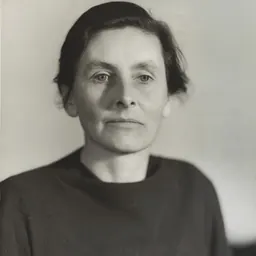
Lived 1931 – 2022 (aged 91). Ursula Bellugi was an American linguist, psychologist and neurologist, known for American Sign Language and Williams Syndrome.
Ursula Bellugi (February 21, 1931 – April 17, 2022) was an American cognitive neuroscientist. She was a Distinguished Professor Emerita and director of the Laboratory for Cognitive Neuroscience at the Salk Institute in La Jolla, California. She is known for research on the neurological bases of American Sign Language and language representation in people with Williams Syndrome.
Early life and education Bellugi was born in Jena, Germany. Her father was Maximilian Herzberger, a physicist and mathematician at the University of Jena. He was Jewish and lost his job during the Third Reich. Albert Einstein helped him to emigrate to Rochester, NY, where he became head of the Kodak company's optical research laboratories. She studied psychology and received a B.A. from Antioch College in 1952 and an Ed.D. from Harvard University in 1967.
Career In 1968 she moved to California, working at the Salk Institute. Beginning 1970 she was Director of its Laboratory for Cognitive Neuroscience.
Research Broadly stated, she conducted research on the biological bases of language. More specifically, she studied the neurological bases of American Sign Language extensively, and her work led to the discovery that the left hemisphere of the human brain becomes specialized for language, whether spoken or signed, a striking demonstration of neuronal plasticity.
She also investigated the language abilities of individuals with Williams Syndrome, a puzzling genetically based disorder that leaves language, facial recognition and social skills remarkably well-preserved in contrast to severe inadequacy in other cognitive aptitudes. The search for the underlying biological basis for this disorder is providing new opportunities for understanding how brain structure and function relate to cognitive capabilities. Her work with both communities caused her to receive love and admiration for her work and efforts. Bellugi was even given a special sign in ASL by those she worked with, and was affectionately referred to as "Dr.B" by those within the Williams Syndrome Association.
Honors and distinctions Bellugi was recognized with numerous awards, including the Distinguished Scientific Contribution Award from the American Psychological Association (1992). In 2007 she was elected a fellow of the American Association for the Advancement of Science, and in 2008 she was elected a member of the National Academy of Sciences. She was also on the advisory council of the National Institute on Deafness and Other Communication Disorders.
Personal life In 1954 Bellugi married the Italian conductor Piero Bellugi., whom she divorced while in Cambridge. She had two sons, David and Rob.
Publications
Books The Signs of Language. Klima, E.S., & Bellugi, U. Cambridge, MA: Harvard University Press, 1979. —Paperback Edition, 1988; —Reprinted, 1995. (Award from Association of American Publishers for Most Outstanding Book in the Behavioral Sciences). Signed and Spoken Language: Biological Constraints on Linguistic Form. Bellugi, U., & Studdert-Kennedy, M. Dahlem Konferenzen. Weinheim/Deerfield Beach, FL: Verlag Chemie, 1980. What the Hands Reveal about the Brain. Poizner, H., Klima, E.S., & Bellugi, U. Cambridge, MA: MIT Press/Bradford Books, 1987. Language, modality and the brain. Trends in Neurosciences. 10, 380–388. (Reprinted in M.H. Johnson, (Ed.), Brain development and cognition. London: Blackwell). Clues to the neurobiology of language. Bellugi, U., & Hickok, G. Washington, DC: Library of Congress. The signs of aphasia. In F. Boller & J. Grafman (Eds.), Handbook of neuropsychology, (2nd ed pp 38–50). Hickok, G., & Bellugi, U. Amsterdam, The Netherlands: Elsevier Science Publishers. Bridging cognition, brain and molecular genetics: Evidence from Williams syndrome. Trends in Neurosciences, 5, 197–208. Bellugi, U., Lichtenberger, L., Mills, D., Galaburda, A. & Korenberg, J.R. (1999). Journey from cognition to brain to gene: New perspectives from Williams Syndrome. Bellugi, U. & St. George, M. (Eds.) Cambridge, MA: MIT Press, 2001. Affect, social behavior and brain in Williams syndrome. Current Directions in Psychological Science. Bellugi, U., Järvinen-Pasley, A., Doyle, T., Reilly, J., & Korenberg, J. (2007). Williams syndrome : A neurogenetic model of human behavior. In Encyclopedia of the Human Genome. Korenberg, J.R., Bellugi, U., Salandanan, L.S., Mills, D.L., & Reiss, A.L.
Selected publications
Don’t just read it —
keep it.
Full-length biographies made to live with: read them, listen on the way to work, watch them tonight.
- E-book
- Audio
- Video
Instant download · yours to keep · every purchase keeps this site free
Important facts
Family & relationships
People in Ursula Bellugi's life
Named in this biography and alive at the same time


Related people
Same field, nearest in time




Contemporaries
People whose lives overlapped Ursula Bellugi's
Frequently asked questions
Who was Ursula Bellugi?
American psychologist
When was Ursula Bellugi born?
Ursula Bellugi was born on 21 February 1931 in Jena.
When did Ursula Bellugi die?
Ursula Bellugi died on 17 April 2022 in La Jolla.
What was Ursula Bellugi's occupation?
Ursula Bellugi was a linguist, psychologist and neurologist.
What was Ursula Bellugi known for?
Ursula Bellugi was known for American Sign Language and Williams Syndrome.
What nationality was Ursula Bellugi?
Ursula Bellugi was American.
Sources & further reading
Cite this page
APA: Biography.guide. (2026). Ursula Bellugi. https://biography.guide/ursula-bellugi/
MLA: "Ursula Bellugi." Biography.guide, https://biography.guide/ursula-bellugi/.
Chicago: "Ursula Bellugi." Biography.guide. https://biography.guide/ursula-bellugi/.
Data last updated: 2026-09-20 · Spot an error? Report a correction.
Page generated 2026-09-27 05:17 UTC