
About Ugo da Carpi
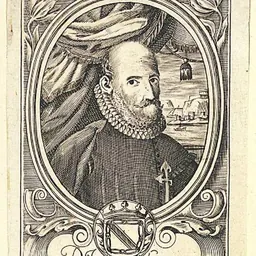
Lived 1480 – 1532 (aged 51–52). Ugo da Carpi was an Italian wood engraver, painter, graphic artist, visual artist and printmaker.
Ugo da Carpi ( – ) was an Italian printmaker active between 1502 and 1532 in the cities of Venice, Rome and Bologna. He is known for his technical and stylistic contributions to the chiaroscuro woodcut, a printmaking technique using blocks of different colours. Ugo claimed to be the first to use this technique, seeking a copyright first from the Venetian senate, and later from Pope Leo X. Although he did not create the chiaroscuro woodcut technique, he was one of the first Italian practitioners. He contributed to its development through his powerful style, focus on tonality and interpretive skills. One of his most famous works is a print of Diogenes. In addition to his numerous prints, he produced a writing book, and is also known to have produced at least one painting, the altarpiece of Saint Veronica in Saint Peter's Basilica in Rome.
Biography David Slaying Goliath, c. 1520, after Raphael, chiaroscuro woodcut with 3 blocks
Early life Ugo da Carpi’s exact birth date is unknown. Some scholars estimate it to be as early as 1450, although others claim it is closer to 1480. He was the 10th of the 13 children of Count Astolfo da Panico and Elisabetta da Dallo. The first historical evidence of Ugo is in the last will and testament of his father in 1490. There are records of Ugo buying and selling land in Carpi in 1495, 1496, and 1503.
Ugo lived in Venice from 1509 to 1517, mostly working as a blockcutter for woodcut book illustrations. Venice was a leading publishing centre, particularly the printing of illustrated books. In 1511, a number of woodcut book illustrations bearing the signature “Ugo” were published in Venice. He requested the copyright for an undefined period of time, and for all designs and woodcuts he had made and would make.
He set up a workshop in his house and printed and published blocks in his own shop. This work, along with many more of Ugo's chiaroscuro works from this time period, are considered by scholars to be the best examples of "truly reproductive prints." Ugo also produced a writing-book while in Bologna. Writing books were common in Italy in the 16th and 17th centuries and contained pages of letters printed using woodcuts. These books were manuals and attempted to teach others how to write in a similar way to Renaissance humanist manuscripts. The majority of Ugo's carvings are copies or reproductions of other works. Although the majority of scholars agree that Ugo's woodcut was based on Caraglio's engraving, The print consists of a sophisticated four block design and intricate carving. In the print, the design is built up through areas of colour instead of detailed line work, making it look more like a painting than a print. In this context, the ball on which the seated female figure rests her foot has been identified as the ball of yarn that represented Penelope's fidelity and cunning, while the depiction of Odysseus can be compared with his description in The Odyssey as lit by the light of a fire and silhouetted against a wall.
Saint Veronica Altarpiece The Saint Veronica Altarpiece is the only painting known to be Ugo's work. It is thought to have been finished between 1524 and 1527, and was originally located in Saint Peter's Basilica in Rome. Woodcuts would consist of a key, or line block, which consisted of the contours and crosshatching and a varying number of tone blocks. The key block sometimes stood alone as a black and white print.
Ugo's own printings of his woodcuts use a distinctive palette of soft blues and greens. Ugo utilized translucent inks in similar colours, which created nuanced and fluid transitions between one block and the next. Ugo's striking Diogenes carving was printed in green and gold.
One of the most distinctive features of Ugo’s carvings, and why he is much better known than other carvers of this time, is that he signed his work. Ugo’s signature is often cleverly incorporated into his prints, as can be seen in the Diogenes print. Diogenes grips a stick in his right hand, directing the viewers’ attention to an open book where the names of both the designer and the printmaker are inscribed. His signatures often acknowledge his identity as an engraver, a printer or a copier.
List of Works Sybil Reading, Facing Right. Chiaroscuro woodcut from two blocks, 287 x 240 mm, Metropolitan Museum of Art, New York. Raphael and His Mistress. Chiaroscuro woodcut from three blocks, 181 x 144 mm, Metropolitan Museum of Art, New York. Three Marys Lamenting the Dead Christ. Woodcut, 218 x 172 mm. British Museum, London. Hercules Chasing Avarice from the Temple of the Muses. Chiaroscuro woodcut from two blocks (first version), 312 x 237 mm. Albertina, Vienna. Hercules Chasing Avarice from the Temple of the Muses. Chiaroscuro woodcut from two blocks (second version), 297 x 228 mm. British Museum, London. Diogenes. Chiaroscuro woodcut from four blocks, 490 x 354 mm, Albertina, Vienna. David Slaying Goliath. Chiaroscuro woodcut from three blocks, 265 x 392 mm, Minneapolis Institute of Art, Minneapolis. Saint Veronica Altarpiece. Tempera and charcoal on panel, 1580 × 1450 mm, Archivio della Fabbrica di San Pietro, Vatican.
Don’t just read it —
keep it.
Full-length biographies made to live with: read them, listen on the way to work, watch them tonight.
- E-book
- Audio
- Video
Instant download · yours to keep · every purchase keeps this site free
Important facts
People in Ugo da Carpi's life
Named in this biography and alive at the same time

Related people
Same field, nearest in time




Contemporaries
People whose lives overlapped Ugo da Carpi's

Frequently asked questions
Who was Ugo da Carpi?
Italian printmaker and painter
When was Ugo da Carpi born?
Ugo da Carpi was born in 1480 in Carpi, Emilia-Romagna, Modena.
When did Ugo da Carpi die?
Ugo da Carpi died in 1532 in Rome.
What was Ugo da Carpi's occupation?
Ugo da Carpi was a wood engraver, painter, graphic artist, visual artist and printmaker.
What nationality was Ugo da Carpi?
Ugo da Carpi was Italian.
Sources & further reading
Cite this page
APA: Biography.guide. (2026). Ugo da Carpi. https://biography.guide/ugo-da-carpi/
MLA: "Ugo da Carpi." Biography.guide, https://biography.guide/ugo-da-carpi/.
Chicago: "Ugo da Carpi." Biography.guide. https://biography.guide/ugo-da-carpi/.
Data last updated: 2026-09-20 · Spot an error? Report a correction.
Page generated 2026-09-27 05:28 UTC