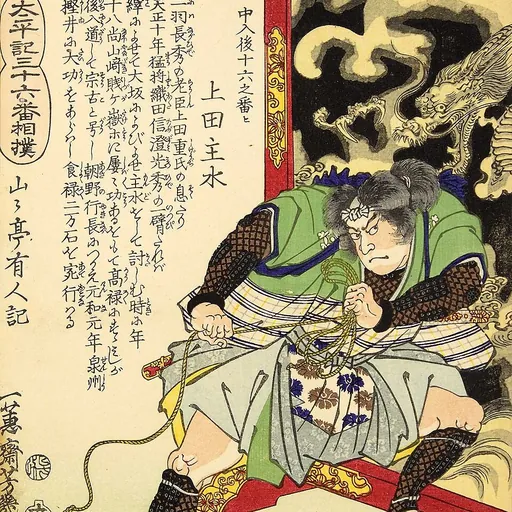
About Ueda Sōko
Lived 1563 – 1650 (aged 86–87). Ueda Sōko was a Japanese military commander and ueda Sōko-ryū.
Ueda Sōko (上田宗箇) (1563 – 30 May 1650) was a warlord who lived during the Momoyama and early Edo Periods. He is best known for founding the Ueda Sōko-ryū, a warrior class school of Japanese tea ceremony from Hiroshima. Ueda Sōko went by the name Satarō (佐太郎) in his younger days and later Shigeyasu (重安). He received his Zen practitioner's name of Chikuin (竹隠) by the 111th patriarch of Daitoku-ji, Shunoku Sōen. Today his death plaque is enshrined at the Sangen-in sub-temple of Daitoku-ji, beside that of his long time teacher in the Way of Tea, Furuta Oribe. Sōko was held in high esteem by Toyotomi Hideyoshi for military exploits and as a tea master. In the Battle of Sekigahara, Sōko sided with Toyotomi's Western Army and was thus defeated. During the Siege of Osaka Summer Campaign (1615), Sōko fought with Asano Yoshinaga on the Tokugawa side, and for this Sōko was given a pardon by Tokugawa Ieyasu. In 1619, the Tokogawa shogunate assigned the Geishū Domain to Asano Nagaakira and Sōko relocated to Hiroshima serving Nagaakira. Sōko was given a fief of 17,000 koku of rice in west Hiroshima (present day Hatsukaichi and Ōtake) and the role of Chief Retainer of the Geishū Domain for the Asano.
In 1632 (Year nine of Kan'ei Era) at the age of 70, Sōko retired from military duties and devoted himself to the Way of Tea. He immersed himself in a life of chanoyu: crafting tea equipage such as bamboo flower vases, chashaku tea scoops and firing raku ware tea bowls. Sōko developed his own school of chanoyu known as the Ueda Sōko-ryū. The school of Japanese tea ceremony continues in its 16th generation today, with an unbroken bloodline to Ueda Sōko.
Ueda Sōko the Warrior and Daimyo In 1585 (Year 13 of Tenshō), Sōko was recruited as a samurai under Toyotomi Hideyoshi and awarded land equivalent of 10,000 koku of rice in Echizen. This gave Sōko daimyō status. Under Hideyoshi, Sōko was assigned the role of supervisor for the construction of the temple for the great Buddha statue at Hōkō-ji temple in Kyoto. Sōko was distinguished as a warrior for his exploits in the Kyūshū Campaign, Siege of Odawara, and Hideyoshi's Korean Campaigns. After many years of military success, in 1594 (Year three of Bunroku Era) Hideyoshi awarded his niece to Sōko in marriage. Sōko sided with Hideyoshi's Western Army in the Battle of Sekigahara. After the Western Army's defeat, Sōko was welcomed by Hachisuka Iemasa the daimyo of Awa Province. As tea master to Iemasa, Sōko instructed chanoyu and built gardens and tea houses while in Tokushima. After three years serving Iemasa, Sōko was solicited by Asano Yoshinaga to join his clan ruling Kishū Province. Sōko came to Hiroshima in service of the Asano Clan as Chief Retainer (karō 家老) and tea master of the Hiroshima Domain in 1619.
Style of Chanoyu Ueda Sōko attended Rikyū's chanoyu practice (the Japanese Way of Tea) as a student for six years before becoming a student of Furuta Oribe for 24 years. Sōko was very close to Furuta Oribe and reverence for his teacher can be seen in the design of Wafūdō (tea villa built on the grounds of Hiroshima Castle). Sōko more or less replicates Oribe's tea house 'Ennan 燕庵' in the tea house 'Enshō 遠鐘' (meaning 'distant resonance of a temple bell') built at Wafūdō. The only difference is the addition of an additional tatami mat in size, requested by Asano Nagaakira. In Sōko's tea garden at Wafūdō, he uses a 'naka-kuguri' (small opening in a high wall) for guests to pass between the outer and inner roji (tea garden) – again used by Oribe. As a dedicated tea disciple of Oribe, Ueda Sōko designed the Wafūdō tea complex inside Hiroshima Castle to conduct the new sukiya onari format. This shows that he and Oribe where in close communication during the time Oribe contrived this new format of chanoyu with Tokugawa Hidetada. During battle campaigns, Sōko would pass the time waiting for enemy forces by carving tea scoops. Examples are the chashaku named teki-gakure (waiting for the enemy). The only extant calligraphy work of Sōko is the single line scroll 'I welcome no layman to my abode' 「門無俗士駕」(mon (ni) zokushi (no) ga nashi). The implication of the characters is "Upon mastering oneself through discipline and cultivating morality, those without such education and taste for the arts cease to appear at one's door".
Teacher, Furuta Oribe
Ueda Sōko learned from Furuta Oribe for 24 years. The current home of the Ueda Sōko-ryū is a reconstruction of the Wafūdō built by Ueda Sōko on the grounds of Hiroshima Castle. As such, it provides a rare example of the warrior style of chanoyu developed by Furuta Oribe and Ueda Sōko.
Gardens by Ueda Sōko Before his fame as a tea master, Sōko gained fame in the arts through his skill as a landscape gardener for palaces and temples throughout Honshū and Shikoku.
Omotegoten Garden of Old Tokushima Castle, Tokushima
(Designated National Place of Scenic Beauty) Garden of the Hachisuka Family on the grounds of Tokushima Castle.
Ni no Maru Garden, Nagoya Castle
Designed and built under order from Tokugawa Ieyasu in Genna 1 (1614) at the Ninomaru Garden, Nagoya Castle. Designated National Place of Scenic Beauty.
Shukkei-en, Hiroshima
Designated National Place of Scenic Beauty. Built as a second residence, Shukkei-en was also called the ‘lake residence’, of Lord Asano, the Daimyo of the Geishū (Hiroshima) Domain. This garden was built in the walkaround style of early Edo Period daimyo gardens.
Nisinomaru Garden, Wakayama Castle
Designated National Place of Scenic Beauty. Sōko was assigned to the reconstruction of Wakayama Castle and the design and construction of the Nisinomaru Garden.
Hōkō-ji, Kyoto Hideyoshi assigned Sōko as supervisor of the construction of the Daibutsuden (temple housing a large icon of the Buddha) at Hōkō-ji Temple.
Wafūdō, Hiroshima Castle Sōko constructed a second wafūdō tea house complex on the main residence of the Ueda family on the grounds of Hiroshima Castle. This Wafūdō reflected the original Wafūdō built in Kishū Province. The Hiroshima Wafūdō included a sukiya tearoom called Enshō, a kusari-no-ma tearoom called Kenkei and the training complex Ankantei. As part of the construction Sōko planted a pine at the summit of Shijōyama mountain. The pine is known as Sōko Matsu ("Soko's Pine") and the mountain is also known as Sōkoyama ("Mount Sōko").
Death Ueda Sōko died at 88 years of age. His oldest son was required to serve the Edo Bakufu which left his second eldest son, Shigemasa, to become heir of the Ueda family in Hiroshima. When Shigemasa died on 10 April at age 44, Sōko abstained from food and water from the same day until dying 21 days later on 1 May (by the lunar calendar). According to Sōko's biography, on the morning of the 1st, Sōko rose, purified his mouth, drank tea and lay down dead. Sōko's ashes were ground into dust and set adrift on the current of the Seto Inland Sea.
Don’t just read it —
keep it.
Full-length biographies made to live with: read them, listen on the way to work, watch them tonight.
- E-book
- Audio
- Video
Instant download · yours to keep · every purchase keeps this site free
Important facts
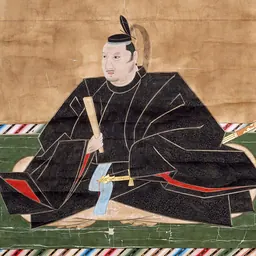
People in Ueda Sōko's life
Named in this biography and alive at the same time


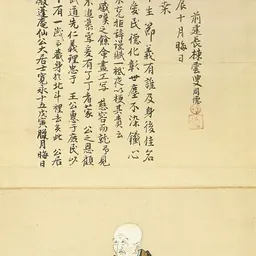
Related people
Same field, nearest in time

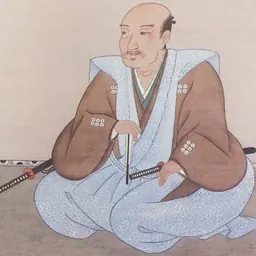


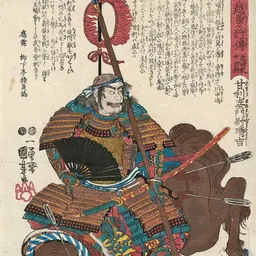
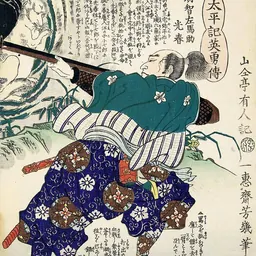
Contemporaries
People whose lives overlapped Ueda Sōko's



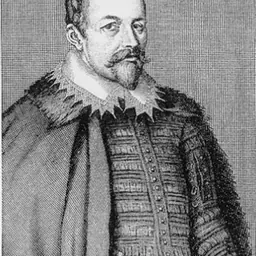

Frequently asked questions
Who was Ueda Sōko?
Japanese warlord (1563–1650)
When was Ueda Sōko born?
Ueda Sōko was born in 1563 in Hoshizaki.
When did Ueda Sōko die?
Ueda Sōko died on 30 May 1650 in Hiroshima.
What was Ueda Sōko's occupation?
Ueda Sōko was a military commander and ueda Sōko-ryū.
What nationality was Ueda Sōko?
Ueda Sōko was Japanese.
Sources & further reading
Cite this page
APA: Biography.guide. (2026). Ueda Sōko. https://biography.guide/ueda-soko/
MLA: "Ueda Sōko." Biography.guide, https://biography.guide/ueda-soko/.
Chicago: "Ueda Sōko." Biography.guide. https://biography.guide/ueda-soko/.
Data last updated: 2026-09-22 · Spot an error? Report a correction.
Portrait: Wikimedia Commons · author & licence
Page generated 2026-09-27 05:02 UTC