
About Udi Hrant Kenkülyan
Lived 1901 – 1978 (aged 76–77). Udi Hrant Kenkülyan was an Armenian and Turkish musician.
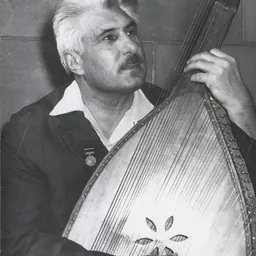
Udi Hrant Kenkulian (; ; 1901 – August 29, 1978), often referred to as Udi Hrant (lit. "oud-player Hrant") or as Hrant Emre ("Hrant of the soul") was an oud player of Ottoman classical music, and a key transitional figure in its transformation into a contemporary style of popular music. He was an ethnic Armenian citizen of Turkey who spent most of his life in Turkey and wrote most of his lyrics in Turkish. He concurrently composed and performed in Armenian as well, although to a much lesser degree. Kenkulian recorded numerous sides in the United States and Europe during his travels in the mid-20th century.
As an oud player, he was a major innovator, introducing left-hand pizzicato, bidirectional picking (the tradition had been to use the pick only on the downstroke), double stops, and novel tunings (sometimes using open tunings or tuning the paired strings in octaves instead of to a single note). According to Harold G. Hagopian, he was most respected for his improvisational taksim.
Biography Born in Adapazarı, declared blind four days after his birth, Hrant as a child sang in the choir of an Armenian Apostolic Church. His family fled to Konya in 1915 to escape the Armenian genocide;
In 1969, Udi Hrant awarded the title of "Udi" and status as master of oud playing to five younger Armenian-American oud players whom he deemed worthy, some of whom had been his own students, (in alphabetical order): John Berberian, Chick Ganimian, Richard Hagopian, George Mgrdichian, and Harry Minassian.
His last performance was in Istanbul in April 1978, a benefit for the Sourp Purgich Armenian Hospital, at which time he already had the cancer that would kill him that August. Udi Hrant, Traditional Crossroads (1994, CD, compiles the 1950 New York recordings) Udi Hrant, Kalan Müzik (1995, CD, reissue in Turkey), out of stock Udi Hrant, Early Recordings, Vol. I, Traditional Crossroads (1995, CD) Udi Hrant, Early Recordings, Vol. II, Traditional Crossroads (1995, CD) Udi Hrant, Can All Times Be One?: Solo, Duo & Trio Performances From 1950s Independent U.S. Labels, Canary Records (2016, digital)
Don’t just read it —
keep it.
Full-length biographies made to live with: read them, listen on the way to work, watch them tonight.
- E-book
- Audio
- Video
Instant download · yours to keep · every purchase keeps this site free
Important facts
People in Udi Hrant Kenkülyan's life
Named in this biography and alive at the same time

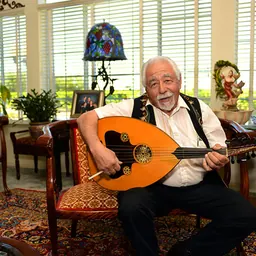

Related people
Same field, nearest in time
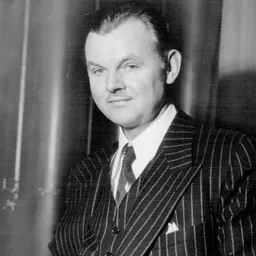
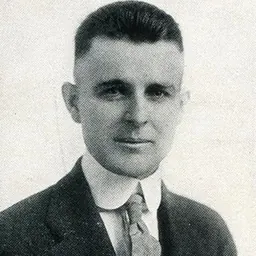


Contemporaries
People whose lives overlapped Udi Hrant Kenkülyan's



Frequently asked questions
Who was Udi Hrant Kenkülyan?
Turkish singer of Armenian ancestry (1901–1978)
When was Udi Hrant Kenkülyan born?
Udi Hrant Kenkülyan was born in 1901 in Adapazarı.
When did Udi Hrant Kenkülyan die?
Udi Hrant Kenkülyan died on 29 August 1978 in Istanbul.
What was Udi Hrant Kenkülyan's occupation?
Udi Hrant Kenkülyan was a musician.
What nationality was Udi Hrant Kenkülyan?
Udi Hrant Kenkülyan was Armenian and Turkish.
Sources & further reading
· Wikipedia: Udi Hrant Kenkülyan
· DBpedia: Udi Hrant Kenkulian
Cite this page
APA: Biography.guide. (2026). Udi Hrant Kenkülyan. https://biography.guide/udi-hrant-kenkulyan/
MLA: "Udi Hrant Kenkülyan." Biography.guide, https://biography.guide/udi-hrant-kenkulyan/.
Chicago: "Udi Hrant Kenkülyan." Biography.guide. https://biography.guide/udi-hrant-kenkulyan/.
Data last updated: 2026-09-20 · Spot an error? Report a correction.
Page generated 2026-09-27 05:14 UTC