
About Turgot of Durham
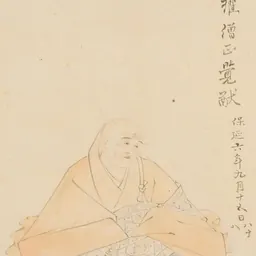
Lived 1050 – 1115 (aged 64–65). Turgot of Durham was a catholic priest, catholic bishop, hagiographer and bishop.
Thorgaut or Turgot (c. 1050–1115) (sometimes, Thurgot) was Archdeacon and Prior of Durham, and Bishop of Saint Andrews.
Biography
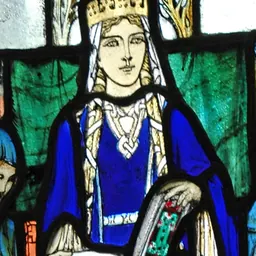
Early life and prior at Durham Turgot came from the Lindsey in Lincolnshire. After the Norman Conquest he was held as a hostage, but escaped to Norway, where he taught psalmody to King Olaf III. In about 1074 he returned to England and became a clerk at Jarrow monastery. He then became a monk at Wearmouth, and in 1087 he was appointed prior of the monastery at Durham, from 1093 combining this with the archdeaconry of Durham. He became close to the Scottish court and became in 1089 a close friend and spiritual adviser to Saint Margaret of Scotland, wife of King Malcom III and a profoundly religious person. After her death and between the years 1100 and 1107, Turgot wrote a vita of her life at the request of her daughter, Matilda, wife of King Henry I of England.
Bishop of St Andrews and death In 1107, the Prior was elected as bishop to the see of St Andrews which had been without a bishop since 1093. Consecration was delayed by ecclesiastical disputes between York and St Andrews, and did not take place until 1 August 1109. According to Symeon of Durham, he found that he could not exercise the office "worthily" as there was only a primitive reliquary church, no Benedictine monks to support him and conflicts between various factions he had to deal with, including the Scottish King Alexander, the Archbishop of York and the culdees, a local Scottish monastic community. Alexander asked Pope Paschal II to advice Turgot on these matters and the pope sent Turgot two letters as well as a book of excerpts of canon law to support him. Turgot, perhaps in response to these letters, proposed to go to Rome to speak directly with Pope Paschal II but Alexander prevented him from doing so.
Tugot became ill in June 1115 and was allowed to return to Durham where he had begun his clerical life, where he died on 31 August 1115. Turgot's last words were from Psalm 76 "His dwelling is in peace and his habitation in Sion" and he was buried in the chapter house of Durham next to the graves of other bishops. His mortuary roll, which may have been prepared by Symeon of Durham himself, circulated as far as the French counties of Anjou, Blois, Touraine and Vermandois.
Don’t just read it —
keep it.
Full-length biographies made to live with: read them, listen on the way to work, watch them tonight.
- E-book
- Audio
- Video
Instant download · yours to keep · every purchase keeps this site free
Important facts
People in Turgot of Durham's life
Named in this biography and alive at the same time

Related people
Same field, nearest in time

Contemporaries
People whose lives overlapped Turgot of Durham's



Frequently asked questions
Who was Turgot of Durham?
Bishop of Saint Andrews
When was Turgot of Durham born?
Turgot of Durham was born in 1050.
When did Turgot of Durham die?
Turgot of Durham died on 31 August 1115.
What was Turgot of Durham's occupation?
Turgot of Durham was a catholic priest, catholic bishop, hagiographer and bishop.
Sources & further reading
Cite this page
APA: Biography.guide. (2026). Turgot of Durham. https://biography.guide/turgot-of-durham/
MLA: "Turgot of Durham." Biography.guide, https://biography.guide/turgot-of-durham/.
Chicago: "Turgot of Durham." Biography.guide. https://biography.guide/turgot-of-durham/.
Data last updated: 2026-09-20 · Spot an error? Report a correction.
Page generated 2026-09-27 05:19 UTC