
About Tullia d'Aragona
Lived 1510 – 1556 (aged 45–46). Tullia d'Aragona was an Italian salonnière, philosopher, writer and poet.
Tullia d'Aragona (1501/1505 – March or April 1556) was an Italian poet, author, and philosopher. Born in Rome sometime between 1501 and 1505, Tullia traveled throughout Venice, Ferrara, Siena, and Florence before returning to Rome. Throughout her life, Tullia was esteemed one of the best female writers, poets, and philosophers of her time. Influencing many of the most famous philosophers, Tullia's work elevated women's status in literature to equal that of men. Her intellect, literary abilities, and social graces helped her become among the most celebrated of Renaissance poet-courtesans.
Early years Tullia was born in Rome sometime between 1501 and 1505, Tullia returned to Rome for the birth of Penelope d'Aragona on March 10, 1535.
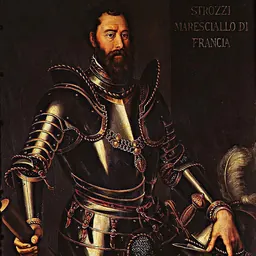
Scholars disagree on whether Penelope was Tullia's daughter or sister. While at a minimum a twenty-five year age difference between siblings is not implausible of a gap it is uncommon. Claims by Tullia's family support the argument that Penelope was Tullia's sister. Nonetheless, she was back in Rome, which was recorded in a letter Tullia wrote to Francesco de' Pazzi, a friend and companion of Piero Strozzi, Filippo's eldest son.
In 1537, Battista Stambellino's correspondence to Isabella D'Este suggests Tullia was living in Ferrara. She apparently came to Ferrara to see Filippo Strozzi, and while there, heard the preaching's of the reformist Bernardo Ochino, who she later referenced a sonnet on the importance of free will. coincidentally Vittoria Colonna was also in Ferrara around the same time, though unlikely they ever met or crossed paths. Ferrara was a capital for arts and culture, and d'Aragona made full use of her skills for singing and sharp-tongued entertainment. Two of Italy's literary giants, Girolamo Muzio and Ercole Bentivoglio, both fell in love with her. Muzio wrote five ardent eclogues to her, naming her as "Thalia", while Bentivoglio went so far as to carve her name on every tree on the Po River. When she left Ferrara four years later, reportedly more than one man had attempted suicide for her. She later moved to Siena sometime between 1543 and 1545.
In 1543, she is recorded to have married Silvestro Guiccardi of Ferrara, whom we do not know anything about. The only evidence of their relationship is a malicious comment that was made by Agnolo Firenzuola who claimed that Tullia let her husband die of hunger. For Tullia, this marriage acted as a way for her to "exempt herself from living in the neighborhood designated for prostitutes," and allowed her to wear clothing that distinguished her as a noble woman. Tullia did, however, have a confirmend son Celio, who is mentioned in her will, but it is unconfirmed whether or not Guiccardi was the father.
In late 1545 or early 1546 due to political uprisings, d'Aragona fled Siena to seek refuge in Florence in the court of Cosimo I. By the end of 1546 she was living in a villa just outside of Florence near the Mensola River. She received numerous visitors to her home. Many of which were poets themselves often exchanging verse with her as recorded in her Choral anthology.
In 1547 Tullia was once again charged with disobeying sumptuary legislation. She goes to successfully appeal this charge personally to both Eleonora di Toledo, Duchess of Florence, and to Cosimo I. They acquit her due to her "rare knowledge of poetry and philosophy." Following this episode She publishes both her Choral Anthology, and dialogue with Gabriele Giolito in Venice.
While there, she composed Dialogues on the Infinity of Love (1547), which is a Neo-Platonist assertion of women's sexual and emotional autonomy within exchanges of romantic love. Initially published in Venice, Italy in 1547 (in Italian), the novel has been translated in recent years in English for the first time by Rinaldina Russell and Bruce Merry in 1997. This book of philosophy was the first of its kind, for it cast a female rather than a male as the main commentator/ knowledge holder on the ethics of love. During Tullia's life, all forms of sensual experiences were considered sacrilegious, but Tullia argues in her work that all sexual drives are uncontrollable and blameless, and that they combined with spiritual needs create the only moral form of love. The only way for love to be honorable, according to this piece, is if both males and females accept and acknowledge their sexual and spiritual desires (of their body and soul). This concept not only validated the importance of sexual desires within a society that choose to repress such things, but also vindicated the role and power of women in a society that viewed women as less than. Tullia brings women to an equal level with men in regards to both their sexual nature and their intellect.
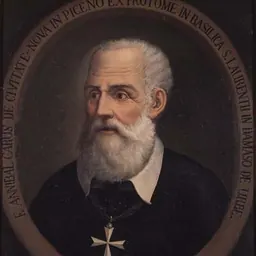
In October 1548 she informed Benedetto Varchi that she is leaving Florence and returning to Rome in a letter. She Appears in Rome in 1549, living near Monsignor Annibale Caro near Palazzo Carpi.
During the preceding century, the Medici court had sponsored considerable revival of Neo-Platonist scholarship, particularly Marsilio Ficino, who had also written on the nature of sexual desire and love from this perspective. At the same time, she wrote a series of sonnets that praised the attributes of prominent Florentine noblemen of her era, or celebrated contemporary literary figures. Her last known work, Il Meschino, is an epic poem, which related the experiences of a captive youth, Giarrino, who was enslaved and journeyed across Europe, Africa and Asia, as well as Purgatory and Hell, trying to find his lost parents.
As an aging forty-year-old, d'Aragona continued writing sonnets, especially to historian and poet Benedetto Varchi, who inspired her. With his patronage and her intellect, she turned her house into a philosophical academy for the cognoscenti, and she continued to thrive as a writer.
After this, d'Aragona returned to Rome from Florence, and little further is known about her life. She died in March or April 1556 in Rome. After her death, there were posthumous editions of her work in Italian, in 1552, 1694, 1864, 1912, 1974, 1975 and 1980. Her work has been discussed in the University of Chicago's "The Other Voice in Early Modern Europe" series, which deals with texts from Renaissance era female authors, as well as male advocates of women's emancipation from that era.
Works Rime della signora Tullia d'Aragona e di diversi a lei (1547); translated as Dialogues on the Infinity of Love (Chicago: University of Chicago, 1997, ) Dialogo dell'Infinità d'Amore (1547) Il Meschino, o il Guerino (1560)
Don’t just read it —
keep it.
Full-length biographies made to live with: read them, listen on the way to work, watch them tonight.
- E-book
- Audio
- Video
Instant download · yours to keep · every purchase keeps this site free
Important facts
People in Tullia d'Aragona's life
Named in this biography and alive at the same time

Related people
Same field, nearest in time

Contemporaries
People whose lives overlapped Tullia d'Aragona's


Frequently asked questions
Who was Tullia d'Aragona?
Italian courtesan, author
When was Tullia d'Aragona born?
Tullia d'Aragona was born in 1510 in Rome.
When did Tullia d'Aragona die?
Tullia d'Aragona died in 1556 in Rome.
What was Tullia d'Aragona's occupation?
Tullia d'Aragona was a salonnière, philosopher, writer and poet.
What nationality was Tullia d'Aragona?
Tullia d'Aragona was Italian.
Sources & further reading
Cite this page
APA: Biography.guide. (2026). Tullia d'Aragona. https://biography.guide/tullia-d-aragona/
MLA: "Tullia d'Aragona." Biography.guide, https://biography.guide/tullia-d-aragona/.
Chicago: "Tullia d'Aragona." Biography.guide. https://biography.guide/tullia-d-aragona/.
Data last updated: 2026-09-22 · Spot an error? Report a correction.
Page generated 2026-09-27 05:18 UTC