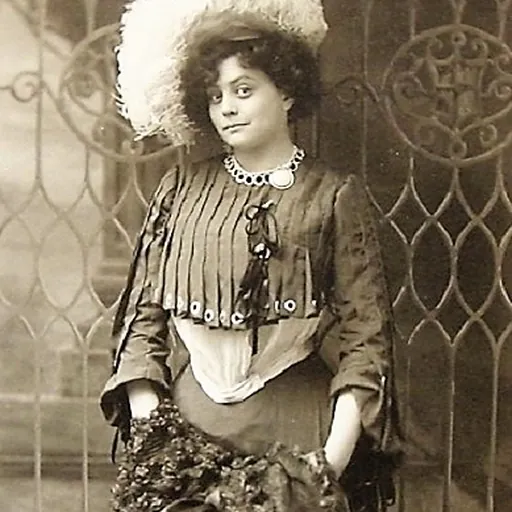
About Trixie Friganza
Lived 1870 – 1955 (aged 84). Trixie Friganza was an American actor, stage actor, film actor and suffragist.
Trixie Friganza (born Delia O'Callaghan; November 29, 1870 – February 27, 1955) was an American actress. She began her career as an operetta soubrette, working her way from the chorus to starring in musical comedies to having her own feature act on the vaudeville circuit.
She transitioned to film in the early 1920s mostly playing small characters that were quirky and comedic. She retired from the stage in 1940 due to health concerns. She spent her last years teaching drama to young women in a convent school and when she died she left everything to the convent. She became a highly sought after comic actress after the success of The Chaperons (she played "Aramanthe Dedincourt") and is best known for her stage roles of Caroline Vokes (or Vokins?) in The Orchid, Mrs. Radcliffe in The Sweetest Girl in Paris, for multiple roles in The Passing Show of 1912, and her run as a vaudeville headliner. During the height of her career, she used her fame to promote social, civic, and political issues of importance, such as self-love and the Suffragist movement.
Early life Friganza was born in Grenola, Kansas, to a mother Margaret Friganza of Spanish descent and an Irish father Cornelius O'Callaghan, and was raised in Cincinnati, Ohio. She had two younger sisters, and along with their mother, these four women were a tightly knit unit growing up. She was educated at St. Patrick's School in Cincinnati, beginning what would become a lifelong allegiance to the Catholic Church. When asked by a reporter why she took the name Friganza she replied, “I didn't marry it”; Friganza, in fact, is her mother's maiden name (Margaret Jane Friganza), which she both liked and found to be suitable for the stage. A friend and colleague of hers by the name of Digby Bell (of the Digby Bell Opera Co.), christened her “Trixie” early on and the name stuck, for she had never been fond of the name Delia.
She began working at a young age (12 or 13) in order to help support her family, securing a cash girl position at Pogue's store, and earning $3 per week. When she was age 16, she was promoted to the handkerchief counter at Pogue's and her salary went up to around $4.50–$5.00 per week, which was a substantial increase in income for her. It was her boyfriend at the time who encouraged her not to waste her talents as a singer and actress and to venture onto the stage where she could double or triple her current salary.
Motivated by the desire to provide more for her family, and the responsibility she must have felt due to being the oldest of the three daughters, she auditioned for a chorus girl position in The Pearl of Pekin''' (1889). She got the part but in order to avoid any embarrassment to her mother and family (stage careers for women were not considered reputable at the time) she opted to begin performing once the production moved up to Cleveland, Ohio.
Her mother was inconsolable and devastated at her daughter's decision to take to the stage. She notified Cleveland authorities who brought Trixie before a Cleveland judge to justify her decision to work in theater. She presented such a compelling and rational case for this career move (she had to prove to the judge that she was neither “silly” nor “stage-struck”, that this was a business move) that the judge granted her clemency and telegraphed her mother saying that Trixie was doing the right thing. She remained on stage in some form or another for the next fifty years.
Personal life Friganza was civic minded and socially attuned. She aligned herself with women's suffrage and the promotion of a positive female body image. On October 28, 1908, Trixie attended a women's suffrage rally at New York City Hall where she delivered a speech for women's rights. She donated money to the cause and repeatedly went on record as an advocate for women's rights, equality and independence.
Theatre career (1889–1917) Trixie toured with many theatre companies in the coming years working her way from roles in the chorus to more prominently featured roles with speaking parts. Part of her success can be attributed to her constant willingness to step in and take over roles when others fell ill or could not appear. These instances provided her an opportunity to demonstrate her ability and ingenuity. She impressed agents, audiences and other actors alike with her stellar singing voice and ability to command audiences with her humorous interpretation of characters.
She worked mainly with musical comedies, however, she did perform in a few dramatic productions, opting to return to comedic performance relatively soon thereafter. Below is a list in chronological order of the productions with which she was involved. Supplementary information (roles; theatre company; additional cast members; theatre technicians; directors; producers; personal statements or experiences), when available, is provided. (dates placed in italics are guesstimated based on the chronology of her performances, meaning the performance likely took place in that year but research did not provide a hard date to confirm this) Pearl of Pekin' – 1889 The Tar and the Tartar – 1890 – Carlton Opera Co. Understudied for Laura Joyce Bell and took her part when she was unable to appear. Jupiter (comic opera) – 1891 – Carlton Opera Co. Role of “Ganymede” George Odell in the Annals of the New York Stage, said of Trixie “The attendant Ganymede of Trixie Friganza, in later years a very heavy maiden, amuses me.” The Mascot (comic opera) – 1892–1894 – Digby Bell Opera Co. Presented at Palmer's Theater in NYC running from July 18th – October 1st Role of “Frederic, Prince of Pisa” Also starring Henry E. Dixey Prince Kam or A Trip to Venus (musical comedy) – 1893–1894 Role of “Isis” Written by C.A. Byrne and Louis Harrison Bill available from the Park Theatre (Robinson Locke Collection, New York City Public Library for the Performing Arts) One Christmas Night (drama) – 1894 The Little Trooper – 1894 Chorus role along with Della Fox Opened at the Casino in New York, August 30 The Little Joker (comedy) – 1894–1895 Written by Carrie W. Colburn Offered the lead role of “Kate” by Colburn who saw her performing in the chorus and wanted her to star in her play, which became T.F's first starring role on stage. Fleur de Lis – 1895 Performed with Della Fox Production opened at the Palmer's Theater in New York City A Trip to Chinatown – 1896–1897 Role of the “Widow” (principal) La Poupee – 1897 Role of “Henry” (boy's part– principal) Performed with Anna Held Show opened in Lyrie, New York, October 9 The Man in the Moon – 1898–1899 Role in the front row of the chorus The Country Sport – 1898–1899 Role in the chorus Understudied for Kate Davis and got to play the principal when she fell ill The Casino Girl – 1900 Opened in Casino, NY; had a chorus role The Belle of Bohemia – 1900–1901 Role of “Mrs. Muggins” (principal) First appearance in London at the Apollo in this role – February 21, 1901 The Whirl of the Town – 1901 Role of “Samanthy Brown” Performed with Henry E. Dixey and Madge Lessing Opened in London, September 11, 1901 The Rounders – 1901 One of the four daughters (principal) The Girl From Paris – 1901–1902 Role of “Julie Bonbon” (principal); Show toured back in the U.S. and in Montreal The Belle of New York – 1902 Role of “Salvation Army girl” When asked to kick a tambourine as the character does in the German translation of the play, she “refused to stultify her artistic conscience in that way” The Chaperons (musical comedy) – 1902 Role of “Aramanthe Dedincourt” (principal) Director Frank L. Perley; music by Isidore Witmark; book and lyrics by Frederic Ranken Opened in New York, NY on June 5th Performed with Walter Jones, Eddie Redway, Lou Middleton, Harry Conor, Eva Tanguay, and May Boley F.C. Havenmeyer, a wealthy 71-year-old man, followed the production around the country showering the female actresses with gifts from Tiffany's, T.F. included. Sally in Our Alley – 1903 Role of “Sally” (principal) Played at McVicker's Theater The Darling of the Gallery Gods – 1903 Role of “Whoa San” (principal) The Dress Parade – 1903 Role of “DuBarry” (principal) Opened in Crystal Gardens, New York, June 22nd The Prince of Pilsen – 1903 Role of “Mrs. Madison Crocker” (principal) Opened on Broadway, New York, July 4, 1903 and in Shaftesbury, London, May 14, 1904 Wears a gown covered with roses which was her “invention.” The Sultan of Sulu – 1904 Role of the “Widow” Higgledy-Piggledy – 1905 – Joe Weber's All Star Co. or Joe Weber Music Hall Stock Co. Role of “Mimi de Chartreuse” (principal) Opened in Weber's M.H., New York, February 13 The Girl From Paris – 1906 Revived role of “Julie Bonbon” (principal) Opened in Manhattan Beach, New York, July 21st Twiddle-Twaddle – 1905 Role of “Matilda Grabfelder” (principal) Opened at Joe Weber's Theatre The Three Graces – 1906 – Kohl & Castle Opened at the Chicago Opera House and went on tour His Honor the Mayor – 1906 Role of “Katrinka” (principal) Performed with Harry Kelly The Orchid – 1906–1907 Role of “Caroline Vokes” (or Vokins?) (principal) Performed with Eddie Foy Opened in Herald Square Theatre, New York, April 8 The Girl from Yama – 1907 Role of “The Girl from Yama” (principal) The American Idea (musical comedy) – 1908 Role of “Mrs. Waxtapper (principal) Written by George M. Cohan Costarring George Beban First public performance at the Star Theatre in Buffalo, New York, September 7 Opened in New York, New York, October 5 The Sweetest Girl in Paris (musical comedy) – 1910–1911 Role of “Mrs. Ned Radcliffe (principal) Opened at the Chicago LaSalle Opera House, August 8 and went on tour The Passing Show of 1912 – 1912–1913 – Winter Garden Co. Roles of “Keokuk,” “Julia Scream,” and “Nancy Sikes” Opened in Winter Garden, New York, July 22 and went on tour A Parody of Oliver Twist Town Topics (musical comedy) – 1915 Role of “Albany Dayline” Conceived of and staged by Ned Wayburn Canary Cottage – 1916–1917 Role of “Blanche Moss”
Vaudeville career (1906–1932) Trixie Friganza easily made the transition from musical comedy to vaudeville though her first vaudeville appearance is a contested matter. The newspaper Brooklyn Eagle claims that her debut was at Keeney's Theatre, May 6, 1905, whereas the Encyclopedia of Vaudeville lists her first appearance at the Hammerstein's Theatre in New York City, in the summer of 1906. Regardless, from that time forward she shuttled back and forth between the theatre and the vaudeville stage until 1912–1913 when she began working primarily within the vaudeville circuit. Her fame as a comic actress buoyed her success and she soon became a headliner, given top billing in the shows.
During her career she appeared at B. F. Keith's Palace Theatre in New York no fewer than ten times, headlining five times from April 1924 through April 1929. Records from the Theatre documented performers' success by rating their reception and applause, counting the number of laughs received, and how they finished. Records from appearances during the week ending April 28, 1918 indicate that the audience's response to Trixie Friganza was huge, where she elicited a total of 29 laughs, second only to Charlie Chaplin's motion picture A Dog's Life. In 1919, she toured with an act called At a Block Party, which featured songs and witty repartee representative of an actual city block party. Frederick James Smith, writing for the Dramatic Mirror (February 8, 1919) called her show “a vigorous comedy act” (Slide, Selected Vaudeville Criticism, pg. 88). During one appearance at the Palace, Variety called her act, “My Little Bag O' Trix,” “a riotous hit” (March, 1920). Other one-woman shows included the “Trixie Friganza Road Show” (1921) and numerous others that she performed untitled.
She performed many successful acts, many of which revolved around her plus-sized figure, which she described as the “perfect forty-six”, and the trials and tribulations of love (Slide, Encyclopedia of Vaudeville, pg. 199). She was an advocate for being plump, topping the scales herself at 180 lbs, and went as far as suggesting that her success as a comic correlated directly to her mass. On July 21, 1915, the Dramatic Mirror reported successful completion of a 75-week tour on the Keith vaudeville circuit; during this time, she never missed a performance, never was late or was involved in any altercations with the stage or house manager.
In 1929, Trixie made a 10-minute Vitaphone short titled "My Bag o'Trix" as seen on TCM and available in the Warner Bros. DVD of The Jazz Singer. The first minute of the picture is lost to nitrate decomposition, but the entire Vitaphone soundtrack survives, preserving a glimpse of what must have been part of her vaudeville act of the time.
Filmography
Mind Over Motor (1923) The Charmer (1925) Proud Flesh (1925) The White Desert (1925) The Coming of Amos (1925) The Road to Yesterday (1925) Borrowed Finery (1925) The Waiter from the Ritz (1926) (not released) Monte Carlo (1926) Almost a Lady (1926)The Whole Town's Talking (1926) A Racing Romeo (1927) Gentlemen Prefer Blondes (1928) Thanks for the Buggy Ride (1928) My Bag o'Trix (1929) (short) Free and Easy (1930) Strong and Willing (1930) (short) The Unholy Three (1930) (uncredited) Myrt and Marge (1933) Wanderer of the Wasteland (1935) Silks and Saddles (1936) A Star Is Born (1937) How to Undress in Front of Your Husband (1937) If I Had My Way (1940) cameo role in Bing Crosby film
Written works During her career, Trixie Friganza published articles and poems in newspapers, some of which still exist today in the Robinson Locke Collection at the New York Public Library for the Performing Arts. Those still available (mostly on microfilm) are listed below accompanied by a short description of content. “Ballad” – From the “Trixie Ballads,” published in 1903 in an unknown newspaper “Comediennes Chosen By Weight” – April 1907, Newspaper Article This article written by Trixie argued that in the future female comics would be selected not based on reputation, rather on their excess pounds. She recognized the value of having thin actresses play leading dramatic and romantic roles, but if any woman would succeed in comedy it would be the larger lady of the two. “Six Trixie Friganza Tricks Which Make Women Laugh” – May 16, 1909, Chicago Tribune The article derived from an interview in which the reporter quoted T.F. at length, her dialogue comprising over 70% of the text. In it she shares her desire to play to women's sense of humor, encouraging their laughter, and the theatrical strategies necessary to do so. “These Stories” – June 26, 1910, published in an unknown newspaper A collection of humorous short anecdotes, most of which seem to derive from real life experiences and place the woman as the humorist or satirist. “Bromides” – February 3, 1915, poem in New Jersey Star The poem documented the internal questions and worries of a stage actor.
Nicknames "The Cincinnati Girl" "The Perpetual Flapper" dubbed this by The Billboard in 1931 "The Champagne Girl"
Don’t just read it —
keep it.
Full-length biographies made to live with: read them, listen on the way to work, watch them tonight.
- E-book
- Audio
- Video
Instant download · yours to keep · every purchase keeps this site free
Important facts
People in Trixie Friganza's life
Named in this biography and alive at the same time


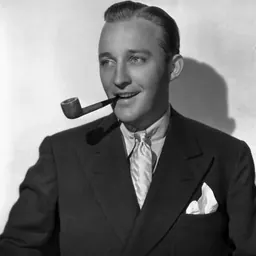

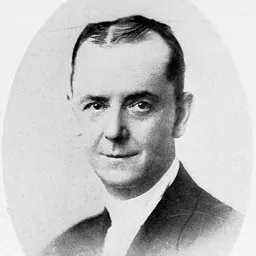
Related people
Same field, nearest in time


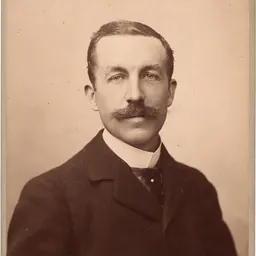
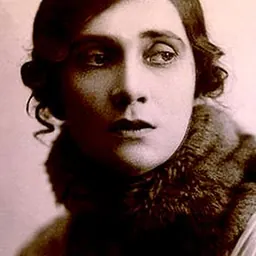
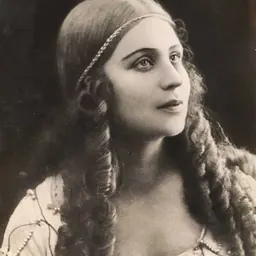
Contemporaries
People whose lives overlapped Trixie Friganza's

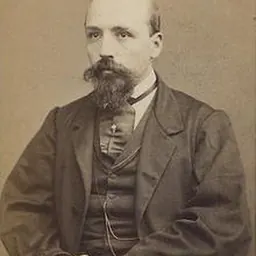
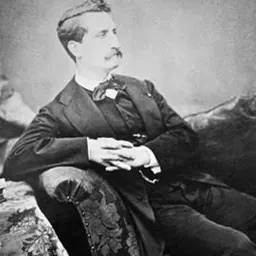


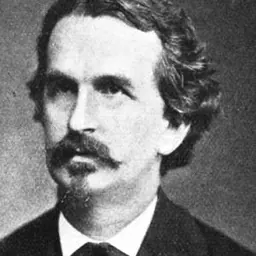
Frequently asked questions
Who was Trixie Friganza?
American actress (1870-1955)
When was Trixie Friganza born?
Trixie Friganza was born on 29 November 1870 in Grenola.
When did Trixie Friganza die?
Trixie Friganza died on 27 February 1955 in La Cañada Flintridge.
What was Trixie Friganza's occupation?
Trixie Friganza was an actor, stage actor, film actor and suffragist.
What nationality was Trixie Friganza?
Trixie Friganza was American.
Sources & further reading
Cite this page
APA: Biography.guide. (2026). Trixie Friganza. https://biography.guide/trixie-friganza/
MLA: "Trixie Friganza." Biography.guide, https://biography.guide/trixie-friganza/.
Chicago: "Trixie Friganza." Biography.guide. https://biography.guide/trixie-friganza/.
Data last updated: 2026-09-23 · Spot an error? Report a correction.
Portrait: Wikimedia Commons · author & licence
Page generated 2026-09-27 05:07 UTC