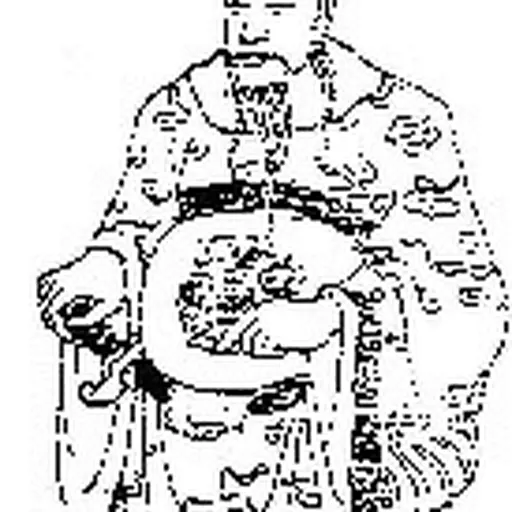
Trinh Kiem
Vietnamese Trinh Lord
About Trinh Kiem
Lived 1503 – 1570 (aged 66). Trinh Kiem was a Vietnamese.
Trịnh Kiểm (1503–1570) posthumously titled Thế Tổ Minh Khang Thái Vương (世祖明康太王), was an influential political and military figure of Đại Việt during the Southern and Northern Dynasties period. In name, he served as a supporter of the Revival Lê dynasty emperors, but in reality, he was the actual leader of the Southern Dynasty from 1545 onwards. Though his highest title during his lifetime was Thái Quốc Công (Grand Duke of the State), he is often regarded as the first Chúa (Lord) of the Trịnh family. He established his family as hereditary governors of Vietnam, ruling in the name of the figurehead Later Lê emperors.
Trịnh Kiểm was born into a poor family in Vĩnh Lộc now known as modern day Thanh Hoa. During his youth, he witnessed the Mạc Dynasty usurp the Lê throne, leading him to join Grand Duke Nguyễn Kim who was raising an army and war against the Mạc, supporting Lê Trang Tông as emperor. Recognizing Trịnh Kiểm’s exceptional prowess and strategic abilities, Nguyễn Kim married his daughter, Nguyễn Thị Ngọc Bảo, to him, entrusted him with military command, and promoted him to the title Dực Nghĩa Hầu (Marquis). Trịnh Kiểm achieved numerous victories against the Mạc forces. Which led the Emperor Lê Trang Tông himself trusting him greatly, promoting him to Đại tướng quân (Grand General) with the noble title Dực Quận Công (Grand Duke), in 1539 when he was 37 years old.
After his father-in-law Nguyễn Kim’s death in 1545, Trịnh Kiểm took over leadership of the government and military of the Lê Dynasty until his death, serving under three Lê emperors: Lê Trang Tông, Lê Trung Tông, and Lê Anh Tông. Although he was the de facto ruler of Vietnam, he never assumed a higher position for himself. When he died, his son Trịnh Tùng declared himself a lord and conferred this title posthumously upon his dead father.
Early life Trịnh Kiểm’s childhood name was Trịnh Phiến (鄭𭪤), later changed to Kiểm. He was born on September 14, 1503 to Trịnh Lâu, and Hoàng Thị Ngọc Dốc, during the Cảnh Thống era of Emperor Lê Hiến Tông. He was the third of seven siblings, with four brothers and two sisters. Trịnh Khả, his great-grandfather was a regent during the reign of child-king Lê Nhân Tông, and was a close ally to Lê Lợi considered to be one of Vietnam’s greatest heroes. His birthplace was his mother’s birthplace the village of Hổ, in Vệ Quốc commune, Yên Định district, Thanh Hoa province. It was said that when he was born, a red light filled the entire room, astonishing the entire village. From a young age, he was known to be intelligent and stood out from others.
When Kiểm was six years old, his father, the family's breadwinner died. This caused his family's financial and social status to deteriorate, and they faced disdain and discrimination from other villagers. As a result, he and his mother had to relocate to the village of Sóc Sơn. To survive, Kiểm worked as a buffalo herder in the Lệ Sơn mountains at a young age. While tending buffalos, he often gathered groups of other village children, where at times due to poverty and hunger they stole chickens and ducks for food. They often played war games—splitting into teams, using the buffalo as war elephants and horses, reeds as banners, practiced fighting armed with knives and salt pots, and organizing different battle formations.
One day he came across a injured buffalo in a nearby area; knowing it was going to die eventually, he killed and cooked it to treat his friends. A villager gathering firewood came across the scene and confronted them. All the children fled except for Kiểm, who remained seated where he was. When questioned, he calmly replied:
The villagers then accused him of theft, dragged him to the village hall for punishment, where many debated whether to drown him to death in the river or report him to the officials. Ultimately, the village chief decided to expel him and his mother from returning. After being expelled, Kiểm moved to Bồ Xuyên village in Yên Mô district.
At the age of 24 (1526), he married a woman from the Trần family, whose name is recorded as Ngọc Lĩnh. He lived with her in Bồ Xuyên, but historical records do not provide further details about her fate.
Stealing his master’s horse In 1527, Dai Viet was in chaos. The ruling Lê dynasty had been overthrown by Mạc Đăng Dung, a former general who seized the throne. Many loyalists of the Lê dynasty refused to accept this change and fled to organise resistance movements. Among them was Nguyễn Kim, a powerful noble who retreated to the remote region of Cổ Lũng (modern-day Cẩm Thủy District) to plan an uprising against the Mạc, and advanced his troops. During this time, a Mạc general named Ninh Bang Hầu established his base in Vĩnh Ninh (Modern day Vĩnh Lộc). His army controlled the surrounding regions, ensuring they retain their loyalty to the new Mạc rulers. Kiểm and his mother sought refuge under Ninh Bang Hầu, hoping for stability and a better life. His mother personally begged the general to take her son into service as a household retainer, pleased with his spirit, he agreed. He assigned Trịnh Kiểm to oversee the farming estates in the hamlet Thọ Liêu where he was responsible for raising livestock, including buffaloes and horses, something he was specialized and experienced in. During his daily routine, Trịnh Kiểm befriended a Cham man who also worked in the estate named Vũ Thì An, who was an expert in training horses. Under his teachings, Trịnh Kiểm also learned how to recognise and train superior horses breeds himself.:
War with the Mac Dynasty In 1546, the Northern emperor Mạc Phúc Hải died, and his son Mạc Phúc Nguyên took the throne. However, because Phúc Nguyên was still young, factions within the court began plotting to overthrow him. Feeling unsafe, he abandoned the main royal palace in Thăng Long and moved outside the city, throwing the capital into chaos.
After Emperor Lê Trang Tông of the Southern court died in 1548, his son Lê Trung Tông, still a child, ascended the throne. Because of the king’s youth, General Kiểm chose to focus on stabilizing the regions and protecting the people rather than launching any major northern campaigns. As a result, both sides of the conflict briefly experienced peace, and the people enjoyed a few years of stability. In 1550, Northern grand chancellor Lê Bá Ly, after being slandered at court, defected from the Mạc and surrendered to the Southern Lê court, following him over 13,000 troops from Sơn Tây and Sơn Nam. He also wrote letters encouraging other northern advisors and generals, like Nguyễn Hữu Liêu and Đặng Huấn, to follow his lead. According to historian Lê Quý Đôn in ‘Kiến Văn Tiểu Lục’, this marked the beginning of the Mạc Dynasty’s decline and the rise of the Lê army’s reputation.
In 1551, Trịnh Kiểm assigned Lê Bá Ly to attack Sơn Nam and Vũ Văn Mật to attack Tuyên Quang, then convened with them in Thăng Long. Before the campaign, he wrote a letter in the Nôm script, urging everyone to remember King Lê Thái Tổ’s past efforts in expelling the Ming invaders and gaining independence for Vietnam, to now once again unite in supporting the Lê king and eliminate the Mac usurpers.
The three generals launched simultaneous attacks. In 1552, Trịnh Kiểm led troops to suppress the southwestern region, and Mạc general Nguyễn Khải Khang surrendered. After capturing the citadel, he withdrew to Tây Đô to avoid a surprise attack from Mạc reinforcements. In May 1552, Trịnh Kiểm launched an offensive from Hủng Hoá, crossing the Thao River to An Lạc. He defeated Mạc troops commanded by Prince Khiêm, Mạc Kính Điển. He then advanced to Xuân Canh Lâm Hạ, winning several more battles. Mạc Phúc Nguyên, frightened, fled to Kim Thành. The Lê army entered Đông Kinh and held a banquet to reward the soldiers. They captured several prefectures in the Sơn Tây and Sơn Nam regions; the Mạc retained only the Eastern and Northern routes. Nguyễn Khải Khang and Lê Bá Ly proposed bringing the emperor back to Thăng Long, but Trịnh Kiểm believed the Mạc were still strong and public sentiment hadn’t fully shifted to the Lê. Therefore, he didn’t sign the petition. Upon reading the petition and understanding Trịnh Kiểm’s intentions, the king ordered a retreat. Mạc Phúc Nguyên, upon hearing of the Southern army’s withdrawal, dispatched troops to pursue them at Nam Công Mountain. However, Trịnh Kiểm defeated the Mạc pursuers and returned to Thanh Hoa. From then on, Đông Kinh and the Sơn Tây and Sơn Nam regions reverted to Mạc control.
By August 1555, the Northern court regained strength. Emperor Mạc Phúc Nguyên ordered Mạc Kính Điển to invade Thanh Hoa, appointing Duke Thọ as commander of the Southern route army, leading 100 warships as the vanguard, advancing straight to the Thần Phù estuary. Sau Mạc Kính Điển hội quân đóng ở sông Đại Lại, Later, Mạc Kính Điển’s forces camped at the Đại Lại River, assigning Duke Thọ to station at Kim Sơn. Prince Khiêm, Mạc Kính Điển, was a formidable opponent to Duke Lượng, Trịnh Kiểm, and the Lê–Trịnh faction. As acknowledged by Lê historians in the “Đại Việt Sử ký Toàn thư”: “Kính Điển was benevolent, brave, intelligent, resourceful, perceptive, experienced in hardships, diligent, and loyal.
Trịnh Kiểm convened a meeting with his generals:
He instructed the villagers on both riverbanks to remain calm. He personally led troops to set up ambushes at Bạch Thạch Mountain phía Bắc Sông, lại sai binh tượng hùng mạnh mai phục dưới núi Kim Sơn, lại sai Thái úy Hùng quốc công Đình Công đốc suất các tướng cũ của Nhà Mạc đầu hàng quân Nam triều là Lê Bá Ly, Nguyễn Khải Khang... cùng quân bản bộ mai phục ở phía nam sông. Từ núi Yên Định cho tới núi Quân Yên, north of the river, deployed strong elephant troops to ambush at the foot of Kim Sơn Mountain, and ordered Grand Marshal Duke Hùng, Đinh Công, to lead former Mạc generals who had defected to the Southern court, such as Lê Bá Ly and Nguyễn Khải Khang, along with their troops, to ambush south of the river. From Yên Định Mountain to Quân Yên Mountain, he assigned Phạm Đốc and Nguyễn Quyện to lead naval forces to occupy the upper reaches from the Hữu Chấp River to the Kim Bôi River to create a strategic advantage. As the Mạc army passed through Kim Sơn to Ông Tập market, they remained overconfident, unguarded, and their troops were known for playing music and singing, as if entering an uninhabited area.
At noon, Đinh Công and Lê Bá Ly signaled with seven cannon shots, launching their attack; troops and war elephants from the lower river crossed to intercept the Mạc rear guard, while the upper river naval forces attacked the front, and troops from all sides overwhelmed the Mạc army. Duke Thọ had to jump into the river and was captured alive by Duke Triều, Vũ Sư Thước. Mạc general Vạn Đôn Hầu and several dozen officers drowned; Kính Điển gathered the remnants and retreated to Thăng Long. Trịnh Kiểm reported the victory to King Lê Trung Tông. The king ordered the execution of Duke Thọ and several dozen other Mạc generals at Đồng Lộc Mountain.
In July 1557, Mạc Phúc Nguyên ordered Mạc Kính Điển to attack Thanh Hoa again, assigning generals Phạm Quỳnh and Phạm Dao to lead naval forces across the sea to attack Nghệ An. Mạc Kính Điển’s naval forces reached the Thần Phù River and Tống Sơn, Nga Sơn Nga Sơn regions, burning all floating bridges of the Southern court. Trịnh Kiểm stationed Duke Thanh at Nga Sơn and Duke Thụy at Tống Sơn, preventing the Mạc army from advancing. Trịnh Kiểm personally led troops, secretly moving along Yên Mô Mountain to the estuary, launching an attack on the Mạc army’s rear, trapping them. During the battle, Trịnh Kiểm ordered Vũ Lăng Hầu, Phạm Đức Kỳ of Hoằng Hóa, to lead the vanguard. Encountering Mạc Kính Điển’s ship, Phạm Đức Kỳ leaped onto it, drew his sword, and cut the umbrella bearer in half, causing the body to fall into the river. Kính Điển, caught off guard, jumped into the river to escape. The Mạc army was defeated, with soldiers fleeing into the mountains; the Southern court captured many weapons. Mạc Kính Điển swam into a cave in Trị Nội village, Yên Mô district, hiding for three days without food. One night, seeing a banana tree floating by the cave entrance, he clung to it, swam back, and fortunately reached Trinh Nữ wharf in Yên Mô, where someone rescued him, allowing him to return safely.
Succession In 1569, in failing health, Trịnh Kiểm passed power to his eldest son, Trịnh Coi. In 1570, Trịnh Kiểm died. In the same year, Trịnh Coi was defeated by a Mạc army and was replaced by his younger, more capable brother, Trịnh Tùng.
Don’t just read it —
keep it.
Full-length biographies made to live with: read them, listen on the way to work, watch them tonight.
- E-book
- Audio
- Video
Instant download · yours to keep · every purchase keeps this site free
Important facts
Family & relationships
People in Trinh Kiem's life
Named in this biography and alive at the same time

Contemporaries
People whose lives overlapped Trinh Kiem's






Frequently asked questions
Who was Trinh Kiem?
Vietnamese Trinh Lord
When was Trinh Kiem born?
Trinh Kiem was born on 14 September 1503 in Thanh Hóa.
When did Trinh Kiem die?
Trinh Kiem died on 24 March 1570.
What nationality was Trinh Kiem?
Trinh Kiem was Vietnamese.
Sources & further reading
Cite this page
APA: Biography.guide. (2026). Trinh Kiem. https://biography.guide/trinh-kiem/
MLA: "Trinh Kiem." Biography.guide, https://biography.guide/trinh-kiem/.
Chicago: "Trinh Kiem." Biography.guide. https://biography.guide/trinh-kiem/.
Data last updated: 2026-09-20 · Spot an error? Report a correction.
Portrait: Wikimedia Commons · author & licence
Page generated 2026-09-27 04:58 UTC