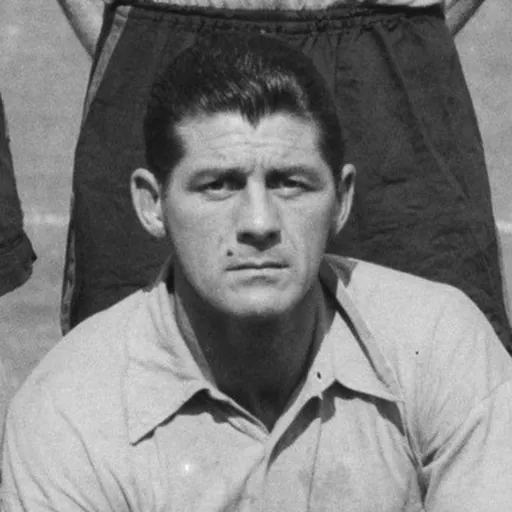
About Trevor Ford
Lived 1923 – 2003 (aged 79). Trevor Ford was a British association football player and cricketer.
Trevor Ford (1 October 1923 – 29 May 2003) was a Welsh professional footballer who played as a forward for Swansea Town, Aston Villa, Sunderland, Cardiff City, PSV Eindhoven, Newport County and Romford, as well as for the Wales national team. A prolific scorer throughout his career, he scored 202 league goals in 401 matches, the majority coming in the First Division during a career that spanned fifteen years.
Described by The Independent as a "fearsomely physical" forward,
In October 1950, he transferred to Sunderland for the sum of £30,000, breaking the British transfer fee record at the time. At Sunderland, Ford formed a strike partnership with England international Len Shackleton, known as the "clown prince of football". However the relationship between the two was acrimonious and the club was unable to mount a title challenge despite their investment, finishing in mid-table in each of Ford's seasons at Roker Park. He left Sunderland in 1953 to return to Wales with Cardiff City. He spent three seasons at Ninian Park before being suspended by the Football Association after revealing details of illegal payments being made to players during his time at Sunderland in an attempt to avoid the maximum wage at the time. Unable to play in Britain due to the suspension, Ford joined Dutch side PSV Eindhoven but returned to Britain in 1960 when his suspension was lifted to finish his career with short spells at Newport County and Romford.
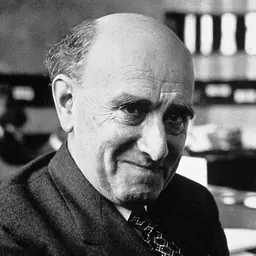
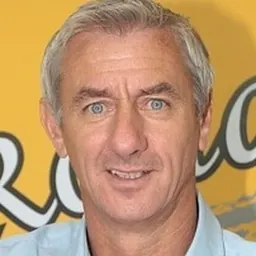
During his career, Ford represented Wales on 38 occasions and became his country's all-time record top goalscorer with 23 goals which stood until it was equaled by Ivor Allchurch and later surpassed by Ian Rush and Gareth Bale. Due to his suspension from the game at the time, Ford was overlooked for selection for the 1958 FIFA World Cup. John Charles described Ford as his idol.
Early life Born in Swansea, Ford was the second child of Trevor and Daisy Ford. His father, Trevor Sr, had been a physical training instructor during the First World War before returning to South Wales to work as a delivery van driver and later at a local cinema, eventually being promoted to manager. He grew up in the Townhill district of the city and attended Powys Avenue School as a child, captaining the school's football side as a centre-half.
Ford's father would often make him practice his football for two hours each day, using a tennis ball on his stronger right foot to improve control. He would also soak a leather football in water and make him wear an ordinary plimsoll on his stronger foot to stop Ford kicking the heavy ball with it. After moving into secondary school, Ford met teacher David Benyon, who was a prominent figure in youth football in the area and included him in the Swansea boys team he managed. Ford was selected to represent Wales at under-14 level in a series of matches against the other home nations of Britain but suffered a broken ankle in a match for his school side just days before the first scheduled fixture against Scotland. He would go on to finish as the club's top scorer in the following three seasons, once scoring four times during a 5–1 victory over local rivals Wolverhampton Wanderers on 27 December 1948. He was seen as a footballing celebrity at the time due to his prolific scoring record having made 128 appearances for Villa between January 1947 and October 1950 scoring 61 goals.
"I think I shall settle down and not let this £30,000 tag worry me, but at the moment I hope someone else soon takes over the costliest player in the game." — Ford commenting on the pressure of his record transfer to Sunderland Billy Bingham, who played alongside the pair at Sunderland, later commented "He (Ford) never seemed to know what Shackleton was going to do with the ball and subsequently Trevor believed that Shackleton was ignoring him on the field of play". Ford still holds the club record for the fastest goal scored for the club, which he set on 23 October 1954 against Charlton Athletic, after just fifteen seconds.
After leaving Cardiff in 1956, he released his autobiography I Lead the Attack in which he revealed that he was involved in an illegal-payments scandal while at Sunderland, with the club attempting to circumvent the maximum wage at the time by offering payments and other incentives to players. The revelations saw the club suffer heavy financial penalties and Ford was temporarily suspended from the game. However, he maintained that he never regretted releasing the book. He eventually won his case for reinstatement, returning to The Football League with a brief spell at Newport County in the Third Division.
International career Ford made his first appearance for Wales on 4 May 1946 in a 1–0 defeat to Northern Ireland in a wartime international. He won his first official cap soon after, making a goal scoring debut in Wales' first official international since the end of the war, a 3–1 victory over Scotland in 1946–47 British Home Championship at the Racecourse Ground in Wrexham. He missed the following match of the competition against England but returned to the side for the final match of the competition, scoring Wales' goal in a 2–1 defeat to Ireland. He continued his scoring start for Wales with another goal against Scotland in the following British Home Championship in 1947, his third goal in his first three matches for his country.
Cricket career Ford was a keen cricketer from an early age and would often turn out for a team representing Aston Villa against local sides. In 1955, he turned out for Glamorgan Cricket Club in a charity benefit match for Allan Watkins against Abergavenny Cricket Club, playing alongside players such as Gilbert Parkhouse, Jim Pressdee and Harold Gimblett. His Wales international teammates Billy Lucas and Alf Sherwood were also due to play in the match.
In August 1968, at the age of 44, Ford, who had represented Wales at schoolboy level at cricket, briefly acted as a substitute fielder for Glamorgan in their County Championship match against Nottinghamshire at St. Helen's, Swansea in the match during which Sir Garfield Sobers hit his world record six sixes from an over bowled by Malcolm Nash.
After football Following his retirement, Ford entered the car trade and worked in garages in Cardiff, Swansea and Sunderland.
Career statistics
Club
Honours Cardiff City Welsh Cup: 1955–56
Don’t just read it —
keep it.
Full-length biographies made to live with: read them, listen on the way to work, watch them tonight.
- E-book
- Audio
- Video
Instant download · yours to keep · every purchase keeps this site free
Important facts
People in Trevor Ford's life
Named in this biography and alive at the same time





Related people
Same field, nearest in time


Contemporaries
People whose lives overlapped Trevor Ford's


Frequently asked questions
Who was Trevor Ford?
Welsh association football player (1923-2003)
When was Trevor Ford born?
Trevor Ford was born on 1 October 1923 in Swansea.
When did Trevor Ford die?
Trevor Ford died on 29 May 2003 in Swansea.
What was Trevor Ford's occupation?
Trevor Ford was an association football player and cricketer.
What nationality was Trevor Ford?
Trevor Ford was British.
Sources & further reading
Cite this page
APA: Biography.guide. (2026). Trevor Ford. https://biography.guide/trevor-ford/
MLA: "Trevor Ford." Biography.guide, https://biography.guide/trevor-ford/.
Chicago: "Trevor Ford." Biography.guide. https://biography.guide/trevor-ford/.
Data last updated: 2026-09-23 · Spot an error? Report a correction.
Portrait: Wikimedia Commons · author & licence
Page generated 2026-09-27 05:08 UTC