
Tran Nhat Duat
Vietnamese prince
About Tran Nhat Duat
Lived 1255 – 1330 (aged 74–75). Tran Nhat Duat was a Vietnamese.
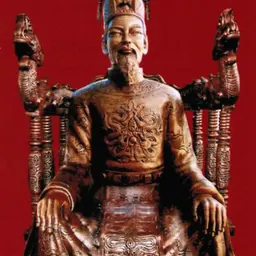
Prince Chiêu Văn Trần Nhật Duật (1255–1330) was the sixth son of Trần Thái Tông, first emperor of the Trần dynasty. Being a younger brother of the emperor Trần Thánh Tông, Trần Nhật Duật was one of the most important figures of the Trần family and royal court during the reigns of four successive emperors: Thánh Tông, Nhân Tông, Anh Tông and Minh Tông. In the second war of resistance against Mongol invasion, Trần Nhật Duật was the general who commanded the Đại Việt army to defeat the navy of Mongol general Sogetu in the Battle of Hàm Tử, one of the biggest victories of the Trần dynasty. With his knowledge of numerous foreign languages and cultures, Prince Chiêu Văn was also a prominent diplomat of the Trần dynasty who helped the emperor to maintain good relations with several ethnic groups in the northwestern region of Đại Việt.
Background Trần Nhật Duật was born in 1255 as the sixth son of the emperor Trần Thái Tông. According to Đại Việt sử kí toàn thư, Trần Nhật Duật was born with four characters "Chiêu Văn đồng tử" ("pupil of Chiêu Văn") in his arm, which is why he was entitled Prince Chiêu Văn (Vietnamese: Chiêu Văn vương) in 1268. Besides the emperor Trần Thánh Tông, Trần Nhật Duật had two other famous elder brothers, Prince Chiêu Minh (Chiêu Minh vương) Trần Quang Khải, who was grand chancellor of royal court, and Prince Chiêu Quốc (Chiêu Quốc vương) Trần Ích Tắc, who was broadly known not only for his intelligence
Since he was young, Trần Nhật Duật began to make friends with many foreigners from Champa or the Song dynasty with whom he could discuss by their own languages and customs. One of them was Triệu Trung, a refugee from China, who eventually became Trần Nhật Duật's subordinate during the war against the Yuan dynasty. Prince Chiêu Văn spoke foreign languages, even some exotic ones, so well that he was once mistaken as a Chinese by an Yuan ambassador.
Military activities In 1279, the Yuan dynasty had the decisive victory over the Song dynasty in the Battle of Yamen which marked the end of the Song dynasty and the total control of Kublai Khan over China. As a result, Kublai Khan began to expose his attempt to take over the southern countries like Đại Việt or Champa. In December 1284, the second Yuan's invasion of Đại Việt was opened under the command of Kublai Khan's prince Toghan. Đại Việt was attacked in two directions: Toghan himself conducted the infantry invaded from the northern border while Yuan's navy under general Sogetu advanced from the southern border through Champa's territory. Ultimately, Sogetu's army suffered heavy defeat in the Battle of Hàm Tử, where Trần Nhật Duật commanded allied troops of Đại Việt soldiers and former Song refugees.
During the reign of Trần Anh Tông, Prince Chiêu Văn and general Phạm Ngũ Lão were responsible for the quelling some rebellions in northern region.
In the imperial court Holding several high positions during the reigns of four successive emperors, Thánh Tông, Nhân Tông, Anh Tông and Minh Tông, Prince Chiêu Văn became an important figure of both the royal family and royal court; he was appointed as grand chancellor in 1302 during the reign of Anh Tông. Since the other sons of Anh Tông all died at a young age, the emperor had Trần Nhật Duật take the duty of bringing up crown prince Trần Mạnh, his only surviving son. Indeed, Prince Trần Mạnh was well looked after due to the wholehearted devotion of Trần Nhật Duật and finally became the emperor Trần Minh Tông. It was also Trần Nhật Duật and Trần Quốc Tú who assisted the 12-year-old Crown Prince Trần Mạnh in ruling the country when Anh Tông was away for a military campaign against Champa in 1312.
Trần Nhật Duật died in 1330 at the age of 77.
Family Trần Nhật Duật had one wife, Lady Trinh Túc, who was of Thanh Hóa origin, so his other concubines all came from Thanh Hóa and descendants of Prince Chiêu Văn were often appointed as officials in this region. The only son of Trần Nhật Duật is Marquis Cương Đông Văn Hiến (Cương Đông Văn Hiến hầu), who plotted with Trần Khắc Chung the defamation campaign which led to the death of Trần Quốc Chẩn, father-in-law of the emperor and prominent general, to keep the position of throne successor for prince Trần Vượng.
Legacy In his work Đại Việt sử kí toàn thư, the court historian Ngô Sĩ Liên praised Trần Nhật Duật as not only a capable official but also a gentleman of intelligence and culture. He was a polyglot and was known to be able to converse in Chinese, Cham and Malay. Despite holding high position in royal court for many years, Prince Chiêu Văn always kept an amiable, tolerant attitude and was well known as a scholar with wide knowledge. Therefore, he was compared with Guo Ziyi, one of the greatest generals and mandarins in Chinese history.
Don’t just read it —
keep it.
Full-length biographies made to live with: read them, listen on the way to work, watch them tonight.
- E-book
- Audio
- Video
Instant download · yours to keep · every purchase keeps this site free
Important facts
Family & relationships
People in Tran Nhat Duat's life
Named in this biography and alive at the same time


Contemporaries
People whose lives overlapped Tran Nhat Duat's




Frequently asked questions
Who was Tran Nhat Duat?
Vietnamese prince
When was Tran Nhat Duat born?
Tran Nhat Duat was born in 1255 in Hanoi.
When did Tran Nhat Duat die?
Tran Nhat Duat died in 1330.
What nationality was Tran Nhat Duat?
Tran Nhat Duat was Vietnamese.
Sources & further reading
Cite this page
APA: Biography.guide. (2026). Tran Nhat Duat. https://biography.guide/tran-nhat-duat/
MLA: "Tran Nhat Duat." Biography.guide, https://biography.guide/tran-nhat-duat/.
Chicago: "Tran Nhat Duat." Biography.guide. https://biography.guide/tran-nhat-duat/.
Data last updated: 2026-09-20 · Spot an error? Report a correction.
Page generated 2026-09-27 05:13 UTC