
About Towner K. Webster
Lived 1849 – 1922 (aged 73). Towner K. Webster was an American entrepreneur.
Towner Keeney Webster (1849–1922) was an American industrialist and business leader who started several businesses, including Webster Manufacturing and Webster Electric.
Early years Webster was born in Ithaca, New York. His father, Dr. Henry Keeney Webster (1800–1857), died when he was eight years old. His mother, Sarah Haviland (1811–1885), was left with little money and three children to raise. By age 12, Webster had a full-time job and never achieved more than a grade school education. When he turned 18, he traveled alone to Chicago and began work at a dry goods store. Within a year or two, his mother and two older sisters followed. All settled in Evanston, Illinois. Webster's first business, a drug and grocery store on Davis Street in Evanston, was a success. He sold his interest in the grocery to his partner, so he could start a clothing store. The clothing store failed. Shortly thereafter, in 1874, he married Emma Josephine Kitchell (1850–1937). Webster needed to find a new way to make a living.
Webster Manufacturing Towner K. Webster at Western Avenue. Courtesy of the Webster Family. Webster became intrigued with an invention called the "'Common-sense' elevator bucket." These buckets were easily manufactured, and when attached to a continuous belt could carry large amounts of grain to the tops of grain elevators. Because of developments like Cyrus McCormick's reaper, elevators were springing up all over the Midwest. In 1876, he began making common-sense buckets in a small shop on Kinzie Street in Chicago. His company grew quickly as he developed machinery for handling grain. He acquired partners and built his first factory in 1882. It doubled and then redoubled in size, and in 1889 Webster moved to a new plant on Western Avenue and Fifteenth Street. His partners dropped out, the firm became the Webster Manufacturing Company.
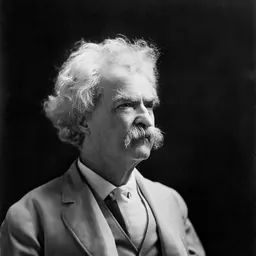
In the early 1890s a group of investors, one of whom was Mark Twain, gave Webster Manufacturing the contract to make the Paige Compositor. The device, which set type, was a complicated mechanical marvel with 18,000 parts. Webster built a new five-story building at the Western Avenue plant to deliver 3000 compositors under the contract. Unfortunately, the compositor was expensive to manufacture and when it broke down only the inventor's chief engineer, Charles Davis, could fix it. The rival linotype machine soon came to dominate the typesetting market. What had seemed like a profitable business venture, cost Mark Twain a fortune and almost bankrupt Webster Manufacturing. Fewer than half-a-dozen machines were actually built. The sole remaining Paige compositor is housed at the Mark Twain House and Museum in Hartford, Connecticut.
In 1897, having returned to his core business, Webster built a two-million-bushel grain elevator on the newly opened Manchester Ship Canal in England. That project provided the inspiration for one of Henry Kitchell Webster's early novels. In 1907, Webster moved his firm to Tiffin, Ohio where it exists today as Webster Industries. To finance the move to Tiffin, Webster took on outside investors. Dissatisfied with company profits and Webster's management style, they assumed control of the company.
The magneto was a profitable product, but it was gradually supplanted by other ignition systems. After Webster's death, the company struggled until the 1930s, when it introduced a popular intercom called the Teletalk. Then, in 1946, Webster Electric debuted the Ekotape recorder, and was for a time a pioneer in magnetic recording. The company was eventually sold to Sta-Rite Industries.
Business and civic leadership In 1903, Webster helped found the City Club of Chicago, a social club whose object was “the investigation and improvement of the city of Chicago.” Webster served as the club's second president and was an occasional speaker. The City Club is today the longest-running civic forum in Chicago.
As Webster Manufacturing grew, he became increasingly involved with labor unions. Unlike many manufacturers, however, Webster believed workers had a right to a decent living wage. While he opposed union attempts to limit output, he defended their right to organize. In a speech on open versus closed shops, he argued “I think the union stands as a great middle wall between the small manufacturer and the great overwhelming power of organized capital.” His straightforward solution to labor unions was to “grant a fair day’s work for a fair day’s pay.” In 1907, when the contract between the Chicago newspaper publishers and the Typographical Union expired, they were unable to come to terms. Webster was selected as the sole arbitrator and found a solution acceptable to both parties. As Walter A. Strong noted, "His decision at so critical a stage in the development of relations between capital and labor and in union practice attracted the attention of many industries in addition to newspapers."
Notable descendants
Henry Kitchell Webster (1875–1932) - Novelist Josephine Webster Strong (1883–1961) Maurice Webster (1892–1982) - Architect Stokely Webster (1912–2001) - Artist Jonathan Strong (1944–present) - Novelist James G. Webster (1951–present) - Professor
Don’t just read it —
keep it.
Full-length biographies made to live with: read them, listen on the way to work, watch them tonight.
- E-book
- Audio
- Video
Instant download · yours to keep · every purchase keeps this site free
Important facts
People in Towner K. Webster's life
Named in this biography and alive at the same time


Related people
Same field, nearest in time


Contemporaries
People whose lives overlapped Towner K. Webster's



Frequently asked questions
Who was Towner K. Webster?
1849
When was Towner K. Webster born?
Towner K. Webster was born on 15 July 1849 in Ithaca.
When did Towner K. Webster die?
Towner K. Webster died on 11 October 1922 in Evanston.
What was Towner K. Webster's occupation?
Towner K. Webster was an entrepreneur.
What nationality was Towner K. Webster?
Towner K. Webster was American.
Sources & further reading
· Wikipedia: Towner K. Webster
Cite this page
APA: Biography.guide. (2026). Towner K. Webster. https://biography.guide/towner-k-webster/
MLA: "Towner K. Webster." Biography.guide, https://biography.guide/towner-k-webster/.
Chicago: "Towner K. Webster." Biography.guide. https://biography.guide/towner-k-webster/.
Data last updated: 2026-09-26 · Spot an error? Report a correction.
Page generated 2026-09-27 05:14 UTC