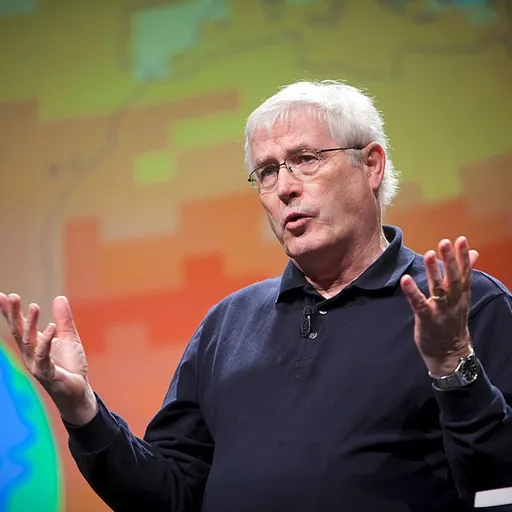
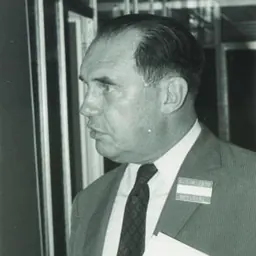
Tony Hey
British physicist and computer scientist
About Tony Hey
Born 1946. Tony Hey is a British computer scientist, physicist and university teacher.
Education Hey was educated at King Edward's School, Birmingham in 1970 supervised by P. K. Kabir. He was a student of Worcester College, Oxford and St John's College, Oxford. In 1990 he was a visiting fellow at the Thomas J. Watson Research Center of IBM Research. He then worked with Jack Dongarra, Rolf Hempel and David Walker, to define the Message Passing Interface (MPI) which became a de facto open standard for parallel scientific computing. In 1998 he was a visiting research fellow at Los Alamos National Laboratory in the USA.
Hey led the UK's e-Science Programme from March 2001 to June 2005. He was appointed corporate vice-president of technical computing at Microsoft on 27 June 2005. Later he became corporate vice-president of external research, and in 2011 corporate vice-president of Microsoft Research Connections until his departure in 2014.
Since 2015, Hey has held the position of Chief Data Scientist at the UK's Science and Technology Facilities Council, and is a Senior Data Science Fellow at the University of Washington eScience Institute.
Hey is the editor of the journal Concurrency and Computation: Practice and Experience. Among other scientific advisory boards in Europe and the United States, he is a member of the Global Grid Forum (GGF) Advisory Committee.
Publications Hey has authored or co-authored a number of books including The Fourth Paradigm: Data-Intensive Scientific Discovery, The Quantum Universe, The New Quantum Universe, The Feynman Lectures on Computation and Einstein's Mirror. Hey has also authored numerous peer-reviewed journal papers. His latest book is a popular book on computer science called The Computing Universe: A Journey through a Revolution.
Awards and honours Hey had an open scholarship to Worcester College, Oxford, from 1963 to 1967, won the Scott Prize for Physics in 1967, senior scholarship to St John's College, Oxford, in 1968 and was a Harkness Fellow from 1970 through 1972. In 2017 he was elected a Fellow of the Association for Computing Machinery (ACM).
Don’t just read it —
keep it.
Full-length biographies made to live with: read them, listen on the way to work, watch them tonight.
- E-book
- Audio
- Video
Instant download · yours to keep · every purchase keeps this site free
Important facts
People in Tony Hey's life
Named in this biography and alive at the same time



Related people
Same field, nearest in time

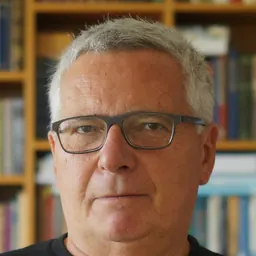

Contemporaries
People whose lives overlapped Tony Hey's
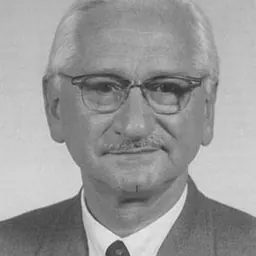
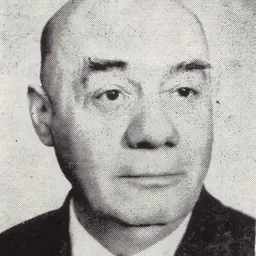
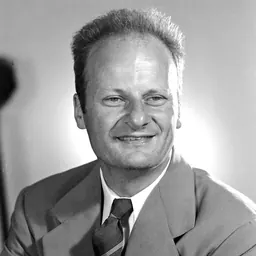

Frequently asked questions
Who is Tony Hey?
British physicist and computer scientist
When was Tony Hey born?
Tony Hey was born on 17 August 1946 in Birmingham.
What is Tony Hey's occupation?
Tony Hey is a computer scientist, physicist and university teacher.
What nationality is Tony Hey?
Tony Hey is British.
Sources & further reading
Cite this page
APA: Biography.guide. (2026). Tony Hey. https://biography.guide/tony-hey/
MLA: "Tony Hey." Biography.guide, https://biography.guide/tony-hey/.
Chicago: "Tony Hey." Biography.guide. https://biography.guide/tony-hey/.
Data last updated: 2026-09-22 · Spot an error? Report a correction.
Portrait: Wikimedia Commons · author & licence
Page generated 2026-09-27 05:03 UTC