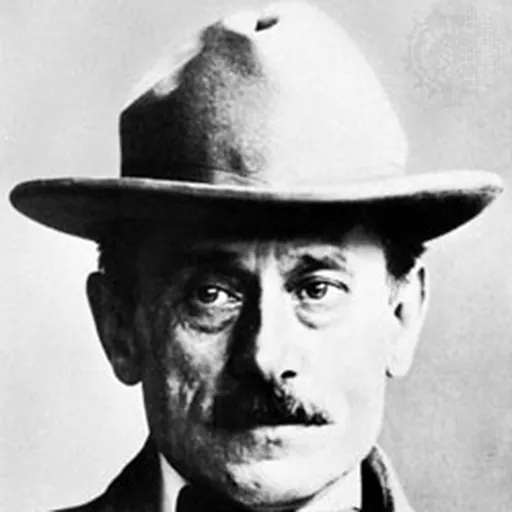
About Tony Garnier
Lived 1869 – 1948 (aged 78). Tony Garnier was a French architect, urban planner and painter.
Tony Garnier (13 August 1869 – 19 January 1948) was a noted French architect and city planner. He was most active in his home city of Lyon, where he notably designed the Halle Tony Garnier and Stade de Gerland. Garnier is considered one of the forerunners of 20th-century French architects.
Biography After learning painting and drafting at the École Technique de la Martinière in Lyon (1883–1886), Garnier studied architecture at the École nationale des beaux-arts de Lyon (1886–1889) and the École nationale supérieure des Beaux-Arts in Paris (1890–1899). In 1899 he won the Prix de Rome for a design of a national bank. The prize enabled him to reside at the Villa Medici in Rome for four years, until 1904. During his stay in Rome he began working on the project of an industrial city that became his main contribution to town planning.
In 1901, after extensive study of sociological and architectural problems, he began to formulate an elaborate solution to the perceived issues concerning urban design. His basic idea included the separation of spaces by function through zoning into several categories: industrial, civic, residential, health related, and entertainment. Garnier's drawings for an ideal industrial city called Une cité industrielle were initially exhibited in 1904, but only published later in 1918.
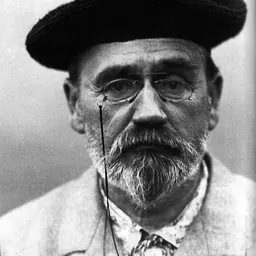
Une Cité Industrielle was designed as an utopian form of living, for 35,000 inhabitants. It was located between a mountain and a river to facilitate access to hydroelectric power. This plan was highly influenced by the writings of Émile Zola, in particular his socialist utopian novel Travail (1901). The plan allowed schools and vocational-type schools to be near the industries they were related to, so that people could be more easily educated. There were no churches or law enforcement buildings, in hope that man could rule himself. The idea of functional separation was later taken up by the members of CIAM, and would ultimately influence the design of cities like Brasília.
In 1904, Garnier returned to Lyon, where he received a commission for a livestock market and slaughterhouse (1906–1924), later named Halle Tony Garnier. In 1910, he was commissioned for the design of the Édouard-Hérriot Hospital, completed in 1927. Further projects included several villas, the Stade de Gerland (Gerland stadium) (1914–1918) and the low-cost housing Quartier des Etats-Unis (1919–1935) on United-States avenue in the 8th arrondissement of Lyon.
In the 1920s, Garnier continued the work on several major projects started before the war. In 1939, he moved from Lyon to Roquefort-la-Bédoule, where he died in 1948. He is buried in the Croix-Rousse cemetery.
Selected projects Cité Industrielle, project for an ideal city, 1904 Rothschild Foundation Housing, Paris (competition entry), 1905 Slaughterhouse and Stockyard, later named after him Halle Tony Garnier, Lyon, 1905–1924 (now a music venue, where coincidentally another Tony Garnier performed in 2010 as part of Bob Dylan's band) Vacherie du Parc, Lyon, 1904–1905 Grange-Blanche Hospital (now H. Edouard Herriot Hospital), Lyon, 1910–1927 Villa Tony Garnier, Saint-Rambert, Lyon, 1911 Stade de Gerland municipal stadium, Lyon, 1914–1918 Quartier des Etats-Unis housing, Lyon, 1919–1935 Villa Gros, Saint-Didier, 1921 Sanatorium, Saint-Hilaire de Touvet, 1923 Lyon and Saint-Etienne Pavilions, International Exposition of Modern Industrial and Decorative Arts, Paris, 1925 Hôtel de Ville, Boulogne-Billancourt, (with Jacques Debat-Ponsan), 1934
Publications 1918 Une Cité Industrielle: Etude pour la construction des villes 1920 Les grands travaux de la ville de Lyon Chambon, Catherine, Jacques Bonniel, et al; Tony Garnier, L’Air Du Temps; Lyon, France, Musée Urbain Tony Garnier, 2019.
Related articles War memorial on Île du Souvenir
Don’t just read it —
keep it.
Full-length biographies made to live with: read them, listen on the way to work, watch them tonight.
- E-book
- Audio
- Video
Instant download · yours to keep · every purchase keeps this site free
Important facts
People in Tony Garnier's life
Named in this biography and alive at the same time


Related people
Same field, nearest in time



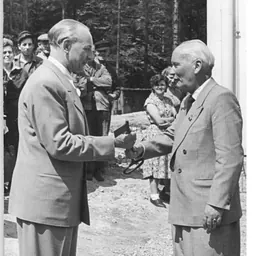
Contemporaries
People whose lives overlapped Tony Garnier's


Frequently asked questions
Who was Tony Garnier?
French architect (1869–1948)
When was Tony Garnier born?
Tony Garnier was born on 13 August 1869 in 1st arrondissement of Lyon.
When did Tony Garnier die?
Tony Garnier died on 19 January 1948 in Roquefort-la-Bédoule.
What was Tony Garnier's occupation?
Tony Garnier was an architect, urban planner and painter.
What nationality was Tony Garnier?
Tony Garnier was French.
Sources & further reading
· DBpedia: Tony Garnier (architect)
Cite this page
APA: Biography.guide. (2026). Tony Garnier. https://biography.guide/tony-garnier/
MLA: "Tony Garnier." Biography.guide, https://biography.guide/tony-garnier/.
Chicago: "Tony Garnier." Biography.guide. https://biography.guide/tony-garnier/.
Data last updated: 2026-09-21 · Spot an error? Report a correction.
Portrait: Wikimedia Commons · author & licence
Page generated 2026-09-27 04:59 UTC