
About Tonino De Bernardi
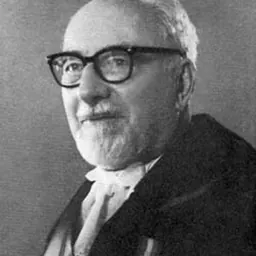
Born 1937. Tonino De Bernardi is an Italian film director, screenwriter, teacher and cinematographer.
Tonino De Bernardi (born May 24 1937) is an Italian auteur and screenwriter, a prolific anti-commercial director with more than 40 feature films in credits.
Life and career
Tonino di Bernardi was born in Chivasso near Turin to Olga Bagnasacco and , after graduating in literature with Massimo Mila, with a thesis on neoclassical Igor Stravinsky,
As recalled by the director, at the age of 29 he filmed his first movie titled Cara Meri, but the tape had been lost over the years. Il Mostro Verde opened a trilogy La favolosa storia in which de Bernardi boldly explored transgressions of gender and sexual binaries. The experimental visuals, featuring audio-visual juxtapositions, split-screen, and a flamboyant colour palette.
Massimo Bacigalupo recalled the impression of first time seeing Il Bestiario:
De Bernardi was a school teacher in Casalborgone until 1992.
By the end of the 1980s, De Bernardi was better known and appreciated abroad than in Italy. It was only in 1991 that he received his first recognition, followed by headlines in major national newspapers. In 1993, he concluded his tetralogia with Uccelli del desiderio, well received at the Torino Film Festival and nominated for Best Italian Fiction Film. In 1994, his film Piccoli Orrori received the Special Mention prize at the Taormina Film Fest.
In 1999, his Appassionata was selected for the Venice Film Festival. Filmed in the back streets of Naples, the movie was praised for its bold concept and execution, although criticised for not being internationally understandable by being ‘too Italian’. In Appassionata, De Bernardi discovered Filippo Timi, an actor that would become a cult performer in Italy. Timi also starred in the lead role in De Bernardi's Rosatigre. Released in 2000, the film could be described as a Bildungsroman: it follows the protagonist Antonello, a fragile and irreverent transvestite played by Timi, as he embarks in journeys and relationships, while trying to figure out his own life. The film was selected for Settimana della Critica of the Venice Film Festival 2005.
De Bernardi's Passato presente/Angeli laici cadono (2005) is a film about various forms of migration, a work that reflects work, society, relationships and family, mixing the present and the past.
His 2007 film Médée miracle starring Isabelle Huppert closed the Orizzonti section of the 64th Venice Film Festival. De Bernardi's Medea is a contemporary interpretation of Euripides’ tragedy. The critics praised the film as a 'precious gift to the audience’, a clandestine charm. This film can be called the most conventional in De Bernardi's filmography: it is shot mainly in color, has a standard length of 90 minutes, and is in the classic 35 mm format.
Released in 2009, Pane/Piazza delle Camelie told a story of Carlo e Grazia, bread bakers from a small town in Tuscany. The hardships of their lives, long nights of hard work with no days off, is contrasted by stories of young and modern city dwellers. In Pane/Piazza delle Camelie de Bernardi tried to explore our present and its contradictions, in the juxtaposition of old and new, from one generation to the next.
In 2023, Tonino de Bernardi donated his archive to the Museo Nacional del Cinema.
Style and themes
De Bernardi's approach, as confirmed by the auteur himself, is rooted in the American underground cinema of the 1960s, he refers to Jonas Mekas as the figure who inspired him not to rely on the industry. His style is deeply experimental, non-conventional, some critics even described his movies as ‘non-film’. In 1982 he released Donne, a 12-hour Super 8 film,
In his films he puts the spotlight on heroes who are often ignored by society, pushed to the margins. The director prefers women as protagonists, as he explained, he grew up mostly surrounded by women, their strength and sensitivity defined his perception of the world. In his films, de Bernardi wanted to give a voice to them, who are usually oppressed and wounded.
Influence and recognition
In Italy, De Bernardi is credited as an independent auteur, ‘one of the most restless and purest directors in Italian cinema’. In 2022 Centre Pompidou called him ‘one of Italy's greatest, most persistent, enlightening experimentalists’.
In 2018, a Portuguese director Teresa Villaverde premiered her experimental film Galileo's Thermometer: A meeting of minds with Tonino De Bernardi at the International Film Festival Rotterdam. For three summer months, the documentary followed the daily life of the director and his wife, interspersed with memories, poems, music, films, landscapes.
Tonino De Bernardi – One Time, One Encounter, a dedication to de Bernardi, was filmed in 2022 by Daniele Segre.
Awards
Lifetime Achievement Award, Lucca Film Festival, 2024; Venice International Film Festival, Nomination Best Film Premio Orizzonti, Medea Miracle, 2007 Venice International Film Festival, Nomination Golden Lion, Appassionate, 1999 Taormina Film Fest, Mención Especial, Piccoli orrori, 1994 Taormina Film Fest, Nomination Golden Charybdis, Piccoli orrori, 1994 Torino Film Festival, Nomination Best Italian Fiction Film, Uccelli mendichi, uccelli d'amore, uccelli perduti, 1993 Torino Film Festival, Nomination Best Italian Film, Leçons de ténèbres n. 2 e 3, 1991 World Wide Video Festival, La Haya, First Prize (ex-aequo with Jean-Luc Godard), 1989 Torino Film Festival, Nomination Best Feature Film, Elettra, 1987
Filmography
before 1967 – Cara Meri; 1967 – Il mostro verde; 1967 – Il Bestiario; 1968-1969 – Dei; 1971-1972 – Il quadrato; 1973-1976 – Il rapporto coniugal parentale; 1977-1979 – L’io e le aggregazioni; 1980-1982 – Donne; 1988 – Viaggio a Sodoma; 1994 – Piccoli orrori; 1997 – Fiori del destino; 1999 – Appassionate; 2000 – Rosatigre; 2001 – La strada nel bosco; 2001 – Farelavita; 2002 – Lei; 2002 – Le cinéma dans tous ses états; 2003 – Serva e padrona; 2003 – Latitudini (2003); 2004 – Marlene de Sousa; 2005 – Passato presente; 2006 – Accoltellati (Accoltellatori); 2007 – Médée miracle (2007); 2008 – Pane/Piazza delle camelie (2008); 2010 – Butterfly – L’attesa; 2011 – Ed è così. Circa. Più o meno (2011); 2012 – Casa dolce casa (2012); 2013 – Hotel de l’Univers (2013); 2018 – Ifigenia in Aulide (2018); 2019 – Resurrezione (2019); 2022 – Ou n'etes vous?; 2022 – Universi circoscritti 2.
Don’t just read it —
keep it.
Full-length biographies made to live with: read them, listen on the way to work, watch them tonight.
- E-book
- Audio
- Video
Instant download · yours to keep · every purchase keeps this site free
Important facts
People in Tonino De Bernardi's life
Named in this biography and alive at the same time





Related people
Same field, nearest in time


Contemporaries
People whose lives overlapped Tonino De Bernardi's



Frequently asked questions
Who is Tonino De Bernardi?
Italian film director and screenwriter
When was Tonino De Bernardi born?
Tonino De Bernardi was born in 1937 in Chivasso.
What is Tonino De Bernardi's occupation?
Tonino De Bernardi is a film director, screenwriter, teacher and cinematographer.
What nationality is Tonino De Bernardi?
Tonino De Bernardi is Italian.
Sources & further reading
· Wikipedia: Tonino De Bernardi
Cite this page
APA: Biography.guide. (2026). Tonino De Bernardi. https://biography.guide/tonino-de-bernardi/
MLA: "Tonino De Bernardi." Biography.guide, https://biography.guide/tonino-de-bernardi/.
Chicago: "Tonino De Bernardi." Biography.guide. https://biography.guide/tonino-de-bernardi/.
Data last updated: 2026-09-20 · Spot an error? Report a correction.
Page generated 2026-09-27 05:19 UTC