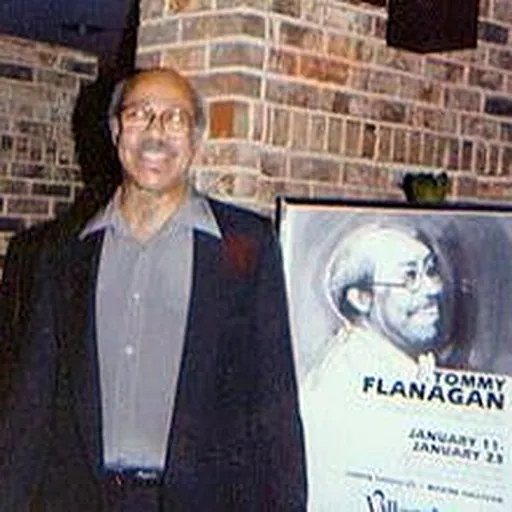
About Tommy Flanagan
Lived 1930 – 2001 (aged 71). Tommy Flanagan was an American pianist, composer, jazz musician, screenwriter, recording artist and musician.
Thomas Lee Flanagan (March 16, 1930 – November 16, 2001) was an American jazz pianist and composer. He grew up in Detroit, initially influenced by such pianists as Art Tatum, Teddy Wilson, and Nat King Cole, and then by bebop musicians. Within months of moving to New York in 1956, he had recorded with Miles Davis and on Sonny Rollins' album Saxophone Colossus. Recordings under various leaders, including Giant Steps of John Coltrane, continued well into 1962, when he became the full-time accompanist to Ella Fitzgerald. He worked with Fitzgerald for three years until 1965, and then in 1968 returned to be her pianist and musical director, this time for a decade.
After leaving Fitzgerald in 1978, Flanagan attracted praise for the elegance of his playing, which was principally in trio settings when under his own leadership. In his 45-year recording career, he recorded more than three dozen albums under his own name and more than 200 as a sideman. By the time of his death, he was one of the most widely admired jazz pianists and had influenced both his contemporaries and later generations of players.
Early life Flanagan was born in Conant Gardens, Detroit, Michigan, on March 16, 1930. was a postman, and his mother, Ida Mae, worked in the garment industry.
At the age of six, Flanagan's parents gave him a clarinet for Christmas. and Gladys Wade Dillard, who also taught Kirk Lightsey and Barry Harris. Flanagan graduated from Northern High School, which he attended with other future musicians, including saxophonist Sonny Red.
Flanagan's early influences included Art Tatum and Teddy Wilson, both of whom he heard on the radio and playing in the Detroit area, as well as Nat King Cole and local pianists Earl Van Riper and Willie Anderson. During 1949, Flanagan had his first residence, at the Blue Bird Inn in Detroit. He was unsure of how long he would stay, having been persuaded to go by Burrell; the two men initially stayed with Burrell's aunt in Harlem. Late in 1957, he was part of Miles Davis' band for a short period, before returning to Johnson early the following year, for another stay of 10 months. A period leading his own trio in 1958 was followed by working with trombonist Tyree Glenn.
Flanagan was with trumpeter Harry Edison in 1959–60, and tenor saxophonist Coleman Hawkins in 1961–62, including a UK tour. He also played with other bands when not required by the vocalist; these included a brief reunion with Rollins in 1965. Later the same year, Flanagan left Fitzgerald and was part of Art Farmer's short-lived New York Jazz Sextet, which recorded Group Therapy. Flanagan then became accompanist to Tony Bennett for part of 1966, and lived on the West Coast.
Flanagan returned to working with Fitzgerald in 1968. During these concerts, Flanagan often played a set as part of his trio, without the singer. Beginning in 1974, he again began to perform and record as a leader: his 1975 trio release, The Tommy Flanagan Tokyo Recital, was his first as leader since 1960. Prior to these performances, he had felt that his technique was inadequate for a soloist, but he enjoyed the extra exposure of being a leader, so decided to continue. Flanagan ended his role with Fitzgerald in 1978, after he had a heart attack In 1979, he was a guest on the first series of Marian McPartland's Piano Jazz radio programs. He continued to work with other players, including as a trio with Tal Farlow and Red Mitchell in 1980. For much of the 1980s, he led a trio that featured bassist George Mraz and various drummers. By around 1990, Flanagan was concentrating on his own appearances and recordings rather than sideman activities. In the early 1990s, Mraz was replaced by Peter Washington, whose heavier bass lines added urgency to the trio's sound.
Flanagan's reputation gradually grew after he moved on from being primarily an accompanist: in a 1992 article, critic Leonard Feather suggested that "Flanagan is the pianist most likely to be named a personal idol by other jazz pianists, whether they be swing veterans or avant-gardists". Flanagan was awarded the Danish Jazzpar Prize in 1993. In 1990, 1993, and 1997, Flanagan toured Japan, where he was very popular, with 100 Golden Fingers, a 10-pianist group.
Flanagan continued to be praised for the elegance of his playing – critic Ben Ratliff commented in 1998 that the trio with Washington and drummer Lewis Nash was, "in its controlled, elegant way, [...] one of the more extraordinarily coordinated piano trios in jazz's history". Despite the near-unanimous praise from critics and musicians for Flanagan's recordings and concert performances after he left Fitzgerald, he did not secure a recording contract with a major label for more than one album.
In late October 2001, Flanagan played in a John Coltrane tribute at the San Francisco Jazz Festival.
Personal life Flanagan's mother died in 1959, and his father in 1977. Flanagan first married in 1960, to Ann. The couple had a son and two daughters, and divorced in the early 1970s; Ann was killed in a car accident in 1980. Flanagan married Diana, his second wife, in 1976. He was survived by Diana, the three children from his first marriage, and six grandchildren. His personality was summarized by his second wife: "His gentleness and quietness are deceptive. He is a strong man, and he has a lot of spirit and firmness."
Playing style Whitney Balliett stated that Flanagan was the most consistent of the pianists influenced by Wilson, Tatum and Cole, and invariably created something new in his playing: he "often states the melody with dissonant, levering chords played offbeat or staccato. Never decorative, they [...] reveal both a respect for the melody and an intense desire to alter it"; during his main improvising, he used "interval-filled descending figures [...] charging rhythmic phrases whose accented first notes make the succeeding notes snap, double-time phrases that race ahead to clear the way, and legato phrases that form sauntering rear guards." In a review of a 1989 concert, Feather commented that Flanagan used "subtle dynamic shadings", while "bursts of upsweeping chords sometimes lent an element of surprise, with a nimble left hand offering graceful filigree fills" and occasional musical quotes that added humor. Other techniques he employed were, in Stanley Crouch's description, "crooning effects achieved by manipulating the pedals, holding down keys long enough to sustain notes in decisively different ways, and working out inflections that evoke the voice – sighs, moans, swells, purrs". Critic John S. Wilson described Flanagan's solo piano style on ballads in 1978: "He drifts through ballads with a dreamy languorous flow, but it is not a soft or flabby style. There is, beneath the surface, a vitality that gives it a lean, swinging character".
Awards and legacy During his career, Flanagan was nominated for five Grammy Awards. The first occasion was in 1983: The Magnificent Tommy Flanagan for Best Jazz Instrumental Performance, Soloist; and Giant Steps for Best Jazz Instrumental Performance, Group. Two years later, Thelonica was nominated for Best Jazz Instrumental Performance, Soloist. The next nomination was in 1998, for Best Jazz Instrumental Solo for his solo on "Dear Old Stockholm" from Sea Changes. The last, in 2003, was in the same category, for Flanagan's solo on "Sunset & the Mockingbird", from A Great Night in Harlem.
Flanagan's influence on pianists extended from his contemporaries to younger performers. Contemporaries included fellow Detroit players Barry Harris and Roland Hanna. Lightsey was influenced by Flanagan's musical creative thinking and pianistic fluidity. Alan Broadbent also acknowledged Flanagan as an influence, as did Helen Sung, who changed from being a classical music pianist to a jazz one after hearing the swing and logic of a Flanagan solo. Kenny Barron described Flanagan as his "hero" and stated that he admired the older man's touch and phrasing from when he first heard it at junior high school: "He became an influence and continued to be an influence till the day he died – and he still is."
Discography
Don’t just read it —
keep it.
Full-length biographies made to live with: read them, listen on the way to work, watch them tonight.
- E-book
- Audio
- Video
Instant download · yours to keep · every purchase keeps this site free
Important facts
People in Tommy Flanagan's life
Named in this biography and alive at the same time

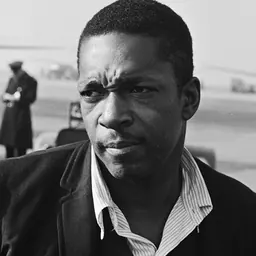



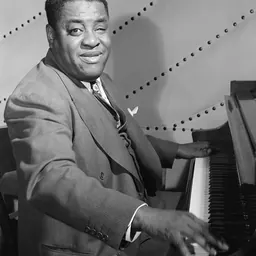

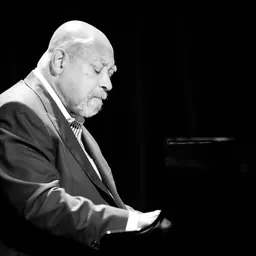
Related people
Same field, nearest in time


Contemporaries
People whose lives overlapped Tommy Flanagan's

Frequently asked questions
Who was Tommy Flanagan?
American jazz pianist (1930-2001)
When was Tommy Flanagan born?
Tommy Flanagan was born on 16 March 1930 in Detroit.
When did Tommy Flanagan die?
Tommy Flanagan died on 16 November 2001 in New York City.
What was Tommy Flanagan's occupation?
Tommy Flanagan was a pianist, composer, jazz musician, screenwriter, recording artist and musician.
What nationality was Tommy Flanagan?
Tommy Flanagan was American.
Sources & further reading
· DBpedia: Tommy Flanagan (musician)
Cite this page
APA: Biography.guide. (2026). Tommy Flanagan. https://biography.guide/tommy-flanagan-pianist/
MLA: "Tommy Flanagan." Biography.guide, https://biography.guide/tommy-flanagan-pianist/.
Chicago: "Tommy Flanagan." Biography.guide. https://biography.guide/tommy-flanagan-pianist/.
Data last updated: 2026-09-22 · Spot an error? Report a correction.
Portrait: Wikimedia Commons · author & licence
Page generated 2026-09-27 05:01 UTC