
About Tom Sturdivant
Lived 1930 – 2009 (aged 78). Tom Sturdivant was an American baseball player.
Thomas Virgil Sturdivant (April 28, 1930 – February 28, 2009), nicknamed "Snake", was an American professional baseball pitcher who played for the New York Yankees, Kansas City Athletics, Boston Red Sox, Washington Senators, Pittsburgh Pirates, Detroit Tigers, and New York Mets of Major League Baseball. He threw a curveball and a knuckleball, among other pitches. He batted left-handed but threw right-handed.
Sturdivant was originally signed by the Yankees as an infielder in 1948. After a two-year stint in the United States Army, he became a pitcher in order to improve his chances of making the major leagues. He debuted with the Yankees in 1955, the first of four straight years he was on a World Series roster. In 1956, he had a 16–8 record, led the American League (AL) with a 2.12 strikeout-to-walk ratio, and won Game 4 of the 1956 World Series, which the Yankees won in seven games over the Brooklyn Dodgers. He went 16–6 in 1957, tying for the AL lead in winning percentage with a .727 mark. Arm trouble and a spike wound to the heel limited him in 1958, though he won his second World Series as the Yankees defeated the Milwaukee Braves in seven games.
The next several years saw Sturdivant pitch for a number of teams. He was traded to the Athletics in May 1959. In 1960, he made the Opening Day start for the Red Sox, but he only started two more games for them. The Senators picked him in the 1960 expansion draft, then traded him to the Pirates in mid-1961. Pittsburgh initially assigned him to the minor leagues, but he won five games in a six start stretch shortly after being recalled. He split 1962 between the starting rotation and the bullpen, winning four straight games in late August/early September. In 1963, he pitched for Pittsburgh, Detroit, and Kansas City, winning just twice as he spent most of the year in the bullpen. He pitched in three games for Kansas City in 1964, then pitched in 16 games for the Mets that same year before getting released on June 27. Following his baseball career, he was involved in trucking businesses around Oklahoma City.
Early life Born in Gordon, Kansas, on April 28, 1930, Tom was the son of Elbert E. Pete Sturdivant and his wife, Ethel (née Moudy). He was the second of two boys; brother Bobby Joe was born in 1926. The family had moved to Oklahoma City, Oklahoma, by 1940. Elbert worked for an oil pipeline company as a telegraph operator while Ethel worked at a fur repair shop as an assistant. He played as a pitcher for Bill Mosier's Tires, an American Legion team, but he also played infield positions. In 33 games, he had a 1–3 record, a 3.16 ERA, 48 strikeouts, 42 walks, and 48 hits allowed in innings. He pitched a scoreless eighth inning in Game 4, but the Yankees lost that one 8–5. Those were his only appearances of the series, which the Dodgers won in seven games. His first appearance was a start, but most of his outings in the early part of the year were in relief. On July 13, Sturdivant threw his first major league shutout, holding the Indians to two hits in a 10–0 victory. After that game, except for a stretch between August 2 and August 18, he was used mainly as a starter. By the end of the year, Stengel said, "He was a meal ticket...starting and relieving and doing both good in the tough spots...now he's got the experience, too, to go along with the rest of it." He led the AL in Strikeout-to-walk ratio with a 2.12 mark. With the Dodgers up 2–1 in the series, he pitched a complete Game 4. Seven times, the leadoff man for the Dodgers reached, drawing visits to the mound from Stengel in the later innings, but the manager elected to use his starter for the full distance. The Yankees defeated the Dodgers 6–2, one day before Don Larsen's perfect game. Included in that stretch were a game on May 15 in which he struck out nine Indians (though he suffered the loss because of two unearned runs) sandwiched between victories over the Athletics on May 7 and May 24, the latter of which was a shutout. Boone started for the mound, and Sturdivant approached him as the benches cleared; both players were thrown out of the game. Sturdivant claimed the pitch was a mistake: "It was a high fast one that got away from me." Six days later, he tied his season high with nine strikeouts against the Indians; though he gave up four runs over eight innings, he earned the win in the 10–4 victory. He threw eight shutout innings in a 2–0 win over the Orioles on September 3. In 1957, Sturdivant walked 80 batters and allowed 170 hits in innings pitched, a career high. Sports Illustrated said he was the "most dependable Yankee pitcher."
The Yankees again reached the World Series, this time facing the Milwaukee Braves. Starting Game 4, Sturdivant pitched three scoreless innings before allowing four runs in the fourth, including home runs by Hank Aaron and Frank Torre. He received a no decision, but the Yankees lost in 10 innings.
Hoping for a higher salary, Sturdivant waited to start spring training, finally agreeing to an $18,000 contract (a $4,000 increase) in late February. Bearing a 1–4 record and a 6.00 ERA through June 12, he was relegated to the bullpen, not starting again until July 20. In August, he suffered an injury during practice when one of his teammates stepped on his heel, spiking him and causing an injury that placed him on the disabled list for six weeks. The Boston Globe reported that Stengel fined the pitcher $250 for horseplay. Arm trouble suffered that year began a "nightmarish" few seasons for him. He had a "miserable" season, according to Sports Illustrated. In 15 games (10 starts), he had a 3–6 record, a 4.20 ERA, 41 strikeouts, 38 walks, and 77 hits allowed in innings pitched. He did not pitch in the series but earned his second World Series ring as New York prevailed in seven games.
Sturdivant started spring training late in 1959 as he negotiated his contract, finally agreeing to the same salary as the previous year. In seven games (three starts) with the Yankees during the regular season, he had an 0–2 record, a 4.97 ERA, 16 strikeouts, nine walks, and 20 hits allowed in innings. Against the Tigers on September 23, with Kansas City down 5–1 and the bases loaded, Sturdivant relieved Al Grunwald and struck out Gus Zernial to end the inning. He then pitched two scoreless innings and earned the win after Kansas City rallied in the sixth. Those were, however, his only wins for Kansas City. The Red Sox liked what they saw of him too, as he was the best-conditioned player at the start of spring training. While Pascual allowed just three hits, Sturdivant gave up six runs (five earned) in four innings, taking the loss. However, he was used out of the bullpen for the rest of the season, often as a long reliever. Twice (June 21 and August 6), he had relief outings of seven innings or more; he allowed five earned runs both times but recorded the victory on August 6 in an 11–9 win over the Tigers.
Washington Senators (1961) and Pittsburgh Pirates (1961–63) On December 14, 1960, he was drafted by the new Washington Senators from the Red Sox in the 1960 expansion draft. He wore uniform numbers 35 and 47 during his tenure with Washington. The only hit he allowed in the game was a double to Vic Wertz, the only baserunner for Boston. Those were his only wins with Washington, however, and after he gave up seven runs in innings of a 14–9 loss to Boston on June 16, he was moved to the bullpen. He replaced George Witt on Pittsburgh's roster. With Pittsburgh, Sturidvant wore uniform number 15. His ERA in those starts was 1.63. However, Sturdivant did not win again after September 5, posting a 4.28 ERA in his final six games (four starts) of the season. After giving up five earned runs in only an inning of work in his next two starts, he was moved to the bullpen. In the second of those two, on April 23, he had become the first pitcher to lose to the Mets, who had lost the first nine ballgames of their existence. He had a 6.41 ERA through June 18, but he lowered over a full run by posting a 2.86 mark from June 24 through August 11. He gave up six runs in innings as a reliever and requested a trade. "I asked the Pirates to trade me because I get nervous when I don’t pitch." He won his first game with Detroit, relieving Phil Regan with two outs and the Tigers up by one in the fifth inning of a game against the Orioles, stranding the two runners he inherited, and pitching scoreless ball the rest of the way in Detroit's 12–4 victory on May 5. That was his only win with the team. In 28 games (all in relief) for the Tigers, he had a 1–2 record, a 3.76 ERA, 36 strikeouts, 24 walks, and 43 hits allowed in 55 innings pitched. He wore uniform number 18 for the Athletics this time. With Kansas City losing 6–5 to Boston on September 25, Sturdivant relieved Ed Rakow in the sixth inning, then held the Red Sox to one run for the rest of the game, earning the win in a 7–6 triumph. In 17 games (three starts) for Kansas City, he had a 1–2 record, a 3.74 ERA, 26 strikeouts, 17 walks, and 47 hits allowed in 53 innings pitched. Two days later, he was placed on waivers, and the Mets released him on June 27. The fastball was a sinkerball, according to the 1955 Sports Illustrated preview of the Yankees before the World Series. Steve Boros described his first major league at bat, which was against Sturdivant in 1957: "I took a curve and a slider, both of which looked rather ordinary. Then he threw me a knuckle ball. I must have lunged at the pitch three times and just did foul it back. I'd never seen anything like that in the Big Ten. I finally popped up on a high inside fast ball. I remember trotting back to the dugout wondering what I had gotten myself into." Sturdivant began incorporating the knuckleball into his repertoire around 1956; the pitch helped him emerge as a starter that year. The Associated Press called the knuckleball his best pitch in 1963. Before he threw a pitch, he had a habit of "banging the ball, again and again into his glove," according to teammate Sal Maglie. Ted Williams said of him in 1956, "Maybe he hasn’t got a thing. But I notice one thing. He keeps winning." His son, Tom III acted in The Young Riders, though he spent most of his life working in sales. By the end of 2006, both Paul and Tommy had died.
During his time with the Yankees, Sturdivant played golf with Mantle. The two were golfing together late in the 1957 season, when Mantle suffered a massive gash in his shin after frustratedly throwing a putter and had to miss five games. Sturdivant remained a Yankee fan after his career ended, subscribing to a television package that allowed him to watch all the games, even in the Midwest. In 1976, he organized an Allie Reynolds Appreciation Day in Oklahoma to help the former pitcher's Hall of Fame chances. Sturdivant participated in baseball fantasy camps.
Don’t just read it —
keep it.
Full-length biographies made to live with: read them, listen on the way to work, watch them tonight.
- E-book
- Audio
- Video
Instant download · yours to keep · every purchase keeps this site free
Important facts
People in Tom Sturdivant's life
Named in this biography and alive at the same time
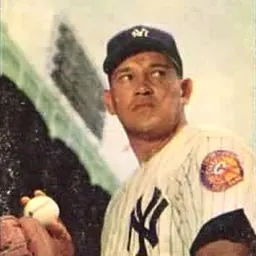
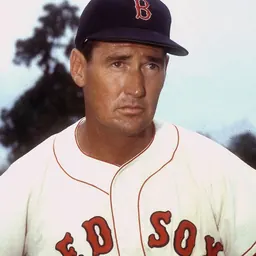

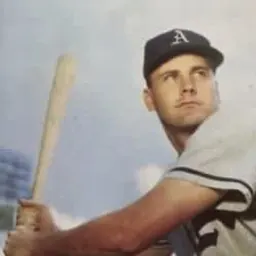
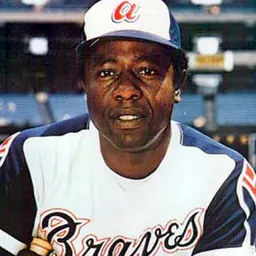



Related people
Same field, nearest in time
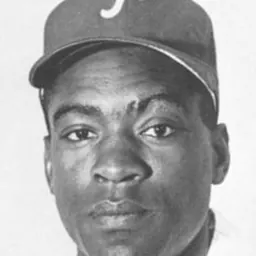

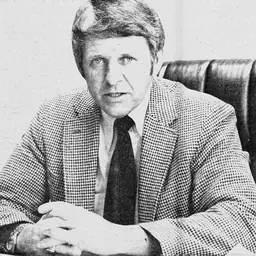

Contemporaries
People whose lives overlapped Tom Sturdivant's
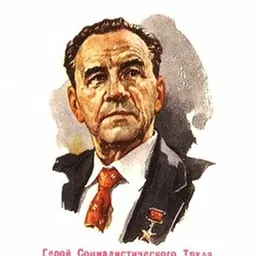
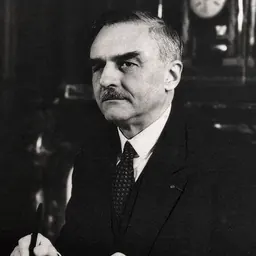


Frequently asked questions
Who was Tom Sturdivant?
American baseball player (1930–2009)
When was Tom Sturdivant born?
Tom Sturdivant was born on 28 April 1930 in Gordon.
When did Tom Sturdivant die?
Tom Sturdivant died on 28 February 2009 in Oklahoma City.
What was Tom Sturdivant's occupation?
Tom Sturdivant was a baseball player.
What nationality was Tom Sturdivant?
Tom Sturdivant was American.
Sources & further reading
Cite this page
APA: Biography.guide. (2026). Tom Sturdivant. https://biography.guide/tom-sturdivant/
MLA: "Tom Sturdivant." Biography.guide, https://biography.guide/tom-sturdivant/.
Chicago: "Tom Sturdivant." Biography.guide. https://biography.guide/tom-sturdivant/.
Data last updated: 2026-09-26 · Spot an error? Report a correction.
Page generated 2026-09-27 05:14 UTC