
About Tōdō Takatora
Lived 1556 – 1630 (aged 74). Tōdō Takatora was a Japanese samurai.
was a Japanese daimyō of the Tōdō clan from the Azuchi–Momoyama to Edo periods. He rose from relatively humble origins as an ashigaru (a light foot soldier) to become a daimyō.
During his lifetime he changed his feudal master seven times and worked for ten people, but in the end he rendered loyalty to Tokugawa Ieyasu, who became his last master.
Tōdō Takatora is famous for excellence in castle design. He is said to have been involved in building as many as twenty castles,
It is mentioned in the historical records that Tōdō Takatora was a large man with around 190 cm in height. After his death, historical records stated that Takatora'a body was covered with lesions and battle scars, and some of his fingers were torn off and had no nails.
Biography Tōdō Takatora was born in 1556 in Ōmi Province. The precise place of his birthplace was in Tōdō village, Inukami-gun, east of Lake Biwa.
Takatora hailed from a Tōdō clan branch which descended from a samurai named Kagemori Todo who served an imperial court noble in the 14th century.
Takatora started working for Azai Nagamasa at the age of 15. He participated in his first battle in the battle of Anegawa in 1570 as a member of Kassho Isono's corps with his father, Torataka. He also played an active role in the attack on Usayama Castle and received a letter of commendation and was given a wakizashi from Nagamasa as reward.
Sometime after the destruction of the Azai clan, Takatora then served Isono Kazumasa, the lord of Ogawa Castle, who was also a former vassal of the Azai clan. As Kazumasa's vassal, Takatora received a landholding worth 80 koku.
Serving the Toyotomi clan In 1576, Takatora served Hashiba Hidenaga, the younger brother of Hashiba Hideyoshi, a senior vassal of Nobunaga, and was granted a smallholding worth 300 koku. At this time, he changed his surname to Yoemon.
In October 1577, when Hidenaga led 3,000 soldiers to march into Tajima, Takatora succeeded in a surprise attack and subdued Takeda Castle with the help of a guide. Takatora was immediately awarded with additional lands worth 1,000 koku, and was appointed to lead ashigaru infantry. However, when Takatora led 120 cavalrymen to attack the resistance forces from Tochiya Castle, Takatora's units suffered heavy casualties.
In 1580, during the Siege of Miki, Takatora personally killed the commander of Bessho Nagaharu's 300 horsemen, Kago Rokuroemon. Takatora was also recorded seizing the mount of Rokuroemon, a jet black colored horse.
In 1583, Takatora participated in the campaign of Shizugatake on the side of Toyotomi. He fought in the Chugoku region where he managed to beat and rout the troops of Sakuma Nobumori. For his service in this campaign, Takatora was rewarded with additional holdings of domains worth 1,300 koku. He also was appointed as 'commissioner' for the construction of Saruokayama Castle and Wakayama Castle. Later, Takatora was further recommended by Hideyoshi and appointed to Sado no kami (Senior Fifth Rank Lower Grade).
In 1589, he built Akagi Castle (present-day Kiwa-cho, Kumano City, Mie Prefecture) as a base for suppressing the Kitayama Uprising. Many farmers were also beheaded at Tahirako Pass by Takatora.
In 1591, after Hidenaga died, Takatora served under Hideyoshi, participating in the invasions of Korea as a "Fleet Commander" of the Toyotomi navy. His fiefdom at that time was Iyo-Uwajima.
In 1595, after the death of Toyotomi Hidetsugu, Takatora decided to become a monk and went up to Mount Kōya. However, Hideyoshi did not want Takatora to waste his talent and ordered Ikoma Chikamasa to summon Takatora, so he returned to secular life, was given an additional 50,000 koku, and moved to Iyo. Soon, he was also further given land in Kokuitajima (present-day Uwajima City), totalling his domain possessions to be worth 70,000 koku.
In 1597 during the second Korean campaign, Takatora participated in the Battle of Myeongnyang, where he was wounded in action.
Takatora also furthered his success in annihilating the naval force led by the Korean navy's military commander Wŏn Kyun at the Battle of Chilcheollyang. After returning to Japan, he had added 10,000 koku to Ozu Castle, bringing it to 80,000 koku.
Serving the Tokugawa clan
Before the clash between Tokugawa Ieyasu's Eastern Army and Ishida Mitsunari's Western Army in Sekigahara, Takatora sent his family to Edo as a sign of allegiance to Ieyasu.
In 1600, at the Battle of Sekigahara, although he was one of Toyotomi's main generals, he sided with Tokugawa Ieyasu's Eastern Army. During the battle, Takatora's units engaged the units of Ōtani Yoshitsugu of the Western Army. However, when Kobayakawa Hideaki's army attacked Yoshitsugu from the west, Yoshitsugu lost his ground and is said to have committed suicide. With the Eastern Army progressing, Takatora led his troops further to the high ground location where troops of the Western Army's supreme leader, Mitsunari, was positioned.
Edo period During the Edo period, the wealth of each fiefdom was measured as a volume of rice production in koku. Iyo-Uwajima was assessed at 70,000 koku. It was reported that the landholdings which Takatora received in Iga Province previously belonged to a lord named Tsutsui Sadatsugu, which Ieyasu stripped off and gave the rights to Takatora. The initial pretext was because of Sadatsugu's sloppy governance of the domain. However, historians argue that the reasons were because Sadatsugu behaved suspiciously by visiting Toyotomi Hideyori at Osaka Castle, without the Shogunate's approval, whilst the land which Sadatsugu occupied was considered as an important strategic military location. Furthermore, it was thought that Ieyasu stripped the land and gave it to the Tōdō clan as political strategy against the Toyotomi clan, as despite his patronage to the Toyotomi family, Tōdō Takatora was considered as a close ally of Ieyasu. Thus, by making him control the portions of Iga Province, it could push more strategic locations to the influence of the Shogunate without directly provoking the Toyotomi faction in Osaka.
Later in 1609, Takatora completed the renovation of Iga Ueno Castle into a newly built layered tower-style castle. Takatora was also entrusted to renovate the Kameyama Castle in Tanba-Kameyama Domain, Kyoto. The constructions and renovation of numerous castles were thought to be a preparation of the incoming potential conflicts against Toyotomi Hideyori of Osaka Castle and any feudal lords who were potentially siding with him, including castles built by Takatora.
In Iga Province, it was reported that Tōdō Takatora employed the Iga-ryū ninja. Aside from ninja, he also employed local clans of Iga Province as "musokunin", which is a class of part-time samurai who had been allowed to retain their clan name but did not have land. The musokunin also worked as farmers during peace, while they are obliged to take arms in the time of war.
in 1614, Takatora participated in the winter phase of the siege of Osaka, aiding the Tokugawa shogunate. He mobilized the musokunin army from Iga Province to besiege Osaka Castle.
After the Osaka campaign, he gained another 50,000 koku in 1617 in southern Ise, to which he added 3000 koku in Shimōsa Province which were originally the patrimony of his younger brother. His total holdings of 323,000 koku were the ninth largest in Japan, excluding the shimpan Tokugawa and Matsudaira domains.
Popular culture Films Portrayed by Kim Myung-gon in the 2014 film The Admiral: Roaring Currents.
Comics A fictionalized version of Todo (renamed "Todo Tokotora") appears in the 2009 comic miniseries Yi Soon Shin: Warrior and Defender, where he is shown in a lover's relationship with fellow general Gurijima Michiyuki. Gurijima's death during the Battle of Hansando becomes Todo's primary motivation to eliminate Yi.
Video games Takatora is a playable character in the Samurai Warriors franchise debuting in Sengoku Musou Chronicle 2nd. In Samurai Warriors 4, he is portrayed as an Azai retainer and a close friend of Ōtani Yoshitsugu before joining the Toyotomi.
Appendix Footnotes
Don’t just read it —
keep it.
Full-length biographies made to live with: read them, listen on the way to work, watch them tonight.
- E-book
- Audio
- Video
Instant download · yours to keep · every purchase keeps this site free
Important facts
People in Tōdō Takatora's life
Named in this biography and alive at the same time


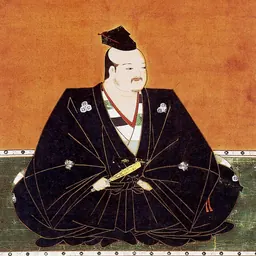

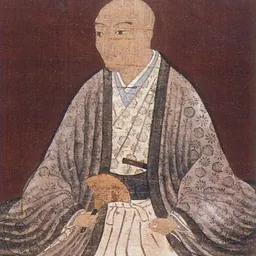
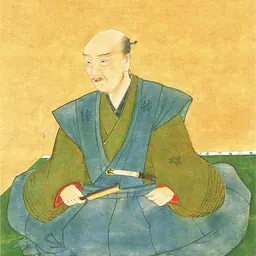

Related people
Same field, nearest in time
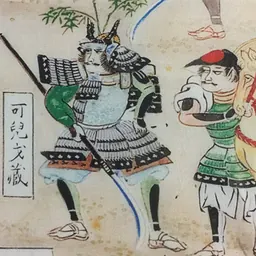

Contemporaries
People whose lives overlapped Tōdō Takatora's

Frequently asked questions
Who was Tōdō Takatora?
Japanese daimyo (1556-1630)
When was Tōdō Takatora born?
Tōdō Takatora was born on 16 February 1556 in Kōra-chō.
When did Tōdō Takatora die?
Tōdō Takatora died on 9 November 1630 in Edo.
What was Tōdō Takatora's occupation?
Tōdō Takatora was a samurai.
What nationality was Tōdō Takatora?
Tōdō Takatora was Japanese.
Sources & further reading
Cite this page
APA: Biography.guide. (2026). Tōdō Takatora. https://biography.guide/todo-takatora/
MLA: "Tōdō Takatora." Biography.guide, https://biography.guide/todo-takatora/.
Chicago: "Tōdō Takatora." Biography.guide. https://biography.guide/todo-takatora/.
Data last updated: 2026-09-20 · Spot an error? Report a correction.
Page generated 2026-09-27 05:33 UTC