
About Titus Flavius Sabinus
Lived AD 8 – AD 69 (aged 60–61). Titus Flavius Sabinus was a Roman politician and military officer.
Titus Flavius T. f. T. n. Sabinus (d. December 20, AD 69) was a Roman politician and soldier. A native of Reate, he was the elder son of Titus Flavius Sabinus and Vespasia Polla, and brother of the Emperor Vespasian.
Career Sabinus is first mentioned in the reign of Claudius, in AD 45, when he served as a legate under Aulus Plautius in Britain, along with his brother, Vespasian. He afterwards governed Moesia for seven years. Sabinus was consul suffectus with Gnaeus Hosidius Geta in AD 47, and was praefectus urbi for the last eleven years of Nero's reign. Upon the ascension of Galba in the year 68, he was replaced as urban prefect by Aulus Ducenius Geminus. However, with the death of Galba, and ascension of Otho in January of 69, Sabinus was reinstated. Sabinus may have been part of the Pisonian conspiracy against Nero, but if so he was never arrested.
Sabinus was an important supporter of his brother; when Vespasian found himself in financial difficulties while governor of Africa, Sabinus lent him the money to continue, although he did demand a mortgage of Vespasian's house and land in return for this assistance. After the death of Otho, Sabinus directed the urban cohorts to swear allegiance to Vitellius, evidently an attempt to preclude further bloodshed. At the same time, the consul Titus Flavius Sabinus, Sabinus' son, directed his troops in northern Italy to submit to the generals of Vitellius. Sabinus continued to retain the dignity of praefectus urbi under Vitellius.
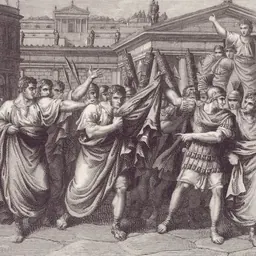
Soon afterward, the legions in the East declared for Vespasian, who then advanced toward Rome, supported by Marcus Antonius Primus. After Vitellius' troops were defeated, the emperor, despairing of success, offered to surrender the empire into the hands of Sabinus, until his brother arrived. However, Vitellius' German soldiers refused this arrangement, and Sabinus was besieged in the Capitol, together with his family members, one of whom was his nephew Domitian. The capitol was burnt by Vitellius' forces, and in the confusion Sabinus' family made their escape, but Sabinus himself was captured and dragged before the emperor, who attempted in vain to save him from the fury of the soldiers. Sabinus was brutally murdered, and his remains thrown down the Gemonian Steps, where the corpses of malefactors and criminals were exposed and disgraced before being thrown into the Tiber river. When the generals of Vespasian obtained possession of the city, Sabinus was interred with the honour of a censor's funeral.
Character Tacitus describes Sabinus as being fair-minded and honest, though prone to be overly gregarious. His failure to hold the well-fortified capitol during the final days of the civil war is attributed to his moderation, lack of enterprise and reluctance to take Roman lives.
Family Sabinus' wife is not clearly identified in any ancient sources. Some scholars of early Christianity have asserted that she was Plautia or Plautilla, the daughter of Aulus Plautius and Pomponia Graecina, possibly an early Christian convert, and that the Plautilla who traditionally lent her veil to Saint Paul was Sabinus' daughter. An alternative identification of Sabinus' wife has been proposed by Christian Settipani, who suggests that she was a sister of Marcus Arrecinus Clemens.
An inscription attests to a daughter for Sabinus: Flavia Sabina, who was the wife of Lucius Caesennius Paetus consul in 61. Gavin Townend has identified two sons for Sabinus: Titus Flavius Sabinus and Gnaeus Arulenus Caelius Sabinus, both suffect consuls in the year 69, a thesis that has come to be accepted by other scholars.
Don’t just read it —
keep it.
Full-length biographies made to live with: read them, listen on the way to work, watch them tonight.
- E-book
- Audio
- Video
Instant download · yours to keep · every purchase keeps this site free
Important facts
People in Titus Flavius Sabinus's life
Named in this biography and alive at the same time

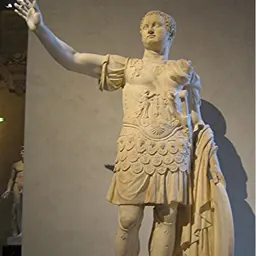


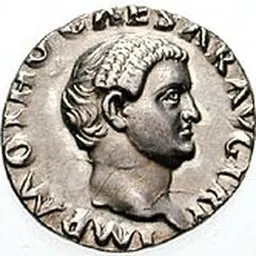

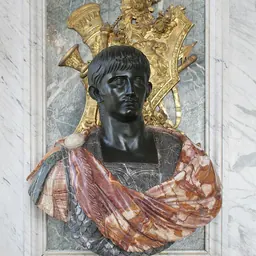
Related people
Same field, nearest in time
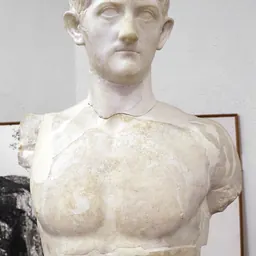


Contemporaries
People whose lives overlapped Titus Flavius Sabinus's


Frequently asked questions
Who was Titus Flavius Sabinus?
brother of emperor Vespasian
When was Titus Flavius Sabinus born?
Titus Flavius Sabinus was born in AD 8 in Rieti.
When did Titus Flavius Sabinus die?
Titus Flavius Sabinus died on 21 December AD 69 in Capitoline Hill.
What was Titus Flavius Sabinus's occupation?
Titus Flavius Sabinus was a politician and military officer.
What nationality was Titus Flavius Sabinus?
Titus Flavius Sabinus was Roman.
Sources & further reading
· Wikipedia: Titus Flavius Sabinus
· DBpedia: Titus Flavius Sabinus (consul AD 47)
Cite this page
APA: Biography.guide. (2026). Titus Flavius Sabinus. https://biography.guide/titus-flavius-sabinus/
MLA: "Titus Flavius Sabinus." Biography.guide, https://biography.guide/titus-flavius-sabinus/.
Chicago: "Titus Flavius Sabinus." Biography.guide. https://biography.guide/titus-flavius-sabinus/.
Data last updated: 2026-09-20 · Spot an error? Report a correction.
Page generated 2026-09-27 05:26 UTC