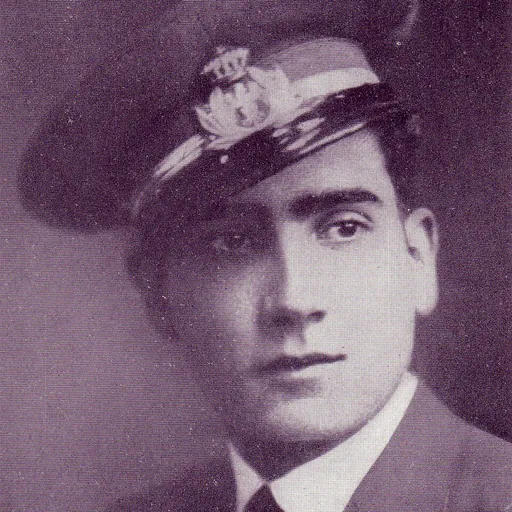
About Tito Minniti
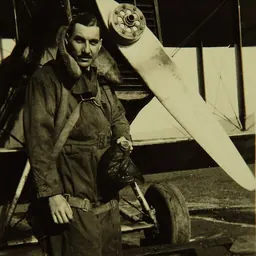
Lived 1909 – 1935 (aged 26). Tito Minniti was an Italian aircraft pilot.
Tito Minniti (31 July 1909 – 26 December 1935) was an Italian pilot who was killed during the Second Italo-Abyssinian War in 1935 near Degehabur. It is unknown whether he died in combat or after being captured by Ethiopian forces.
Life
Tito Minniti was born in Placanica, near Reggio Calabria, Italy on July 31, 1909. He became a military pilot of the Regia Aeronautica in 1933. He had attained the rank of Lieutenant when he volunteered to fight in Ethiopia in 1935. He flew a number of missions over enemy territory.
On 26 December 1935 Minniti was flying a reconnaissance mission with an observer, Sergeant Livio Zannoni. He was forced to land behind enemy lines, probably due to engine trouble. Minnitti and Zannoni survived apparently uninjured, but were soon challenged by Ethiopians. What happened next is disputed. Both men were killed, but according to Rainer Baudendistel, "it was never established whether they died defending themselves or were killed after surrender". The only officially recorded testimony of the event, given by an Egyptian paramedic, asserted that Minniti was tortured and murdered by Ethiopian troops.
Italian version According to one version of events, Minniti and Zannoni fought the Imperial Ethiopian Army soldiers who approached. Minniti attacked them with the aircraft's machine gun, killing some of them. Eventually, he ran out of ammunition and was forced to surrender. Zannoni was killed, but Minniti was taken to the village of Bolali. Italian propaganda later declared that Minniti was subject to torture and mutilation before his death.
This version of events relied on the assertions of an attaché of the Egyptian Red Cross, Abdel Mohsein El Uisci, who later testified to the League of Nations and stated that the severed head and feet of Minniti were carried to the towns of Degehabur, Jijiga and Harar. El Uisci testified:
The leader of the killers, Manghestu, took the genitals and told El Uisci that he intended to flay Minniti's body to make cigarette paper from the skin. El Uisci, again in Dagabur, said he had also witnessed the torture of another Italian soldier, who was mutilated, impaled and then transported on a stake, which pierced a metal bar that was lying on the back of two camels.
Castration of defeated enemies was a tradition in Ethiopia as was the taking of body parts as trophies. Italy had already raised the practice at the League of Nations, as part of its justification for the invasion. Isamael Daoud, El Uisci's superior, denied the truth of his account of events. The Italians argued that Daoud was in no position to dispute the accuracy of the story, as he was in Egypt at the time.
Ethiopian version The Ethiopian authorities asserted that the two Italians had been killed not by Ethiopian troops but by local people, angered by the bombing of their villages. The local Ethiopian commander Dejazmach Nasibu Emmanual sent a messenger to the Italian General Rodolfo Graziani, giving the Ethiopian version of events and assuring him that prisoners were being treated in accordance with international law. The messenger was arrested, and Graziani did not reply. The Reggio Calabria Airport, near his birthplace, was named after Minniti and still bears his name. The Italian sculptor Arturo Martini created a memorial entitled "Tito Minniti Hero of Africa" in 1936, depicting his headless naked body tied to a tree in a cruciform pose. It is preserved in the Galleria Nazionale d'Arte Moderna in Rome.
The legitimacy of the Italian response was much debated. In 1937, the antifascist writer Giuseppe Antonio Borgese gave his own version of events, arguing that Graziani merely seized on the incident to excuse his actions:
Ferdinando Pedriali, of the official Ufficio Storico Aviazione Militare, wrote in 2000 that during the Italo-Ethiopian war "the killing of hundreds of wounded and prisoners, Italian and Eritrean, was the norm, not the exception" and that such actions potentially legitimated the use of gas.
Don’t just read it —
keep it.
Full-length biographies made to live with: read them, listen on the way to work, watch them tonight.
- E-book
- Audio
- Video
Instant download · yours to keep · every purchase keeps this site free
Important facts
People in Tito Minniti's life
Named in this biography and alive at the same time



Related people
Same field, nearest in time


Contemporaries
People whose lives overlapped Tito Minniti's


Frequently asked questions
Who was Tito Minniti?
Italian pilot
When was Tito Minniti born?
Tito Minniti was born on 31 July 1909 in Placanica.
When did Tito Minniti die?
Tito Minniti died on 26 December 1935 in Degehabur.
What was Tito Minniti's occupation?
Tito Minniti was an aircraft pilot.
What nationality was Tito Minniti?
Tito Minniti was Italian.
Sources & further reading
· DBpedia: Killing of Tito Minniti
Cite this page
APA: Biography.guide. (2026). Tito Minniti. https://biography.guide/tito-minniti/
MLA: "Tito Minniti." Biography.guide, https://biography.guide/tito-minniti/.
Chicago: "Tito Minniti." Biography.guide. https://biography.guide/tito-minniti/.
Data last updated: 2026-09-24 · Spot an error? Report a correction.
Portrait: Wikimedia Commons · author & licence
Page generated 2026-09-27 05:09 UTC