
About Tinsley Lindley
Lived 1865 – 1940 (aged 74). Tinsley Lindley was a British association football player, cricketer, judge and barrister.
His Honour Tinsley Lindley, OBE (27 October 1865 – 31 March 1940) was an English footballer. He was described as "an ideal centre forward". He scored three goals in his debut aged 16 for Nottingham Forest. He was an amateur who did not wear football boots but scored 14 goals for England in 13 internationals On retirement from football, Lindley turned his attention to his law practice, having been called to the Bar in 1899 while still playing.
Early life Lindley was the third son of Leonard Lindley who was a lace dresser and Mayor of Nottingham in 1882. and also for the Corinthians and Casuals. Lindley obtained not just a degree but he also achieved a Master of Law and LL.D law doctorate. the match with Benjamin Spilsbury scoring four goals in a 6–1 victory.
It has been claimed that he holds the record for scoring in nine consecutive England matches between 13 March 1886 and 7 April 1888. However, there is no substance whatsoever to this claim, as this includes the match against Wales on 29 March 1886, in which all contemporary reports credit the goals to George Brann, Fred Dewhurst and Andrew Amos. He did, however, score in each of the next 6 consecutive games, which is still an England record (though note that Steve Bloomer scored in ten consecutive matches in which he played, and George Camsell in nine). In total he scored 14 international goals in just 13 games. He held the overall England goalscoring record from March 1888 when he equalled Charles Bambridge's tally of 11 until his final tally of 14 was overhauled by Steve Bloomer in 1898.
First-class cricket Lindley played first-class cricket for Cambridge University and Nottinghamshire. He played ten games between 1885 and 1893 taking nearly a wicket a match as a round-arm right-armed slow to medium bowler. Lindley also averaged about ten runs per innings as a right-handed batsman. During World War I, Lindley served as the Chief Officer of the Nottingham Special Constabulary and as Deputy Director of the Nottinghamshire Territorial Association. He was awarded the OBE in 1918 for these services.
Personal life In 1896, Lindley married Constance Agnes Burnand, daughter of playwright F. C. Burnand. They had a daughter. The family lived at 14 Park Terrace in Nottingham.
In October 2013 a campaign was launched to raise £6,000 to provide a headstone on Lindley's grave in the Wilford Hill Cemetery near Nottingham. For an unknown reason, Lindley had been buried in an unmarked grave. As of 11 March 2014 £5850 had been raised.
Don’t just read it —
keep it.
Full-length biographies made to live with: read them, listen on the way to work, watch them tonight.
- E-book
- Audio
- Video
Instant download · yours to keep · every purchase keeps this site free
Important facts
People in Tinsley Lindley's life
Named in this biography and alive at the same time

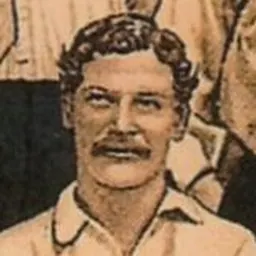
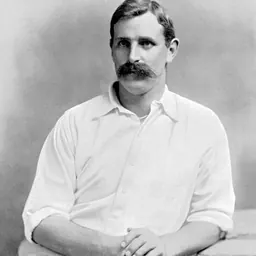





Related people
Same field, nearest in time


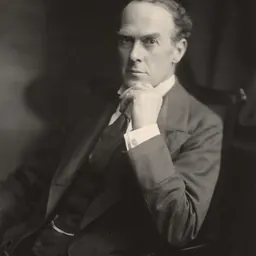
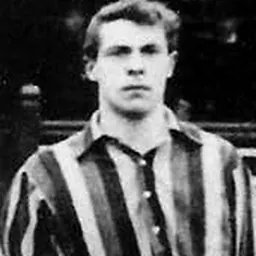
Contemporaries
People whose lives overlapped Tinsley Lindley's
Frequently asked questions
Who was Tinsley Lindley?
English footballer (1865-1940)
When was Tinsley Lindley born?
Tinsley Lindley was born on 27 October 1865 in Nottingham.
When did Tinsley Lindley die?
Tinsley Lindley died on 31 March 1940 in Nottingham.
What was Tinsley Lindley's occupation?
Tinsley Lindley was an association football player, cricketer, judge and barrister.
What nationality was Tinsley Lindley?
Tinsley Lindley was British.
Sources & further reading
Cite this page
APA: Biography.guide. (2026). Tinsley Lindley. https://biography.guide/tinsley-lindley/
MLA: "Tinsley Lindley." Biography.guide, https://biography.guide/tinsley-lindley/.
Chicago: "Tinsley Lindley." Biography.guide. https://biography.guide/tinsley-lindley/.
Data last updated: 2026-09-20 · Spot an error? Report a correction.
Page generated 2026-09-27 05:11 UTC