
Timothy McVeigh
American domestic anti-government terrorist
About Timothy McVeigh
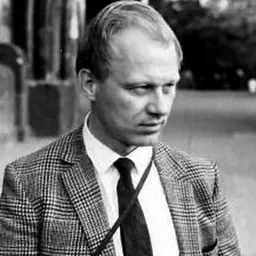
Lived 1968 – 2001 (aged 33). Timothy McVeigh was an American military personnel, security guard, terrorist and mass murderer.
Early life Timothy James McVeigh was born on April 23, 1968, in Lockport, New York, the only son and the second of three children of his Irish American parents, Noreen Mildred "Mickey" Hill and William McVeigh. In 1866, McVeigh's great-great-grandfather Edward McVeigh emigrated from Ireland and settled in Niagara County. After McVeigh's parents divorced when he was ten years old, he was raised by his father in Pendleton, New York.
Most who knew McVeigh remember him as being very shy and withdrawn while a few described him as an outgoing and playful child who withdrew as an adolescent. He is said to have had only one girlfriend as an adolescent; he later told journalists that when trying to impress women, he would always say the wrong thing.
While in high school McVeigh became interested in computers, and hacked into government computer systems on his Commodore 64 under the handle The Wanderer, taken from the song by Dion DiMucci. In his senior year he was named "most promising computer programmer" of Starpoint Central High School (as well as "Most Talkative" by his classmates as a joke as he did not speak much) but had relatively poor grades until his 1986 graduation. After dropping out of college, McVeigh worked as an armored car guard and was noted by co-workers as being obsessed with guns. One co-worker recalled an instance when McVeigh came to work "looking like Pancho Villa" as he was wearing bandoliers.
In an interview before his execution, McVeigh said that he hit an Iraqi tank more than 500 yards away on his first day in the war and then the Iraqis surrendered. He also decapitated an Iraqi soldier with cannon fire from 1,100 yards away. He said he was later shocked to see carnage on the road while leaving Kuwait City after U.S. troops routed the Iraqi Army. McVeigh received several service awards, including the Bronze Star Medal Southwest Asia Service Medal, Army Service Ribbon, McVeigh decided to leave the Army and was honorably discharged in 1991.
Post-military life McVeigh wrote letters to local newspapers complaining about taxes. In 1992, he wrote to the Lockport Union-Sun & Journal:
McVeigh also wrote to Representative John J. LaFalce (D–New York), complaining about the arrest of a woman for carrying mace:
For the five months following the Waco siege, McVeigh worked at gun shows and handed out free cards printed with the name and address of Lon Horiuchi, an FBI sniper, "in the hope that somebody in the Patriot movement would assassinate the sharpshooter." Horiuchi's actions while an FBI agent have drawn controversy, specifically his shooting and killing of Randy Weaver's wife while she held an infant child. McVeigh wrote hate mail to Horiuchi, suggesting that "what goes around, comes around". McVeigh later considered putting aside his plan to target the Murrah Building to target Horiuchi or a member of his family instead.
McVeigh became a fixture on the gun show circuit, traveling to forty states and visiting about eighty gun shows. He found that the further west he went, the more anti-government sentiment he encountered, at least until he got to what he called "The People's Socialist Republic of California."
Arizona with Fortier McVeigh had a road atlas with hand-drawn designations of the most likely places for nuclear attacks and considered buying property in Seligman, Arizona, which he determined to be in a "nuclear-free zone." He lived with Michael Fortier in Kingman, Arizona, and the two became so close that he served as best man at Fortier's wedding. McVeigh experimented with cannabis and methamphetamine after first researching their effects in an encyclopedia. He was never as interested in drugs as Fortier was, and one of the reasons they parted ways was that McVeigh grew tired of Fortier's drug habits.
With Nichols, Waco siege, and radicalization
In April 1993, McVeigh headed for a farm in Michigan where former roommate Terry Nichols lived. In between watching coverage of the Waco siege on TV, Nichols and his brother began teaching McVeigh how to make explosives by combining household chemicals in plastic jugs. The destruction of the Waco compound enraged McVeigh and convinced him that it was time to take action. He was particularly angered by the government's use of CS gas on women and children; he had been exposed to the gas as part of his military training and was familiar with its effects. The disappearance of certain evidence, such as the bullet-riddled steel-reinforced front door to the complex, led him to suspect a cover-up.
McVeigh's anti-government rhetoric became more radical. He began to sell Bureau of Alcohol, Tobacco, Firearms and Explosives (ATF) hats riddled with bullet holes, and a flare gun that he said could shoot down an "ATF helicopter". He produced videos detailing the government's actions at Waco and handed out pamphlets with titles such as "U.S. Government Initiates Open Warfare Against American People" and "Waco Shootout Evokes Memory of Warsaw '43." He began changing his answering machine greeting every couple of weeks to various quotes by Patrick Henry, such as "Give me liberty or give me death." He began experimenting with making pipe bombs and other small explosive devices. The government imposed new firearms restrictions in 1994 which McVeigh believed threatened his livelihood.
McVeigh felt the need to personally reconnoiter sites of rumored conspiracies. He visited Area 51 in order to defy government restrictions on photography and went to Gulfport, Mississippi, to determine the veracity of rumors about United Nations operations. These turned out to be false; the Russian vehicles on the site were being configured for use in U.N.-sponsored humanitarian aid efforts. Around this time, McVeigh and Nichols began making bulk purchases of ammonium nitrate, an agricultural fertilizer, for resale to survivalists, since rumors were circulating that the government was preparing to ban it.
McVeigh also wrote a letter to recruit a customer named Steve Colbern: quote|A man with nothing left to lose is a very dangerous man and his energy/anger can be focused toward a common/righteous goal. What I'm asking you to do, then, is sit back and be honest with yourself. Do you have kids/wife? Would you back out at the last minute to care for the family? Are you interested in keeping your firearms for their current/future monetary value, or would you drag that '06 through rock, swamp and cactus... to get off the needed shot? In short, I'm not looking for talkers, I'm looking for fighters... And if you are a fed, think twice. Think twice about the Constitution you are supposedly enforcing (isn't "enforcing freedom" an oxymoron?) and think twice about catching us with our guard down – you will lose just like Degan didand your family will lose. He said he wanted Reno to accept "full responsibility in deed, not just words." Such an assassination seemed too difficult, and he decided that since federal agents had become soldiers, he should strike at them at their command centers. According to McVeigh's authorized biography, he decided that he could make the loudest statement by bombing a federal building. After the bombing, he was ambivalent about his act and the deaths he caused; as he said in letters to his hometown newspaper, he sometimes wished that he had carried out a series of assassinations against police and government officials instead.
Oklahoma City bombing
The Alfred P. Murrah Federal Building two days after the Oklahoma City bombing Working at a lakeside campground near McVeigh's old Army post, he and Nichols constructed an ANFO explosive device mounted in the back of a rented Ryder truck. The bomb consisted of about of ammonium nitrate and nitromethane.
On April 19, 1995, McVeigh drove the truck to the front of the Alfred P. Murrah Federal Building just as its offices opened for the day. Before arriving, he stopped to light a two-minute fuse. At 09:02, a large explosion destroyed the north half of the building. It killed 168 people, including 19 children in the day care center on the second floor, and injured 684 others. Nichols said that he and McVeigh did know about the daycare center in the building, and that they did not care.
McVeigh's biographers, Lou Michel and Dan Herbeck, spoke with McVeigh in interviews totaling 75 hours. He said about the victims:
During an interview in 2000 with Ed Bradley for television news magazine 60 Minutes, Bradley asked McVeigh for his reaction to the deaths of the nineteen children. McVeigh said:
According to the Oklahoma City Memorial Institute for the Prevention of Terrorism (MIPT), more than 300 buildings in the city were damaged. More than 12,000 volunteers and rescue workers took part in the rescue, recovery and support operations following the bombing. In reference to theories that McVeigh had assistance from others, he responded with a well-known line from the film A Few Good Men, "You can't handle the truth!" He added, "Because the truth is, I blew up the Murrah Building and isn't it kind of scary that one man could wreak this kind of hell?"
Arrest and trial
By tracing the vehicle identification number of a rear axle found in the wreckage, the FBI identified the vehicle as a Ryder rental box truck rented from Junction City, Kansas. Workers at the agency assisted an FBI artist in creating a sketch of the renter, who had used the alias "Robert Kling". The sketch was shown in the area. Lea McGown, manager of the local Dreamland Motel, identified the sketch as Timothy McVeigh.
Shortly after the bombing, while driving on Interstate 35 in Noble County, near Perry, Oklahoma, McVeigh was stopped by State Trooper Charles J. Hanger. Hanger had passed McVeigh's yellow 1977 Mercury Marquis and noticed that it had no license plate. McVeigh admitted to the state trooperwho noticed a bulge under his jacketthat he had a gun; the trooper arrested him for driving without plates and possessing an illegal firearm. McVeigh's concealed weapon permit was not legal in Oklahoma. McVeigh was wearing a shirt at that time with a picture of Abraham Lincoln and the motto ('Thus always to tyrants'), the supposed words shouted by John Wilkes Booth before he shot Lincoln. Three days later, McVeigh was identified as the subject of the nationwide manhunt.
On August 10, 1995, McVeigh was indicted on 11 federal counts, including conspiracy to use a weapon of mass destruction, use of a weapon of mass destruction, destruction with the use of explosives, and eight counts of first degree murder for the deaths of law enforcement officers. On February 20, 1996, the Court granted a change of venue and ordered that the case be transferred from Oklahoma City to the District Court in Denver, to be presided over by District Judge Richard Paul Matsch.
McVeigh instructed his lawyers to use a necessity defense, but they ended up not doing so. As part of the defense, McVeigh's lawyers showed the jury the controversial video Waco, the Big Lie. Although 168 people, including 19 children, were killed in the April 19, 1995, bombing, murder charges were brought against McVeigh for only the eight federal agents who were on duty when the bomb destroyed much of the Murrah Building. Along with the eight counts of murder, McVeigh was charged with conspiracy to use a weapon of mass destruction, and destroying a federal building. Oklahoma City District Attorney Bob Macy said he would file state charges in the other 160 murders after McVeigh's co-defendant, Terry Nichols, was tried. After the verdict, McVeigh tried to calm his mother by saying, "Think of it this way. When I was in the Army, you didn't see me for years. Think of me that way now, like I'm away in the Army again, on an assignment for the military."
On June 13, the jury recommended that McVeigh be sentenced to death. The U.S. Department of Justice brought federal charges against McVeigh for causing the deaths of eight federal officers leading to a possible death penalty for McVeigh; they could not bring charges against McVeigh for the remaining 160 deaths in federal court because those deaths fell under the jurisdiction of the State of Oklahoma. Because McVeigh was convicted and sentenced to death, the State of Oklahoma did not file murder charges against McVeigh for the other 160 deaths. Before the sentence was formally pronounced by Judge Matsch, McVeigh addressed the court for the first time and said: "If the Court please, I wish to use the words of Justice Louis Brandeis dissenting in Olmstead v. United States to speak for me. He wrote, 'Our Government is the potent, the omnipresent teacher. For good or for ill, it teaches the whole people by its example.' That's all I have."
Motivations for the bombing McVeigh claimed that the bombing was revenge against the government for the sieges at Waco and Ruby Ridge. McVeigh visited Waco during the standoff. While there, he was interviewed by student reporter Michelle Rauch, a senior journalism major at Southern Methodist University who was writing for the school paper. McVeigh expressed his objections over what was happening there.
McVeigh frequently quoted and alluded to the white supremacist novel The Turner Diaries; he claimed to appreciate its interest in firearms. Photocopies of pages sixty-one and sixty-two of The Turner Diaries were found in an envelope inside McVeigh's car. These pages depicted a fictitious mortar attack upon the U.S. Capitol in Washington.
In a 1,200-word essay dated March 1998, from the federal maximum-security prison at Florence, Colorado, McVeigh claimed that the terrorist bombing was "morally equivalent" to U.S. military actions against Iraq and other foreign countries. The handwritten essay, submitted to and published by the alternative national news magazine Media Bypass, was distributed worldwide by the Associated Press on May 29, 1998. This was written in the midst of the 1998 Iraq disarmament crisis and a few months before Operation Desert Fox.
On April 26, 2001, McVeigh wrote a letter to Fox News, "I Explain Herein Why I Bombed the Murrah Federal Building in Oklahoma City", which explicitly laid out his reasons for the attack. McVeigh read the novel Unintended Consequences (1996), and said that if it had come out a few years earlier, he would have given serious consideration to using sniper attacks in a war of attrition against the government instead of bombing a federal building. At Nichols' trial, evidence was presented indicating that others may have been involved. Several residents of central Kansas, including real estate agent Georgia Rucker and a retired Army NCO, testified at Terry Nichols' federal trial that they had seen two trucks at Geary Lake State Park, where prosecutors alleged the bomb was assembled. The retired NCO said he visited the lake on April 18, 1995, but left after a group of surly men looked at him aggressively. The operator of the Dreamland Motel testified that two Ryder trucks had been parked outside her Grandview Plaza motel where McVeigh stayed in Room 26 the weekend before the bombing. Terry Nichols is incarcerated at ADX Florence in Florence, Colorado.
Michael and Lori Fortier were also considered accomplices, due to their foreknowledge of the bombing. In addition to Michael assisting McVeigh in scouting the federal building, Lori had helped McVeigh laminate a fake driver's license which was used to rent the Ryder truck. Michael agreed to testify against McVeigh and Nichols in exchange for a reduced sentence and immunity for his wife. He was sentenced on May 27, 1998, to twelve years in prison and fined $75,000 for failing to warn authorities about the bombing. On January 20, 2006, Fortier was released for good behavior into the Witness Protection Program and given a new identity.
An ATF informant, Carol Howe, told reporters that shortly before the bombing she had warned her handlers that guests of the private community of Elohim City, Oklahoma, were planning a major bombing attack. McVeigh was issued a speeding ticket there at the same time. Other than this speeding ticket, there is no evidence of a connection between McVeigh and members of the Midwest Bank Robbers at Elohim City.
Some witnesses claimed to have seen a second suspect, and there was a search for a "John Doe #2", but none was ever found.
Incarceration and execution McVeigh was held at USP Florence ADMAX in Colorado until 1999.
McVeigh's death sentence was delayed pending an appeal. One of his appeals for , taken to the Supreme Court of the United States, was denied on March 8, 1999. McVeigh's request for a nationally televised execution was also denied. Entertainment Network Inc., an Internet company that produces adult-themed websites, unsuccessfully sued for the right to broadcast the execution. At USP Florence ADMAX, McVeigh and Nichols were housed in what was known as "bomber's row". Ted Kaczynski, Luis Felipe, and Ramzi Yousef were also housed in this cell block. Yousef made frequent, unsuccessful attempts to convert McVeigh to Islam. An agnostic, he said that if there turned out to be an afterlife, he would "improvise, adapt and overcome", He also said: "I knew I wanted this before it happened. I knew my objective was state-assisted suicide and when it happens, it's in your face. You just did something you're trying to say should be illegal for medical personnel." McVeigh dropped his remaining appeals, saying that he would rather die than spend the rest of his life in prison. On January 16, 2001, the BOP set May 16 as McVeigh's execution date. McVeigh said that his only regret was not completely destroying the federal building. Six days prior to his scheduled execution, the FBI turned over thousands of documents of evidence it had previously withheld to McVeigh's attorneys. As a result, U.S. Attorney General John Ashcroft announced McVeigh's execution would be stayed for one month.
McVeigh was held on federal death row at USP Terre Haute in Indiana after 1999.
McVeigh chose William Ernest Henley's 1875 poem "Invictus" as his final written statement. Just before the execution, when he was asked if he had a final statement, he declined. Jay Sawyer, a relative of one of the victims, wrote, "Without saying a word, he got the final word." Larry Whicher, whose brother died in the attack, described McVeigh as having "a totally expressionless, blank stare. He had a look of defiance and that if he could, he'd do it all over again." McVeigh was executed by lethal injection at 7:14 a.m. on June 11, 2001, the first person to be executed by the United States federal government since Victor Feguer was executed in Iowa on March 15, 1963.
McVeigh stated that he had "religious, ethical and philosophical objections" to an autopsy. A letter to his hometown paper, The Buffalo News, reads "I was sentenced to death, not to death and disembowelment." The authorities granted him his wish.
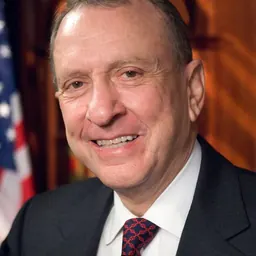
On November 21, 1997, President Bill Clinton had signed S. 923, special legislation introduced by Senator Arlen Specter to bar McVeigh and other veterans convicted of capital crimes from being buried in any military cemetery. His body was cremated at Mattox Ryan Funeral Home in Terre Haute. His ashes were given to his lawyer, who said "the final destination of McVeigh's remains would remain privileged forever." He had expressed willingness to donate organs, but was prohibited from doing so by prison regulations.
Associations According to CNN, his only known associations were as a registered Republican while in Buffalo, New York, in the 1980s, and a membership in the National Rifle Association while in the Army.
While in the military, he signed up for a trial membership in the Ku Klux Klan, although he did not ultimately continue with the Klan. There is no conclusive evidence that he ever belonged to any other extremist groups. During his childhood, he and his father attended Mass regularly. McVeigh was confirmed at the Good Shepherd Church in Pendleton, New York, in 1985. In a 1996 interview, McVeigh professed belief in "a God", although he said he had "sort of lost touch with" Catholicism and "I never really picked it up, however I do maintain core beliefs." Father Charles Smith ministered to McVeigh in his last moments on death row.
In popular culture In the 2023 historical drama miniseries Waco: The Aftermath, McVeigh is portrayed by Alex Breaux.
In 2024, HBO produced the documentary An American Bombing: The Road to April 19.
In the 2024 film McVeigh, he is played by Alfie Allen.
Don’t just read it —
keep it.
Full-length biographies made to live with: read them, listen on the way to work, watch them tonight.
- E-book
- Audio
- Video
Instant download · yours to keep · every purchase keeps this site free
Important facts
People in Timothy McVeigh's life
Named in this biography and alive at the same time





Related people
Same field, nearest in time

Contemporaries
People whose lives overlapped Timothy McVeigh's



Frequently asked questions
Who was Timothy McVeigh?
American domestic anti-government terrorist (1968–2001)
When was Timothy McVeigh born?
Timothy McVeigh was born on 23 April 1968 in Lockport.
When did Timothy McVeigh die?
Timothy McVeigh died on 11 June 2001 in United States Penitentiary, Terre Haute.
What was Timothy McVeigh's occupation?
Timothy McVeigh was a military personnel, security guard, terrorist and mass murderer.
What nationality was Timothy McVeigh?
Timothy McVeigh was American.
Sources & further reading
Cite this page
APA: Biography.guide. (2026). Timothy McVeigh. https://biography.guide/timothy-mcveigh/
MLA: "Timothy McVeigh." Biography.guide, https://biography.guide/timothy-mcveigh/.
Chicago: "Timothy McVeigh." Biography.guide. https://biography.guide/timothy-mcveigh/.
Data last updated: 2026-09-20 · Spot an error? Report a correction.
Page generated 2026-09-27 05:29 UTC