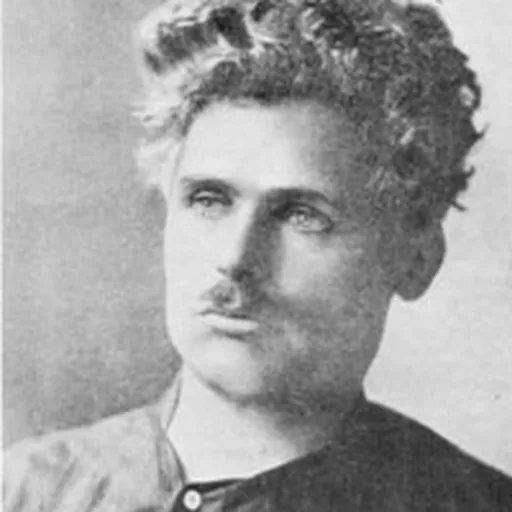
About Timofei Sapronov
Lived 1887 – 1937 (aged 49–50). Timofei Sapronov was a Russian statesperson, economist and politician.
Timofei Vladimirovich Sapronov (; 1887 – September 28, 1937) was a Russian revolutionary, Old Bolshevik and socialist militant who was one of the leaders of the Left Opposition in the Communist Party of the Soviet Union.
Early life and career Sapronov was born in Mostaushka, Tula Governorate in a family of Russian peasants. According to an autobiographical essay he wrote in the 1920s for the Great Soviet Encyclopedia his family lived a hut with a roof that leaked, and when he started school, aged seven, his clothes were so ragged that the other children nicknamed him "the beggar". From the age of 15, he worked as a painter. He took part in street demonstrations in Moscow during the 1905 Revolution, but the revolution had been suppressed, he wrote, "my search for some kind of organisation among construction workers was in vain, and I had no choice but to work alone." In 1912, he learnt about the Bolshevik faction of the Russian Social Democratic Labour Party from reading Pravda, and created a Bolshevik group among his colleagues, and founded a builders' union. In 1916, he was drafted into the Russian army, for the war with Germany, but was discharged because of illness. He then lived illegally, as an itinerant Bolshevik organiser.
During the Russian Revolution, Sapronov was based in Moscow, where he was a member of the military committee of the Bolshevik faction of the RSDLP, a delegate to the short-lived Constituent Assembly, and chairman of the provincial executive from October 1917 to December 1919, after which he was transferred to Kharkiv, after the Red Army had driven the White Army of General Denikin out of the city, to take over as chairman of the executive committee. Despite calling themselves 'centralists', the group campaigned persistently against over-centralisation, and was criticised by the party leadership for being excessively decentralist.
While he was based in Kharkiv, Sapronov captured control of the party organisation, expanded the membership, and dominated the Fourth Ukrainian party conference in March 1920, securing a left wing majority, but when Sapronov and Osinsky presented a set of theses to the Ninth Party Congress in Moscow, later that month, they were heavily outvoted, after Lenin had pronounced that their submission was "nothing but theoretical blunders."
The Democratic Centralists continued to campaign against the bureaucratic methods of the party throughout the early twenties as part of the so-called 1923 opposition. Despite this Sapronov remained a leading party figure and chairman of the Public Works Committee, a member of the Central Executive Committee and was a pall-bearer at Lenin's funeral. He, along with Osinsky, Smirnov and Drobnis, signed The Declaration of 46 and later adhered to the Left Opposition, albeit as a separate grouping considered ultra-left within it. Sapronov helped lay the groundwork for the United Opposition of the Trotskyist and Zinovite factions in 1926, but he and the former Democratic Centralists remained ultra-left, declaring in the statement of the Group of 15 that the Soviet Union was no longer a workers' state and that capitalism had been restored. They also ‘denied the necessity for the defense of the Soviet Union’ according to Leon Trotsky addressing the Dewey Commission.
Arrest and death Sapronov was expelled from the party at the fifteenth Party Congress in December 1927 and sentenced to three years exile in Arkhangelsk. When the decision was reported to them, he and Smirnov signed a protest claiming that they did not know what they were accused of, and that "the OGPU does not and cannot have any facts about our anti-Soviet work. Our work of late has been to defend within the party our views set out in the Platform of the 15..."
In December 1931, Sapronov wrote an 11-page essay, entitled The Agony of the Petty-Bourgeois Dictatorship in which he said that 'police methods' had been used to force the peasants onto collective farms, creating "a kind if ugly state capitalism" and that "to call such an economy socialist means committing a crime against the working class."
Don’t just read it —
keep it.
Full-length biographies made to live with: read them, listen on the way to work, watch them tonight.
- E-book
- Audio
- Video
Instant download · yours to keep · every purchase keeps this site free
Important facts
People in Timofei Sapronov's life
Named in this biography and alive at the same time
Related people
Same field, nearest in time





Contemporaries
People whose lives overlapped Timofei Sapronov's




Frequently asked questions
Who was Timofei Sapronov?
Russian revolutionary (1887-1937)
When was Timofei Sapronov born?
Timofei Sapronov was born in 1887 in Yefremov Uyezd.
When did Timofei Sapronov die?
Timofei Sapronov died on 28 September 1937 in Verkhneuralsk.
What was Timofei Sapronov's occupation?
Timofei Sapronov was a statesperson, economist and politician.
What nationality was Timofei Sapronov?
Timofei Sapronov was Russian.
Sources & further reading
Cite this page
APA: Biography.guide. (2026). Timofei Sapronov. https://biography.guide/timofei-sapronov/
MLA: "Timofei Sapronov." Biography.guide, https://biography.guide/timofei-sapronov/.
Chicago: "Timofei Sapronov." Biography.guide. https://biography.guide/timofei-sapronov/.
Data last updated: 2026-09-22 · Spot an error? Report a correction.
Portrait: Wikimedia Commons · author & licence
Page generated 2026-09-27 05:03 UTC