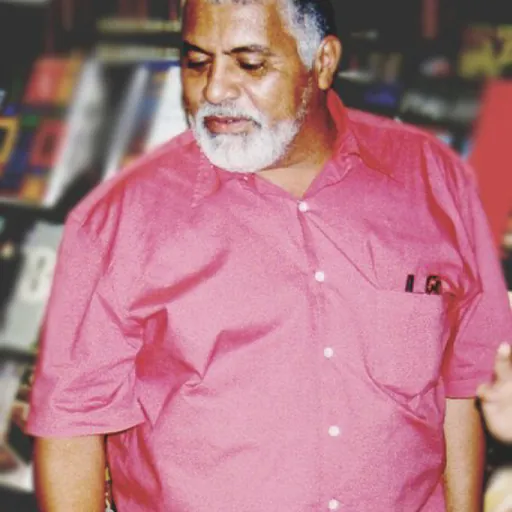
About Tim Lopes
Lived 1950 – 2002 (aged 51). Tim Lopes was a Brazilian journalist and investigative journalism.
Tim Lopes (born Arcanjo Antonino Lopes do Nascimento; November 18, 1950 – June 2, 2002) was a Brazilian investigative journalist and producer for the Brazilian television network Rede Globo. In 2002, the media reported him missing while working undercover on a story in one of Rio's favelas. It was later learned that Lopes had been accosted by drug traffickers who controlled the area, was kidnapped, driven to the top of a neighboring favela in the trunk of a car, tied to a tree and subjected to a mock trial, tortured by having his hands, arms, and legs severed with a sword while still alive, and then had his body necklaced – a practice that traffickers have dubbed (in allusion to the microwave oven).
The details of Lopes's death received substantial attention in Brazil's media because of the barbarity of the crime and due to it highlighting the existence of (parallel power) within Rio—meaning criminals controlling areas of the city with impunity.
Early life and personal life Arcanjo Antonino Lopes do Nascimento was born in Pelotas, Brazil, the fourth child of a family of twelve. When he was 8 years old, his parents moved the family to Rio de Janeiro, where they lived in humble circumstances in the Mangueira favela in a three-room shanty.
Hill which is part of the Mangueira favela where Lopes grew up in Rio de JaneiroMangueira is home to the samba school, Mangueira and is located on a hill near Maracanã football stadium.
Years later as a journalist, Lopes produced a piece about Mangueira samba and one of its founders, the Carioca sambista Carlos Cachaça. Cachaça saw the story and commented to a sambista friend, Monarco, of the Velha Guarda da Portela, that Lopes's reporting was "the best material that he had ever seen" on Mangueira. In 2002, Lopes was co-writing a book, about Mangueira samba school and his experience growing up there, with Alexander Medeiros.
Lopes was one of the founders of the carnival block "Simpatia é quase amor" ("sympathy is almost like love"), of Ipanema, and had served as an official judge of the annual carnival procession at the Sambadrome Marquês de Sapucaí. He was a dedicated fan of the professional Rio football club, Vasco da Gama.
Lopes lived with his wife Alessandra Wagner and her son Diogo. Lopes also had a nineteen-year-old son, Bruno, from a previous marriage, with whom he maintained a father-son relationship. He was at ease hanging out with wealthy residents in Leblon or with those living in poor areas of the city or on the street, and in speaking street slang.
Career Tim Lopes attended journalism school at the Faculdade Hélio Alonso (FACHA) in Rio de Janeiro and during his career wrote for the Rio newspapers O Globo, O Dia, and Jornal do Brasil. Lopes won a Brazilian journalism award called the Prêmio Abril de Jornalismo in both 1985 and 1986 for feature stories involving football in the sports magazine Placar. Lopes felt that the government had ceded control of poor neighborhoods to violent drug traffickers.
Lopes became a producer at Rede Globo in 1996. In 2001 Lopes and his team at Rede Globo received the Prêmio Esso (Brazil's version of the Pulitzer) for an investigative series entitled "Feirão das Drogas" ("Big Drug Fair"), in which he used a hidden camera to show dealers on the street openly hawking cocaine to passing pedestrians, yelling out the drug and its price. His footage also captured armed traffickers parading past on motorcycles with AK-47s.
Death
Kidnapping On the afternoon of June 2, 2002, Lopes left his apartment in a middle class section of Rio's Copacabana neighborhood. thumb Rede Globo headquarters in Rio's Jardim Botânico neighborhood, where Lopes began working in the broadcast news division in the mid-1990s as an investigative journalist and producer. He was heading to the Vila Cruzeiro favela after first stopping by his office at Rede Globo, where he had been a broadcast producer since 1996. César Sebra, the man who was Lopes's boss for six years at Rede Globo, recalled: "Most of the journalists working at Globo's offices are middle-class. Only a few people live like Tim used to live in the favelas." Lopes had previously confided to colleagues that he was feeling tired and wanted to take a break from the agitation and violence of the city and find a rural retreat somewhere where he could recuperate. "The deeper in the jungle the better," he told them. His awareness of drugs and crime plaguing the city, and the lack of social services for youth to deal with these problems, seemed to drain him of energy. Since residents could not seek redress from the police, they instead sought help from Lopes. Nassif Elias Sobrinho, president of the Rio journalist union, recalled: "Tim Lopes was called because there was no one to hear their problems. The community told the police many times and nothing was done."
After leaving his office that afternoon at the Rede Globo television studios, where he left his "cell phone, wallet, and dress shirt," Lopes went to the Penha Shopping Mall where he rigged himself with a hidden camera. One of the purposes of this baile funk was to draw crowds from other neighborhoods, so Lopes's presence there would not have made him a target in and of itself. However, the "Feirão das Drogas" report from the previous year had received a lot of attention and led to numerous arrests. Furthermore, after Lopes and his team had been granted the Prêmio Esso, his image was subsequently broadcast all over Rio.
On the afternoon of June 2, Lopes decided to film at a drug-selling location along (Eighth Street) in the Vila Cruzeiro favela. Lopes's aim was to obtain footage of drugs and weapons, as he had in 2001 in the favela da Grota within the Complexo do Alemão.
Upon being confronted, Lopes stated that he was a journalist from Rede Globo. They asked for his journalist credentials, which Lopes did not carry when working undercover. Lopes was subsequently beaten at the scene. Using a Nextel radio, the traffickers called the head drug lord, Elias Pereira da Silva, known by his nickname, Elias "Maluco" (literally, "Crazy Elias" or "Madman Elias"), at the faction's headquarters at the favela da Grota within the Complexo do Alemão for instructions.
Murder
The traffickers drove Lopes along a winding back dirt road leading away from the Vila Cruzeiro favela (which is situated in Penha) and into the Complexo do Alemão network of favelas, nine of whom participated in Lopes's murder. The other traffickers, including André "Capeta" and Ratinho, also participated in the torture. Police were later told that there was blood on several of the traffickers that were gathered around. Lopes was placed within several tires, covered in diesel fuel, and set on fire. This process, which had become institutionalized among traffickers within Rio's most violent favelas at the time, was referred to as (literally, "microwave oven")
Investigation Detective Daniel Gomes learned through speaking to shopkeepers and others in Vila Cruzeiro that Lopes had arrived at the favela in the afternoon and was accosted by traffickers at around 8:00. At that time, a Globo attorney entered a nearby police station with the driver from the previous night and spoke with Inspector Daniel Gomes, the chief detective in charge of the Lopes case.
When Gomes started investigating in Vila Cruzeiro that Monday, the word on the street was electric, as residents spoke about a man who had been captured and beaten by traffickers. Also found buried at the site were Lopes' wristwatch, his crucifix, and the micro-camera that he had been using that night. Rio Governor Benedita da Silva subsequently took Gomes off of the case.
On July 7, Lopes's remains were buried at the Jardim da Saudade cemetery in the Rio suburb of Sulacap. State governor Benedita da Silva attended the funeral.
Five years after Lopes's death, a teenager was arrested in southern Brazil who had been at the scene of his murder. Then going by the name (literally, "Fifty"), he was a 12-year-old boy in 2002 when he was told to buy diesel fuel and bring it to the top of the hill in order to set fire to Lopes. Upon his arrest in 2007, he gave police a detailed account of that night and spoke to a group of journalists, adding to what had been previously said during the investigation.
Of the group of traffickers involved who were subsequently pursued, three were killed by police, and others were sentenced to prison. After their incarceration, anger was expressed through Rio's media when two of the traffickers were paroled on work release at which point they fled. Both have since been recaptured.
Among those convicted of Lopes's murder, Claudino dos Santos Coelho ("Xuxa"), and Cláudio Orlando do Nascimento ("Ratinho") were each sentenced to 23 years and 6 months' incarceration.
Ratinho took an active part in torturing Lopes and was strongly in favor of killing Lopes when they conducted a mock trial. Ratinho had been one of the traffickers featured in the "Big Drug Fair" report from the previous year, which had resulted in a period of police crackdowns.
Claudino dos Santos Coelho (known by the nicknames "Xuxa" and "Russão") escaped from the Bangu penitentiary in Rio's in February 2013, along with 30 other prisoners, by tunneling to a sewer. By September 2013, he was one of those leading a gang of sixty heavily armed bandits ensconced in the jungled hills above Rio (between Covanca and Lins de Vasconcelos) as a home base from which they preyed on neighborhoods. When the police special forces unit of BOPE mounted an operation against them in September 2013 he and another trafficker were killed in the ensuing gun battle along with a lieutenant of BOPE.
Elizeu Felício de Souza ("Zeu") was responsible for setting fire to Lopes's body. In 2007 he was paroled, at which point he fled to the Complexo do Alemão, which was an area outside of police interference at that time. Zeu was later secretly filmed working as a drug trafficker in the Complexo do Alemão.
Ângelo Ferreira da Silva ("Primo") was sentenced to nine years. After he had completed a sixth of his total sentence he was let out of prison on work release, at which point he fled. He was recaptured by police in the Rio suburb of Santa Cruz in May 2010.
Other traffickers implicated in Lopes's torture and murder were André da Cruz Barbosa (André "Capeta"), who cut off Lopes's legs and ordered others to burn the body; Flávio Reginaldo dos Santos ("Buda"); and Maurício de Lima Matias ("Boizinho"), who were all killed in confrontations with police.
Aftermath Though a prominent journalist, Tim Lopes only became nationally known after his death in a crime that shocked the country.
Rio journalist Jorge Antonio Barros, who has been writing about Rio's favelas and the crime beat since the 1980s and was a colleague of Lopes at Globo, wrote that Lopes's death served to snap him out of the dream state, to which people sometimes fall prey, of romanticizing "the malandro;" and that his death reminded people who don't have to live in favelas under the "law of the trafficker" of the terror that exists as a daily reality.
Another colleague of Lopes at Globo was journalist César Seabra, who wrote: "The death of Tim Lopes opened our eyes to a new reality. Now our dilemma is to figure out how to report stories from the areas controlled by drug dealers." Seabra wrote in response to Lopes's death that the culture of crime reporting at that time needed to change: "We're tired of giving the criminals the front page. We're tired of interviewing the criminal on TV. We're tired of empowering the criminal in order to get an exclusive."
Tim Lopes was honored in a São Paulo carnaval (carnival) procession in 2003 by the samba school, Acadêmicos do Tucuruvi, with the theme "Do not shut my voice," a tribute to a free press, with lyrics such as, "the truth Tim-Tim by Tim-Tim," in reference to his nickname.
A street has since been named after Tim Lopes in Rio's west suburb of Barra da Tijuca. It is called Avenida Tim Lopes. The change was lobbied by the Sindicato dos Jornalistas Profissionais do Município do Rio (Union of Professional Journalists of the City of Rio).
When a new public high school was built in the Complexo do Alemão, it was named Colégio Tim Lopes. From time to time, on the anniversary of Lopes's death, students have artistic performances and other expressions to memorialize Lopes.
Police invades Vila Cruzeiro and the Complexo
On November 25, 2010, Rio's special forces battalion (BOPE), supported by other police units, entered Vila Cruzeiro in Penha via Brazilian Marine armored transport to various points within the slum and ultimately took control of the hill and the surrounding area of Penha. This action was in response to attacks throughout Rio by the criminal faction headquartered there. Military and civil police units (which included CORE, Batalhão de Choque, Federal Police, among others) then took over the territory of the network of favelas comprising the Complexo do Alemão with support from the Brazilian Armed Forces. Thousands of soldiers of the Brazilian military were stationed throughout these communities during the subsequent two years.
During the 2010 Rio de Janeiro security crisis, after BOPE reached strategic points at the top of Vila Cruzeiro hill via tanks driven by Brazilian Marines, Rio's media showed live aerial footage of a multitude of criminals frantically fleeing on foot over the dirt back roads that exited into the Complexo do Alemão. This was the same route that the kidnapped Tim Lopes traveled in a car trunk when he was being transported from Vila Cruzeiro to the Complexo do Alemão.
Several Brazilian journalists visited these favelas in the days after the security forces took control and discussed what the changes meant. (During a time period after Tim Lopes's death, when journalists would enter favelas housing criminal factions associated with the traffickers who killed Lopes, they would sometimes hear "vai ter mais Tim, vai ter mais Tim!" (There will be more Tims!) as a warning insinuating that more reporters could be killed.) Just the Complexo itself is policed by 1,200 UPP officers (it was announced in July 2012 that the number would be increased to 1,800). One of the UPPs within the Complexo covers the area of the Pedra do Sapo, which is the hill and upper field where an anonymous tip led detectives to discover a clandestine cemetery which contained some fragments of Lopes's bones and some of his personal effects.
In December 2010, a mass was held to commemorate Lopes in a church in the Complexo called the Igreja Nossa Senhora de Guadalupe. Lopes's 87-year-old mother, Maria do Carmo do Nascimento, was in attendance. The service was organized by Rio's municipal union for journalists, the Sindicato dos Jornalistas do Município do Rio de Janeiro.
In January 2011, during the inauguration ceremony marking his reelection, Rio de Janeiro State Governor Sérgio Cabral mentioned Tim Lopes in his inaugural speech. Cabral stated that Tim Lopes's memory had been honored by Rio's government when the press room and a public high school were named after Lopes.
Documentary films
Tim Lopes's son, Bruno Quintella (who was 19 when his father was killed), completed a university degree in journalism in 2010. In 2011 he began filming a biographical documentary film about the life of his father to show a broader perspective, not just the details of his death. In May 2012, 29-year-old Quintella visited Vila Cruzeiro, and also Pedro do Sapo in the Complexo do Alemão, the location of the clandestine cemetery that had held his father's remains. His visit coincided with the establishment of a permanent community police presence, as new UPPs were inaugurated in the area. The title of the film is "Histórias de Arcanjo: um documentário sobre Tim Lopes," (Stories of Archangel: a documentary about Tim Lopes); Arcanjo being Tim Lopes's first name.
In 2011 it was announced that Brazilian film director José Padilha, who is best known for his Elite Squad films (and who directed the remake of the 1987 urban sci-fi action film, RoboCop) is directing a documentary about the 2010 invasion of Vila Cruzeiro and the Complexo do Alemão by Rio's police and the Brazilian military. It's been reported that the documentary begins with an opening scene recounting the torture of Tim Lopes.
Posthumous human rights award
Tim Lopes was posthumously awarded Brazil's top human rights prize, the , on December 17, 2012, among other recipients. The award was presented by Brazilian President Dilma Rousseff to Lopes's sister Tânia Lopes at Itamaraty in Brasília. President Dilma expressed that the award honors "individuals fighters" who "risk their lives in defense of human rights."
Don’t just read it —
keep it.
Full-length biographies made to live with: read them, listen on the way to work, watch them tonight.
- E-book
- Audio
- Video
Instant download · yours to keep · every purchase keeps this site free
Important facts
People in Tim Lopes's life
Named in this biography and alive at the same time







Related people
Same field, nearest in time






Contemporaries
People whose lives overlapped Tim Lopes's

Frequently asked questions
Who was Tim Lopes?
Brazilian investigative reporter (1950-2002)
When was Tim Lopes born?
Tim Lopes was born on 18 November 1950 in Pelotas.
When did Tim Lopes die?
Tim Lopes died on 2 June 2002 in Rio de Janeiro.
What was Tim Lopes's occupation?
Tim Lopes was a journalist and investigative journalism.
What nationality was Tim Lopes?
Tim Lopes was Brazilian.
Sources & further reading
· DBpedia: Tim Lopes (journalist)
Cite this page
APA: Biography.guide. (2026). Tim Lopes. https://biography.guide/tim-lopes-journalist/
MLA: "Tim Lopes." Biography.guide, https://biography.guide/tim-lopes-journalist/.
Chicago: "Tim Lopes." Biography.guide. https://biography.guide/tim-lopes-journalist/.
Data last updated: 2026-09-23 · Spot an error? Report a correction.
Portrait: Wikimedia Commons · author & licence
Page generated 2026-09-27 05:05 UTC