
Thorold Dickinson
British film director, screenwriter, film editor and film producer
About Thorold Dickinson
Lived 1903 – 1984 (aged 80). Thorold Dickinson was a British film director, screenwriter, film editor, film producer, director and producer.
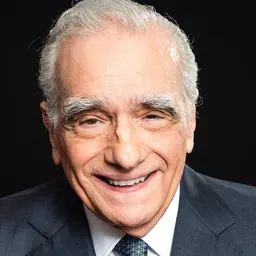
Thorold Barron Dickinson (16 November 1903 – 14 April 1984) was a British film director, screenwriter, film editor, film producer, and Britain's first university professor of film. Dickinson's work received much praise, with fellow director Martin Scorsese describing him as "a uniquely intelligent, passionate artist... They're not in endless supply."
Early life Of Norwegian descent, his father was the Archdeacon of Bristol from 1921 to 1927, Dickinson was educated at Clifton College and Keble College, Oxford where he read theology, history and French. For Pearson he wrote the scenario of The Little People (1926). Following this he observed the American industry's transition to sound in New York in 1929. In the 1920s and 1930s he was active in the London Film Society, being responsible for the technical presentation of films. At the LFS, he helped introduce the work of the Soviet directors Sergei Eisenstein and Dziga Vertov to British audiences, and in 1937 staged a notable programme protesting the Italian invasion of Abyssinia, Record of War.
Career Dickinson worked as a film editor on such features as Love's Option (1928), Auld Lang Syne (1929), Loyalties (1933) and Sing As We Go! (1934). His first directorial experience was on Java Head (1934), when he took over after J. Walter Ruben became ill and was unable to continue. remaining in the post until 1953.
Dickinson's first feature film, starring Lionel Atwill and Lucie Mannheim, was The High Command (1937), for which he formed the short-lived Fanfare Pictures with Gordon Wellesley. He visited Spain during the Civil War and made two documentary shorts, one of which Spanish ABC (1938) "is a sober advocacy of the educational policy of Republican Spain".
A film biography of Disraeli, The Prime Minister (1941), starring John Gielgud, was disowned by its director, Men of Two Worlds (1946), from a script by novelist Joyce Cary starring Robert Adams, attempted to "tell an African story from the point of view of an African". It was though a difficult production; the crew lost equipment and film stock.
For The Queen of Spades (1949) Dickinson assumed responsibility at five days notice after he was recommended by actor Anton Walbrook, the star of Gaslight, when the production was close to collapse. Following an aborted attempt to adapt Thomas Hardy's The Mayor of Casterbridge in time for the Festival of Britain, he returned to Secret People (1952), a long cherished project which Ealing Studios took up, but this was unsuccessful at the box-office and became Dickinson's last British-made feature film.
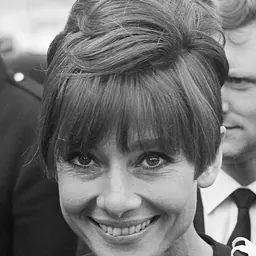
Secret People was notable for providing Audrey Hepburn with her first supporting film role, in which she performed all her own ballet moves during the dance sequences. Dickinson went on to film the screen test of Audrey which led to international stardom. In the screen test, she describes how she used to dance for audiences to raise funds for the resistance in The Netherlands during the Second World War. The screen test was sent to director William Wyler and led to her casting as Princess Ann in Roman Holiday.
In Israel, Dickinson directed a short film for the Israeli Army, The Red Ground (1953), and an English-language feature, Hill 24 Doesn't Answer (1955), for which he reworked the screenplay in collaboration with his wife Joanna. Dickinson's other work outside the UK included a tenure with the United Nations Department of Public Information as Chief of Film Services from 1956 to 1960. In 1959 he was a member of the jury at the 1st Moscow International Film Festival.
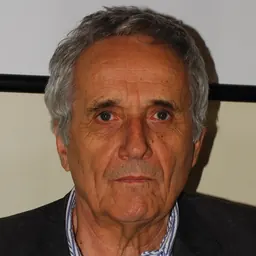
After his work with the United Nations, Dickinson devoted the final part of his life to teaching about film. In 1960 he established the film studies department at the Slade School of Fine Art, University College London, where one of his first students was Raymond Durgnat, the prominent film critic. Others included Marco Bellocchio and Maysoon Pachachi. In 1967 he was head of the jury at the 17th Berlin International Film Festival. In the same year, he was named a professor in the department, becoming the first professor of film studies in the UK. He served in the post until 1971. He was appointed CBE in the 1973 Birthday Honours.
The Thorold Dickinson Archive is held at the University of the Arts London's Archives and Special Collections Centre.
Partial filmography
Love's Option (editor, 1928) The School for Scandal (1930, editor) Tilly of Bloomsbury (1931, editor) The Sport of Kings (1931) Shikari (1932) The First Mrs. Fraser (1932) Loyalties (1933) Java Head (editor, part directed, 1934) Sing As We Go (1934) Whom the Gods Love (editor, 1936) Calling the Tune (1936) The High Command (1937) The Arsenal Stadium Mystery (1939) Gaslight (1940) The Prime Minister (1941) The Next of Kin (1942) Men of Two Worlds (1946) The Queen of Spades (1949) Secret People (1952, produced and co-wrote) Hill 24 Doesn't Answer (1955) Overture (1958, producer)
Don’t just read it —
keep it.
Full-length biographies made to live with: read them, listen on the way to work, watch them tonight.
- E-book
- Audio
- Video
Instant download · yours to keep · every purchase keeps this site free
Important facts
People in Thorold Dickinson's life
Named in this biography and alive at the same time




Related people
Same field, nearest in time


Contemporaries
People whose lives overlapped Thorold Dickinson's

Frequently asked questions
Who was Thorold Dickinson?
British film director, screenwriter, film editor and film producer (1903-1984)
When was Thorold Dickinson born?
Thorold Dickinson was born on 16 November 1903 in Bristol.
When did Thorold Dickinson die?
Thorold Dickinson died on 14 April 1984 in Oxford.
What was Thorold Dickinson's occupation?
Thorold Dickinson was a film director, screenwriter, film editor, film producer, director and producer.
What nationality was Thorold Dickinson?
Thorold Dickinson was British.
Sources & further reading
· Wikipedia: Thorold Dickinson
Cite this page
APA: Biography.guide. (2026). Thorold Dickinson. https://biography.guide/thorold-dickinson/
MLA: "Thorold Dickinson." Biography.guide, https://biography.guide/thorold-dickinson/.
Chicago: "Thorold Dickinson." Biography.guide. https://biography.guide/thorold-dickinson/.
Data last updated: 2026-09-20 · Spot an error? Report a correction.
Page generated 2026-09-27 04:57 UTC