
About Thomson Jay Hudson
Lived 1834 – 1903 (aged 68–69). Thomson Jay Hudson was an American writer, parapsychologist and journalist.
Thomson Jay Hudson (February 22, 1834 – May 26, 1903), was an American author, journalist, a chief examiner of the US Patent Office, and a prominent anti-Spiritualist psychical researcher, known for his three laws of psychic phenomena, which were first published in 1893.
Family The son of John Hudson (1791-1872), and Ruth Hudson (1800-1875), Thomson Jay Hudson was born in Windham, Ohio on February 22, 1834.
He married Hannah Elizabeth Story (1833-1908), later Mrs. William R. Dewitt Bersley, in 1852. They had four children.
He married Emma Little (c.1844-1908) on May 28, 1861.
Early life His early life was spent on a farm, where he bore the brunt of the hardships incident to farm life in days before agricultural machinery lightened its labors. To this, as well as to heredity on both sides of his family, he owed his robust health and iron constitution. His early education was acquired in the common schools of his neighborhood and at an academy in a neighboring town. It was here that some characteristics of his adult life first asserted themselves. He refused to be bound by precedent or to submit to authority in matters of education; while following the prescribed course faithfully, he insisted on adding studies he deemed valuable. For instance, he surprised his common-school teacher by announcing his intention to study Natural Philosophy, Chemistry, and Logic. However, young Hudson was aided in his private education by a learned uncle who loaned him books and provided private instruction.
Education He was educated in public schools at Windham. He studied law and was admitted to the bar at Cleveland, Ohio in 1857. and a "Ph.D. from Ewing College, Illinois".
Professional life He practiced for several years in Mansfield, Ohio until he started his journalistic career in 1860. and the Detroit Evening News (Detroit, Michigan). In 1880, he abandoned journalism and entered the US Patent Office.
Hudson's theories gained increased popularity when Thomas Troward adopted them, forming the foundation for his renowned series of lectures on "Mental Science", delivered at the Queen Street Hall, in Edinburgh, in 1904, and at the Doré Gallery, in London, in 1909. Troward integrated the concept of two minds into New Thought, and it subsequently caught the attention of Ernest Holmes, evolving into the fundamental insight that underlies the principles of Religious Science.
Hudson was associate editor of The Medico-Legal Journal. At a meeting of the Medico Legal Society on December 18, 1901, he discussed the case of psychic Leonora Piper. Hudson lectured at Dr. Herbert A. Parkyn's Chicago School of Psychology and was a regular contributor to its affiliated publications The Hypnotic Magazine and Suggestion magazine where he elaborated on his psychical theories and research.
Hudson's Primary Areas of Research Psychical Research and Metaphysics: Hudson was interested in the scientific study of psychical phenomena, attempting to bring a more systematic and empirical approach to the exploration of paranormal experiences. While rooted in psychology, his work also touched on metaphysical and spiritual aspects, especially concerning the possibility of an afterlife. Subconscious Mind: Hudson's work often focused on the subconscious mind and its role in shaping human behavior and experiences. He believed that much of what is considered paranormal could be explained by understanding the workings of the subconscious mind.
"Two minds" In The Law of Psychic Phenomena (1893, p. 26), Hudson spoke of an "objective mind" and a "subjective mind"; and, as he further explained, his theoretical position was that: our "mental organization" was such that it seemed as if we had "two minds, each endowed with separate and distinct attributes and powers; [with] each capable, under certain conditions, of independent action" (p.25); and, for explanatory purposes, it was entirely irrelevant, argued Hudson, whether we actually had "two distinct minds", whether we only seemed to be "endowed with a dual mental organization", or whether we actually had "one mind [possessed of] certain attributes and powers under some conditions, and certain other attributes and powers under other conditions" (pp.25-26).
Hudson used his hypothesis of two minds to explain the appearance of ghosts which he argued were not spirits of the dead but creations from the subjective mind projected from one mind to another. His also argued that cases of spirit photography were not spirits but visions projected from the medium's subjective mind. His dual mind hypothesis relied on the existence of telepathy which has not proven to exist.
Hudson's three laws Man has two minds: the objective mind (conscious) and the subjective mind (subconscious). The subjective mind is constantly amenable to control by suggestion. A (1893) review of The Law of Psychic Phenomena, in The Dublin Journal of Medical Science, noted that "we recommend this book to all our medical readers who take an interest in hypnotism as an example of what absurdities may still find advocates". A (1894) of The Law of Psychic Phenomena, published in the Journal of the Bristol Medico-Chirurgical Society, commented that "in the face of recent psycho-physiological researchers, it is a little venturesome to maintain that large classes of mental phenomena go on independently of neutral processes; but Mr. Hudson does so with an almost wanton lightness". A (1894) review of The Law of Psychic Phenomena, in The Speaker, commented that Hudson's hypothesis relied on the idea that the "subjective mind" is independent of the brain and has its own organisation independent of the "objective mind" which uses the brain but this idea is unreasonable and not supported by scientific evidence. also rejected Hudson's dual mind hypothesis, considering it disproven. In his contribution to the society's (1901) examination of the issues raised by the Leonora Piper controversy, Ferdinand Eugene Daniel, M.D. (1839–1914), Vice-Chairman of the Psychological Section of the Medico-Legal Society of New York, and the Editor of the Texas Medical Journal, commented that, in his view on the basis that he (Daniel) was "not acquainted with any authority that admits the ["two minds"] postulate upon which Mr. Hudson bases his elaborate "Laws of Psychic Phenomena"" Hudson was "laboring under a delusion".
Death He died from heart failure at his home in Detroit, Michigan on May 26, 1903 at age 69 after being ill for approximately four months.
Works Publications
Hudson, T.J. (1893), The Law of Psychic Phenomena: A Working Hypothesis for the Systematic Study of Hypnotism, Spiritism, Mental Therapeutics, etc., Chicago, IL: A.C. McClurg & Company. Hudson, T.J. (1895), A Scientific Demonstration of The Future Life, Chicago, IL: A.C. McClurg & Company. Hudson, T.J. (1903), The Law of Mental Medicine: The Correlation of the Facts of Psychology and Histology in their Relation to Mental Therapeutics, Chicago, IL: A.C. McClurg & Company. Hudson, T.J. (1904), The Evolution of the Soul and Other Essays: With Portrait and Biographical Sketch, Chicago, IL: A.C. McClurg & Company. Hudson, T.J. (1908), The Law of Psychic Phenomena: A Working Hypothesis for the Systematic Study of Hypnotism, Spiritism, Mental Therapeutics, etc. (Thirty-First Edition), Chicago, IL: A.C. McClurg & Company. Hudson, T.J. (1920), The Evolution of the Soul and Other Essays: With Portrait and Biographical Sketch (Sixth Edition), Chicago, IL: A.C. McClurg & Co.
Articles, etc.
Hudson, T.J. (1895a),"Hypnotism in its Relations to Criminal Jurisprudence", The New York Medical Journal , Vol.61, (26 January 1895), pp. 106-109. Howard, William Lee (1895), "Hypnotism and Crime: A Reply to Mr. Thomson Jay Hudson", The New York Medical Journal, Vol.61, (9 March 1895), pp. 298-300. Hudson, T.J. (1895b), "Hypnotism and Crime: A Reply to Dr. William Lee Howard", The New York Medical Journal, Vol.61, (11 May 1895), pp. 590-592. Hudson, T.J. (1897), "The Danger Lines in Hypnotism", The Hypnotic Magazine, 2(3), (March 1897), pp. 129-141. Hudson, T.J. (1900), "The Fundamental Principles of Hypnotism", pp. 140-145 in E.V. Neal & C.S. Clark (eds.), Hypnotism and Hypnotic Suggestion: A Scientific Treatise on the Uses and Possibilities of Hypnotism, Suggestion and Allied Phenomena by Thirty Authors, Rochester, NY: New York State Publishing Co. Hudson, T.J. (1901a),The Truth about "Christian Science": A Psychopathic Study (Part I), Everybody's Magazine, 4(22), (June 1901), pp. .667-672. Hudson, T.J. (1901b),The Truth about "Christian Science" — A Psychopathic Study: II. An Explanation of Mental Healing, Everybody's Magazine, 5(23), (July 1901), pp. .55-60. Hudson, T.J. (1902a), "Spiritism and Mrs. Leonora E. Piper", pp. 4-20 in Clark Bell (ed.), Spiritism, Hypnotism and Telepathy: As Involved in the Case of Mrs. Leonora E. Piper and the Society for Psychical Research, etc., New York, N.Y., Medico-Legal Journal. Hudson, T.J. (1902b), "Conclusion and Summing Up of the Discussion", pp. 163-171 in Clark Bell (ed.), Spiritism, Hypnotism and Telepathy: As Involved in the Case of Mrs. Leonora E. Piper and the Society for Psychical Research, etc., New York, N.Y., Medico-Legal Journal.
Don’t just read it —
keep it.
Full-length biographies made to live with: read them, listen on the way to work, watch them tonight.
- E-book
- Audio
- Video
Instant download · yours to keep · every purchase keeps this site free
Important facts
People in Thomson Jay Hudson's life
Named in this biography and alive at the same time

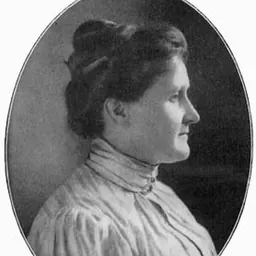

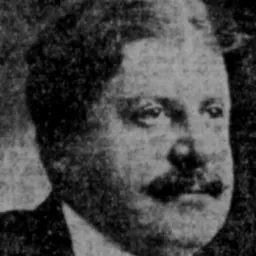



Related people
Same field, nearest in time

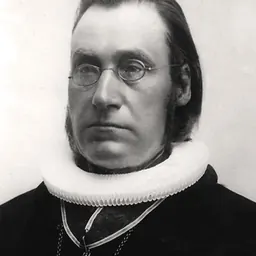
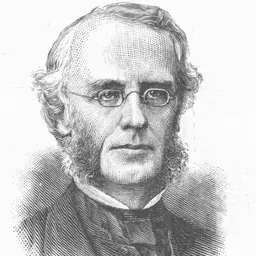
Contemporaries
People whose lives overlapped Thomson Jay Hudson's



Frequently asked questions
Who was Thomson Jay Hudson?
parapsychologist (1834–1903)
When was Thomson Jay Hudson born?
Thomson Jay Hudson was born in 1834 in Windham.
When did Thomson Jay Hudson die?
Thomson Jay Hudson died in 1903 in Detroit.
What was Thomson Jay Hudson's occupation?
Thomson Jay Hudson was a writer, parapsychologist and journalist.
What nationality was Thomson Jay Hudson?
Thomson Jay Hudson was American.
Sources & further reading
· Wikipedia: Thomson Jay Hudson
Cite this page
APA: Biography.guide. (2026). Thomson Jay Hudson. https://biography.guide/thomson-jay-hudson/
MLA: "Thomson Jay Hudson." Biography.guide, https://biography.guide/thomson-jay-hudson/.
Chicago: "Thomson Jay Hudson." Biography.guide. https://biography.guide/thomson-jay-hudson/.
Data last updated: 2026-09-26 · Spot an error? Report a correction.
Page generated 2026-09-27 05:13 UTC