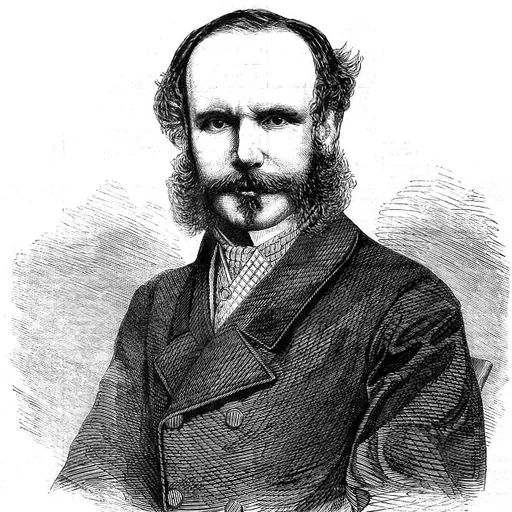
About Thomas William Bowlby
Lived 1818 – 1860 (aged 42). Thomas William Bowlby was a British journalist.
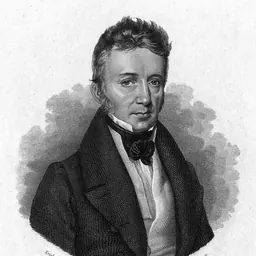
Thomas William Bowlby (7 January 1818 – 22 September 1860) was a British correspondent for The Times in Germany and China in the 19th century. A "pioneer in the risky business of war reportage", his torture and death during the Second Opium War was a factor in the British and French decision to raze the Old Summer Palace (Yuanmingyuan) in Beijing.
Early life Born in Gibraltar, he was the son of Thomas Bowlby, a captain in the Royal Artillery, and Williamina Martha Arnold Balfour, daughter of Major-General William Balfour, a former Lieutenant-Governor of New Brunswick. Bowlby's parents moved while he was young to Sunderland, where his father became a timber merchant. Bowlby was educated by Dr Cowan, a Scottish school teacher living in Sunderland.
After finishing his schooling he trained as a solicitor under his cousin Russell Bowlby of Sunderland and on completion of his training he moved to London where spent some years as a salaried clerk to a law firm in The Temple. In 1846 he became junior partner to the firm of Lawrence, Crowdy and Bowlby. However, Bowlby found the law uncongenial and felt drawn to a career in writing.
Career Although he remained as a member of the firm of Lawrence, Crowdy and Bowlby until 1854, Bowlby went to Berlin as a special correspondent for The Times in 1848 to report on the revolutions occurring in Europe at the time.
In 1860, Bowlby was engaged to travel to China as the special correspondent of The Times to cover the Second Opium War, which was fought by the Chinese Qing Empire against the British and French. Lord Elgin and Baron Gros were his fellow passengers on the steamship SS Malabar, which sank in Galle harbour on 22May 1860 after being beached in a severe storm. Bowlby's report of the shipwreck was considered one of his best pieces of work.
Bowlby's reports from China were informative and popular with readers of The Times. Whilst focusing on political and military developments, he also described many elements of local culture, such as gardening.
In retaliation for the treatment of the delegation, the British and French burnt down the Qing Emperor's Old Summer Palace (Yuanmingyuan) in Beijing. Lord Elgin reportedly told a French commander "What would The Times say of me, if I did not avenge its correspondent?"
Bowlby's mangled body was retrieved later and buried in the Russian cemetery outside the Anding Gate of Beijing on 17October 1860. He was survived by his widow and five young children, among whom included the surgeon Sir Anthony Alfred Bowlby.
Don’t just read it —
keep it.
Full-length biographies made to live with: read them, listen on the way to work, watch them tonight.
- E-book
- Audio
- Video
Instant download · yours to keep · every purchase keeps this site free
Important facts
People in Thomas William Bowlby's life
Named in this biography and alive at the same time

Related people
Same field, nearest in time


Contemporaries
People whose lives overlapped Thomas William Bowlby's




Frequently asked questions
Who was Thomas William Bowlby?
19th century British correspondent journalist (1818–1860)
When was Thomas William Bowlby born?
Thomas William Bowlby was born on 7 January 1818 in Gibraltar.
When did Thomas William Bowlby die?
Thomas William Bowlby died on 22 September 1860 in Tongzhou District.
What was Thomas William Bowlby's occupation?
Thomas William Bowlby was a journalist.
What nationality was Thomas William Bowlby?
Thomas William Bowlby was British.
Sources & further reading
· Wikipedia: Thomas William Bowlby
· DBpedia: Thomas William Bowlby
Cite this page
APA: Biography.guide. (2026). Thomas William Bowlby. https://biography.guide/thomas-william-bowlby/
MLA: "Thomas William Bowlby." Biography.guide, https://biography.guide/thomas-william-bowlby/.
Chicago: "Thomas William Bowlby." Biography.guide. https://biography.guide/thomas-william-bowlby/.
Data last updated: 2026-09-23 · Spot an error? Report a correction.
Portrait: Wikimedia Commons · author & licence
Page generated 2026-09-27 05:07 UTC