
About Thomas W. Lamb
Lived 1870 – 1942 (aged 71). Thomas W. Lamb was an American architect.
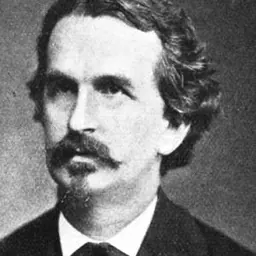
Thomas White Lamb (May 5, 1870 – February 26, 1942) was an American architect. He was one of the foremost designers of theaters and cinemas of the 20th century.
Career
Born in Dundee, Scotland, United Kingdom, Thomas W. Lamb came to the United States at the age of 12. He studied architecture at Cooper Union in New York and initially worked for the City of New York as an inspector. His architecture firm, Thomas W. Lamb, Inc., was located at 36 West 40th Street in Manhattan, New York.
Lamb achieved recognition as one of the leading architects of the boom in movie theater construction of the 1910s and 1920s. Particularly associated with the Fox Theatres, Loew's Theatres and Keith-Albee chains of vaudeville and film theaters, Lamb was instrumental in establishing and developing the design and construction of the large, lavishly decorated theaters, known as "movie palaces", as showcases for the films of the emerging Hollywood studios.
As early as 1904, Lamb was credited with renovations for two existing theaters in the city: the Weber and Fields' Broadway Music Hall at 1215 Broadway, and the Dewey Theater on East 14th Street, the latter owned by Tammany Hall figure "Big Tim" Sullivan. His first complete theater design was the City Theatre, built on 14th Street in 1909 for film mogul William Fox. His designs for the 1914 Mark Strand Theatre, the 1916 Rialto Theatre and the 1917 Rivoli Theatre, all in Times Square, set the template for what would become the American movie palace.
Among his most notable theaters are the 1929 Fox Theatre in San Francisco and the 1919 Capitol Theatre in New York, both now demolished. Among his most noted designs that have been preserved and restored are the B.F. Keith Memorial Theatre in Boston (1928) (now the Boston Opera House), Warner's Hollywood Theatre (1930) in New York (now the Times Square Church), the Hippodrome Theatre (1914) in Baltimore, and the Loew's Ohio Theatre (1928) in Columbus, Ohio. Among Lamb's existing Canadian theaters are the Pantages Theatre in Toronto (1920) (now the Ed Mirvish Theatre). and Elgin and Winter Garden Theatres. The Cinema Treasures website, which documents the history of film theaters, lists 174 theaters designed by Lamb's company.
Aside from movie theaters, Lamb is noted for designing (with Joseph Urban) New York's Ziegfeld Theatre, a legitimate theater, as well as the third Madison Square Garden and the Paramount Hotel in midtown Manhattan.
Lamb died in 1942 in New York City at the age of 71. His architectural archive is held by the Drawings and Archives Department of Avery Architectural and Fine Arts Library at Columbia University.
John J. McNamara During the last ten years of his practice, Lamb's associate was the architect John J. McNamara. After Lamb's death, McNamara continued as an architect of theaters under his own name. McNamara was responsible for renovating some of Lamb's older New York theaters, and among his original designs was one for the 1969 Ziegfeld Theatre in Manhattan, which replaced Lamb's original building.
Selected theater designs
United States
Academy of Music, New York City, 1927 B.F. Keith Memorial Theatre, Boston, Massachusetts, 1928 Capitol Theatre, New York City, 1919 Capitol Theatre, Port Chester, New York, 1926 Cort (now James Earl Jones) Theatre, New York City, 1912 Embassy Theatre, New York City, 1925 Eltinge 42nd Street Theatre, New York City, 1912 Fenway Theatre, Boston, 1915 Fox Theatre, San Francisco, California, 1929 Grand Opera House, Philadelphia, Pennsylvania, 1913, remodel Franklin Square Theatre, Worcester, Massachusetts, 1927 Hippodrome Theatre, Baltimore, Maryland, 1914 Hippodrome, New York City, 1923 redesign Keith-Albee Theatre, Flushing, Queens, New York, 1928 Keith-Albee Theatre, Huntington, West Virginia, 1928 Keith-Albee Palace Theatre, Columbus, Ohio, 1926 Keith-Albee Palace Theatre, Stamford, Connecticut, 1927 Lincoln Theatre, Miami Beach, Florida, 1936 Loew's 72nd Street Theatre, New York City, 1930 Loew’s Canal Theatre, 1926 Loew's 175th Street Theater, New York City, 1930 Loew's and United Artists' Ohio Theatre, Columbus, Ohio, 1928 Loew's Grand Theatre, Atlanta, Georgia, 1932 redesign Loew's Midland Theatre, Kansas City, Missouri, 1927 Midway Theatre, Forest Hills, New York, 1942 Loew's Pitkin Theatre, Brooklyn, New York, 1928 Loew's State Theatre, Back Bay, Boston, 1922 Loew's State Theatre, Times Square, New York City, 1924 Newark Paramount Theatre, Downtown Newark, Newark, New Jersey, 1920s. Loew's State Theatre, New Orleans, Louisiana, 1926 Loew's Theatre, New Rochelle, New York, 1925 Loew's State Theatre (Now the Landmark Theatre), Syracuse, New York, 1928 Madison Square Garden, New York City, 1925 Madison Theater, Albany, New York, 1929 Mark Hellinger Theatre (now Times Square Church), New York City, 1930 Mark Strand Theater, New York City, 1914 Maryland Theatre, Hagerstown, Maryland, 1915 Municipal Auditorium, Birmingham, Alabama, 1924 Ohio Theatre, Playhouse Square, Cleveland, Ohio, 1921 Orpheum Theatre, Boston, Massachusetts, 1915 redesign Palace Theater, Waterbury, Connecticut, 1922 Poli's Majestic Theatre, Bridgeport, Connecticut, 1922 Poli's Palace Theatre, Bridgeport, Connecticut, 1922 Pythian Temple, Manhattan, 1927, the spacious theater the building once housed is gone; the facade remains. Proctor's 58th Street Theatre, New York City, 1928 Proctor's 86th Street Theatre, New York City, 1927 Proctor's Theatre, Schenectady, New York, 1926 Reade's State Theatre, New Brunswick, New Jersey, 1921 Regent Theatre, New York City, 1913 Rialto Theatre, New York City, 1916 Ridgewood Theatre, Ridgewood, New York, 1916 Rivoli Theatre, New York City, 1917 Stanley Theatre, Utica, New York, 1928 State Theatre, Uniontown, Pennsylvania, 1922 Strand Theatre, Lakewood, New Jersey, 1922 Tivoli Theatre, Washington, DC, 1924 Victoria Theater, New York City, 1917 Warner Theatre, Torrington, Connecticut, 1931 Warner's Hollywood Theatre, New York City, 1930 Ziegfeld Theatre, New York City (with Joseph Urban), 1927
Canada
Elgin and Winter Garden Theatres, Toronto, 1913 The Sanderson Centre, Brantford, Ontario, 1919; auditorium restored in 1990, currently a performing arts centre Capitol Theatre, Hamilton, Ontario, 1920; 103 King Street East, Hamilton all but lobby demolished in 1973; remaining portion of theatre now operating as Escape Manor Inc. Capitol Theatre (Windsor, Ontario), 1920; currently a performing arts centre. Pantages Theatre, Toronto, Ontario, 1920 Uptown Theatre, Toronto, Ontario, 1920; demolished in 2003
India
Metro Cinema, Mumbai, Maharashtra, 1938 Metro Cinema, Kolkata (Calcutta), West Bengal, 1935; Currently being renovated.
Residential architecture
In 1920, Lamb designed for himself a private summer home in the Adirondacks in the village of Elizabethtown, New York. The house, which is still extant as a residence, is situated on the Boquet River. The eight-bedroom manor, referred to today as Cobble Mountain Lodge, is a shingle and cobble stone design marked by the inclusion of a stone turret.
Don’t just read it —
keep it.
Full-length biographies made to live with: read them, listen on the way to work, watch them tonight.
- E-book
- Audio
- Video
Instant download · yours to keep · every purchase keeps this site free
Important facts
People in Thomas W. Lamb's life
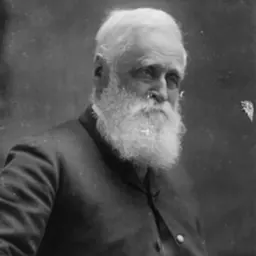
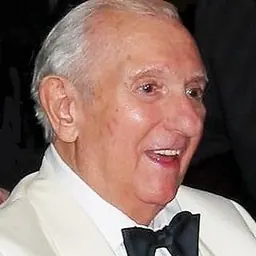
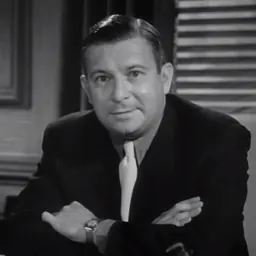
Named in this biography and alive at the same time




Related people
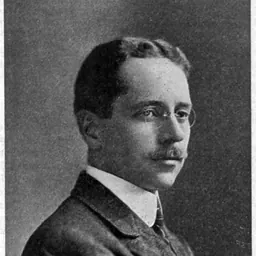
Same field, nearest in time



Contemporaries
People whose lives overlapped Thomas W. Lamb's


Frequently asked questions
Who was Thomas W. Lamb?
American architect (1870–1942)
When was Thomas W. Lamb born?
Thomas W. Lamb was born on 5 May 1870 in Dundee.
When did Thomas W. Lamb die?
Thomas W. Lamb died on 26 February 1942 in New York City.
What was Thomas W. Lamb's occupation?
Thomas W. Lamb was an architect.
What nationality was Thomas W. Lamb?
Thomas W. Lamb was American.
Sources & further reading
Cite this page
APA: Biography.guide. (2026). Thomas W. Lamb. https://biography.guide/thomas-w-lamb/
MLA: "Thomas W. Lamb." Biography.guide, https://biography.guide/thomas-w-lamb/.
Chicago: "Thomas W. Lamb." Biography.guide. https://biography.guide/thomas-w-lamb/.
Data last updated: 2026-09-20 · Spot an error? Report a correction.
Page generated 2026-09-27 05:24 UTC