
About Thomas Stoltzer
Lived 1475 – 1526 (aged 50–51). Thomas Stoltzer was a German composer.
Thomas Stoltzer, also Stolczer, Scholczer (c.1480–1526) was a German composer of the Renaissance.
Life Nothing is known of Stoltzer's early life, though he is thought to have come from the same family as Clemens Stoltzer, who was a town clerk in Schweidnitz, and to have been born in Schweidnitz, Silesia. Stoltzer may have studied with Heinrich Finck; while no concrete evidence of this association exists, he was at the least intimately familiar with Finck's work since he quotes from Finck's music copiously.
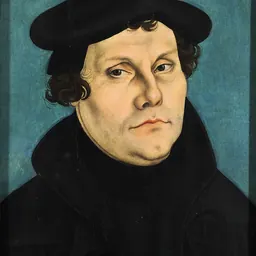
He served as a priest in Breslau from 1519, and was a supporter of the Reformation, though he never made public his sentiments. Louis II appointed him magister capellae in Ofen at the Hungarian court on May 8, 1522. Ludwig's wife, Mary, asked him to set Martin Luther's translations of psalms xii, xiii, xxxviii and lxxxvi, which he did between 1524 and 1526. One personal letter of Stoltzer's is still extant, dated February 23, 1526 and addressed to Albert, Duke of Prussia in Königsberg; in this letter Stoltzer relates the news of a recently completed psalm setting and intimates that he would like to join Albrecht's court. On this letter, there is additional writing, dated March 1526, which refers to him as "the late Thomas". It was previously thought that he had died at the Battle of Mohács in August 1526, but this is erroneous. He is thought to have died near Znaim, Moravia.
Works Stoltzer's extant works amount to some 150 pieces, gathered in 30 publications and 60 manuscripts. None of them date from Stoltzer's own lifetime. Stoltzer was most popular in Saxony, in the areas most directly affected by the Reformation; Georg Rhau was one of his most dedicated printers, issuing at least 70 of Stoltzer's works in his publications. His works remained in general circulation in German-speaking countries up until the end of the 16th century. While he composed in all of the standard sacred forms of his day, he concentrated on motets. His early motets often make use of numerological signifiers of religious importance; later works show influence from the Netherlands school of composers, such as imitation and the use of multiple choirs. Among his most popular motets was O admirabile commercium, which survives today in 11 sources.
He composed four masses, as well as fourteen introits spanning the church year from Christmas to Easter. His hymns were particularly beloved by Rhau, who printed 39 of them in 1542.
Editions Newe deudsche geistliche Gesenge (1544), ed. J. Wolf, Denkmäler deutscher Tonkunst, 1908 Das deutsche Gesellschaftslied in Österreich von 1480–1550, ed. L. Nowak, Denkmaler der Tonkunst im Österreich, 1930 Thomas Stoltzer: Sämtliche lateinische Hymnen und Psalmen, ed. H. Albrecht and O. Gombosi, Denkmäler deutscher Tonkunst, 1931 Thomas Stoltzer: Ausgewählte Werke, vol. i ed. H. Albrecht, Das Erbe deutscher Musik, 1942; vols. ii-iii ed. L. Hoffmann-Erbrecht, 1969, 1983 Georg Forster: Frische teutsche Liedlein (1539–1556) ed. Kurt Gudewill, , 1942 Georg Rhau: Sacrorum hymnorum liber primus, ed. R. Gerber, Das Erbe deutscher Musik, 1942–43 Georg Rhau: Vesperarum precum officia, ed. H.J. Moser, Musikdrucke aus den Jahren 1538 bis 1545 in praktischer Neuausgabe, 1960
Don’t just read it —
keep it.
Full-length biographies made to live with: read them, listen on the way to work, watch them tonight.
- E-book
- Audio
- Video
Instant download · yours to keep · every purchase keeps this site free
Important facts
People in Thomas Stoltzer's life
Named in this biography and alive at the same time


Related people
Same field, nearest in time


Contemporaries
People whose lives overlapped Thomas Stoltzer's



Frequently asked questions
Who was Thomas Stoltzer?
German renaissance composer
When was Thomas Stoltzer born?
Thomas Stoltzer was born in 1475 in Świdnica.
When did Thomas Stoltzer die?
Thomas Stoltzer died in 1526.
What was Thomas Stoltzer's occupation?
Thomas Stoltzer was a composer.
What nationality was Thomas Stoltzer?
Thomas Stoltzer was German.
Sources & further reading
Cite this page
APA: Biography.guide. (2026). Thomas Stoltzer. https://biography.guide/thomas-stoltzer/
MLA: "Thomas Stoltzer." Biography.guide, https://biography.guide/thomas-stoltzer/.
Chicago: "Thomas Stoltzer." Biography.guide. https://biography.guide/thomas-stoltzer/.
Data last updated: 2026-09-20 · Spot an error? Report a correction.
Page generated 2026-09-27 04:58 UTC