
Thomas Sinito
American mobster
About Thomas Sinito
Lived 1938 – 1997 (aged 59).
Thomas James Sinito, also known as "The Chinaman" (September 18, 1938 − December 21, 1997), was a powerful Caporegime in the Cleveland crime family who was once accused of plotting the assassination of then mayor of Cleveland, Ohio, Dennis J. Kucinich in 1979. Kucinich later became a candidate for the Democratic nomination for President of the United States in the 2004 and 2008 elections.
Biography Early life Sinito was born on Woodland Ave in Cuyahoga County, Ohio. His father was a maternal cousin of the convicted corrupt Cleveland municipal prosecutor, Thomas Longo who represented the Bedford, Highland Hills and Chagrin Falls townships and was a candidate for the Bedford Municipal Judgship in May 1997. Sinito was the nephew of (Giuseppe Antonio Berardinelli) Joey Maxim by marriage, the legendary Italian-American boxer who became the 1952 Lightweight Boxing Champion of the World.
Early association with the Cleveland family Thomas Sinito's involvement with the Cleveland family Capo, Angelo "Big Ange" Lonardo began when he worked as a bartender at Angelo's Highlander Restaurant and Lounge on Northfield Road. Prior to this acquaintance, he had served many years as an errand boy for the mob, tending various vending machine routes. Later, Sinito had several of his own ventures, including part ownership in a Valley Forge, Pennsylvania amusement park. This amusement park provided an ingenious way to launder money undetected, which came from various gambling, drug trafficking and loansharking pursuits, through the amusement park's cash flow.
The nickname There are many stories on how Sinito acquired the nickname "The Chinaman". One version said that nickname derived from his eyes, which allegedly look slanted "like a Chinaman’s". Another version stated that the nickname described his silent, calm, stoic, disciplined and inscrutable demeanor, the stereotypical qualities of a Chinese man. Another version cited a resemblance to actor David Carradine to the television show Kung Fu, and to a claim that Sinito made karate chops when angry. However, the most popular story was that in either 1973 or 1974 Sinito allegedly threw 10 to 30 people out of a bar on Cleveland's West Side during a brawl.
Cleveland’s Model Cities scandal Sinito was a minor figure involved in the 1973 Cleveland's Model Cities scandal. In August 1973, Robert Doggett was the director of the Model City program, which was a federal initiative created under President Lyndon B. Johnson’s Great Society Program during the 1970s. The program funneled millions of dollars into major cities in an effort to help the poor. Local Cleveland area civic and community groups were to determine how to use these funds. Originally the first planned amount was to be $45 million. A federal audit later undertaken by the GAO showed much of the Federal funds were wasted. The General Accounting Office's audit showed at least as much as $9.2 million were misspent on fraud and waste.
Danny Greene controlled some of the more lucrative laundry contracts which Sinito was competing for. Sinito and mob associate, Joseph "Joey Loose" Iacobacci soon murdered one of Greene's associates. Greene's response was to have one of his gang, possibly his cousin Kevin McTaggart, wire a bundle of dynamite to the frame of Sinito's car. Sinito found the bomb in his car, attached to the frame. He removed the bomb, disarmed it and later destroyed it. This act of war by Greene drew Sinito into the Mafia war with Greene in Cleveland during the 1970s, where he would play a significant role.
In the midst of the Mafia's war with Greene, Licavoli gained permission from Anthony Salerno, head of the Genovese crime family, to initiate ten new official members, including Thomas Sinito in 1977.
During this period, the Cleveland family was involved in a large-scale narcotics network that distributed and sold marijuana, cocaine, quaaludes, and other controlled substances. The narcotics network was overseen by Cleveland mobster, Carmen P. Zagaria, who was controlled in the operation by Sinito and another Capo, Joseph Charles Gallo. In spite of his Italian-American heritage and deep involvement in business dealings with the Cleveland family, Zagaria refused Gallo's offer to be "made" into the family, with the rank of a Caporegime. It is estimated that in 1981 alone, Zagaria's drug network brought in approximately $15 million and was considered the largest narcotics network in northeast Ohio.
Years later, while testifying in front of the US Senate, Lonardo testified that Sinito was running a major narcotics trafficking network for the Cleveland family in the late seventies. The profits were delivered up to Licavoli, with Sinito taking a cut. He also stated that, at that time, Sinito was known for organizing hits on anyone who crossed him, not only other drug dealers stepping on his turf, but friends, too.
The massive drug ring operation created by the merger of the smaller drug rings in the 1970s continued to operate and generate profit for the mob. It operated until the FBI arrested and got convictions to imprison the drug kingpins running it. Cocaine, marijuana, repackaged illegally obtained prescription drugs, hashish, LSD, PCP and heroin were sold through Zagaria's ring. Drug mules made regular deliveries of raw drugs to safe stash houses in Cleveland. The raw drugs would then be processed for street sales.
After becoming the focus of an FBI investigation codenamed "Operation Busmark", Carmen Zagaria was convicted in state court of selling drugs, and sentenced to 10 to 30 years in prison. He became a fugitive while out on bail, but gave himself up to the FBI at Holy Cross Cemetery on September 23, 1982. Facing the original conviction and sentence, additional federal drug charges, weapons charges, and potential indictments against his family members, Zagaria became a government witness and admitted to leading a drug enterprise and over 19 murders committed by the network.
The Perrier and Bonarrigo murders Sinito was involved in the murder of a Cleveland gangster named Joseph Bonarrigo. After supposedly hearing of a murder threat against the Cleveland family hierarchy from Bonarrigo, Sinito went to Licavoli and Lonardo and informed them of the threat. Sinito was then given permission to contract for Bonarrigo's murder, which was given to Joe Iacobacci. Iacobacci used the help of a Hell's Angels member in the murder of Joe Bonarrigo. However, after finding out that Sinito was in the dope business with Zagaria, Lonardo assumed that Sinito wanted Bonarrigo out of the way for his dope business, and not because of any real threat to them.
On July 2, 1986, Sinito pleaded guilty to charges of engaging in a continuing criminal enterprise, and possession with intent to distribute; cocaine. He was sentenced by the United States District Court for the Northern District of Ohio, to a term of imprisonment of twenty-two years, and a concurrent term of imprisonment of five years, with a special parole term of three years. This sentence was to run concurrently with the federal sentence Sinito had been serving. On July 17, 1986, Sinito plead guilty to voluntary manslaughter in connection with the 1981 execution murder of David Perrier, in Trumbull County. He received a sentence of seven to twenty-five years for manslaughter from an Ohio state court.
Even while incarcerated, Sinito remained a major influence in the Cleveland Mafia. Angelo Lonardo warned the FBI, that Sinito was one of the few made members who possessed the strong will and determination necessary to revive the Cleveland family after being released from prison. From prison, Sinito recommended two new members, Russell Papalardo and Joseph "Loose Lips" Iacobacci, Jr, be inducted into the Cleveland crime family in 1983.
He was seeking early release from the state parole board, when he died of a heart attack in the exercise yard, at the Belmont Correctional Institution near St. Clairsville, Ohio. He was 59 years old at the time of his death. During Sinito's funeral service, on December 23, 1997 at St. John's Cathedral, his former defense lawyer, James Willis summed up Sinito's life by calling him "courageous and honorable." Of Sinito, Willis said; "If he told you something you could take it to the bank. He wasn’t a cry baby.... He was from the old school." Sinito is buried in Knollwood Cemetery in Mayfield Heights, Ohio.
Don’t just read it —
keep it.
Full-length biographies made to live with: read them, listen on the way to work, watch them tonight.
- E-book
- Audio
- Video
Instant download · yours to keep · every purchase keeps this site free
Important facts
People in Thomas Sinito's life
Named in this biography and alive at the same time

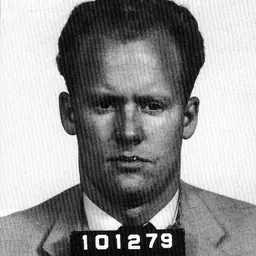

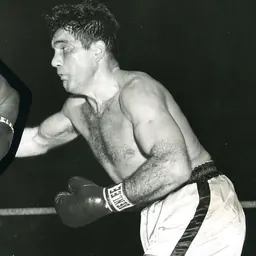
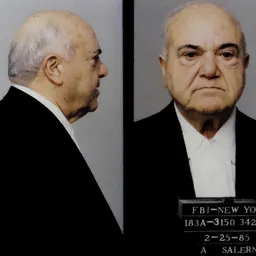
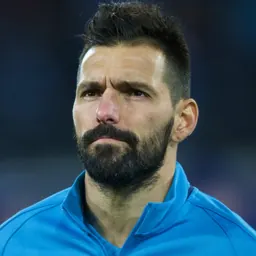


Contemporaries
People whose lives overlapped Thomas Sinito's




Frequently asked questions
Who was Thomas Sinito?
American mobster (1938–1997)
When was Thomas Sinito born?
Thomas Sinito was born on 18 September 1938.
When did Thomas Sinito die?
Thomas Sinito died on 21 December 1997.
Sources & further reading
Cite this page
APA: Biography.guide. (2026). Thomas Sinito. https://biography.guide/thomas-sinito/
MLA: "Thomas Sinito." Biography.guide, https://biography.guide/thomas-sinito/.
Chicago: "Thomas Sinito." Biography.guide. https://biography.guide/thomas-sinito/.
Data last updated: 2026-09-20 · Spot an error? Report a correction.
Page generated 2026-09-27 05:08 UTC