
About Thomas Robinson
Lived 1560 – 1601 (aged 40–41). Thomas Robinson was a British composer and lutenist.
Thomas Robinson was an English Renaissance composer and music teacher, who flourished around 1600. He taught and wrote music for lute, cittern, orpharion, bandora, viol, and voice.
Biography Very little is known about Robinson's life, but it is possible to draw conclusions from the dedicatory pages of his works. He and his father were in service of the Cecil family: Robinson's father worked for the 1st Earl of Salisbury, Robert Cecil, and Robinson was in the service of the 1st Earl of Exeter, Thomas Cecil, who was Robert Cecil's brother. The Cecil family fostered several artists in these days, amongst others William Byrd and Orlando Gibbons.
It was before 1589 that Robinson became Princess Anne's (1574–1619) and Queen Sophie's (1557–1631) private music teacher at Elsinore, Denmark. Princess Anne was the daughter of the King of Denmark, Frederick II (1559–1588). It is presumed that Robinson must have been in his twenties then, so that his birth can be dated back to around 1560.
The Court of Denmark, like other courts, employed many well-recognized musicians from Denmark and other countries, like England, France, Germany and the Netherlands. It is known that John Dowland – the most famous Renaissance lutenist nowadays – worked as a court lutenist in Denmark from 1598 to 1606. Besides Robinson's own mention of his employment there, no official record of it exists.
In 1603, Robinson published his first book, Medulla Musicke, of which no copy survived. It was even suggested (Ward JM, see "Literature"), that it was never published at all, although Robinson seems to be referring to it in the first pages of his second book: "." From: "The Schoole of Musicke", 1603
Also in 1603, Robinson brought out his second book, The Schoole of Musicke, a tutor for lute and other instruments. It displaced John Alford's book A Briefe and Easye Instruction from 1574 (an English translation of Adrian Le Roy's Briefve et facile instruction pour apprendre la tabulature) as the most important lute tutor in England from then on.
In 1609 Robinson's third book, New Citharen Lessons, was published. It was a cittern tutor for beginners and advanced learners.
Robinson's works for the most part consist of his own compositions. But there are also arrangements of other pieces of music, some of which are still rather popular: for instance "My Lord Willoughby's Welcome Home" (in: The Schoole of Musicke) or "Can she excuse my wrongs?" (in New Citharen Lessons) – both originally composed by John Dowland.
There is no further information available about Robinson's life after 1609.
Works
Medulla Musicke Medulla Musicke (The Stationer's Company, London, 1603) was a music tutor now presumably lost. It is supposed to have included 40 canons on the then popular plainsong Miserere after arrangements by William Byrd and Alfonso Ferrabosco.
The Schoole of Musicke The Schoole of Musicke, (Tho. Este, London, 1603), was a tutor for lute, bandora, orpharion, viol, and singing.
Contents The Queenes good Night (for two lutes) Twenty waies upon the bels (for two lutes) Row well you Marriners A Galliard A Galliard A Plaine Song for 2 lutes (for two lutes) Grisse his delight Passamezzo Galliard (for two lutes) A Fantasie for 2 lutes (for two lutes) A Toy for 2 lutes (for two lutes) A Galliard Merry Melancholie Robinson's Riddle Goe from my Window A Toy A Gigue An Almaigne An Almaigne A Toy A Toy Robin is to the greenwood gone A Toy The Queenes Gigue Ut re mi fa so la: 9 sundry ways My Lord Willobies Welcome Home Bell Vedere The Spanish Pavin A Gigue A Gigue Walking in a country town Bony sweet boy A Gigue Lantero Three parts in one upon a ground Sweet Jesu who shall lend me wings A Psalme O Lord of whom I do depend O Lord thou art my righteousness
Furthermore, The Schoole of Musicke contains eight short pieces, seven of them called "A Psalme" in the chapter "Rules to instruct you to sing".
New Citharen Lessons New Citharen Lessons, (London, 1609), was a cittern tutor for beginners and advanced learners. It included 53 compositions, the first 47 for four-course cittern (tuned e' d' g b), pieces 48 to 53 for fourteen-course cittern (tuned e' d' g bb f d G F E D C BBb AA GG).
Contents My Lord Treasurer his Paven The Galliard to the Pavin before A Fantasie Wades Welfare Powles Carranta O Cupid looke about thee For two Citherens in the unison (A Jigge for two Citherens) A Ground Pipers Galiard A Psalme Philips Pavin A Galiard A Galiard: Can she excuse my wrongs A Galiard A Psalme Passamezzo Paven Oft I have forsworne her company Galliard to the Quadron Pavin An Almaine A French Toy Excuse me Robinson Idelsbie Shepard shoot home Ioan come kisse me now A Psalme Passamezzo Galiard The new Hunts up Souches March Whetelies wheat-sheafe O Hone An Almaine An Almaine Robinsons modicum An Almaine Farewell deare love Alexander Chezum his Curranta Robarts Request The Quadro Pavin For two Citharens What if a day Ah, alas, thou God of Gods Now Cupid looke about thee Pauuana Passamezzo Mr. North his Novell Fantasia Fantasia 2 Fantasia 3 Fantasia 4
Others There are some further pieces and arrangements from Thomas Robinson in other manuscripts: Spanish Pavan (in Add. MS 3056 (Cozens Lute Book), ca. 1595, Cambridge University Library) – a version in major Hay (in Dd. 9.33, 1600, Cambridge University Library) Pipers Galliard Jo Dowland. Tho. Robinson (in Ms. Dd. 4.23, Cambridge University Library) Galliard T. R. (in Ms. Dd. 4.23, Cambridge University Library) [The Hunt's Up] T: R. (in Ms. Dd. 4.23, Cambridge University Library)
Don’t just read it —
keep it.
Full-length biographies made to live with: read them, listen on the way to work, watch them tonight.
- E-book
- Audio
- Video
Instant download · yours to keep · every purchase keeps this site free
Important facts
People in Thomas Robinson's life
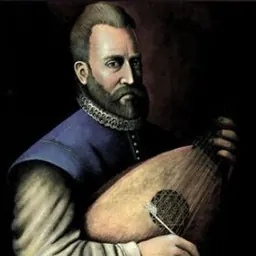
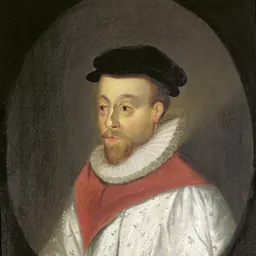
Named in this biography and alive at the same time



Related people
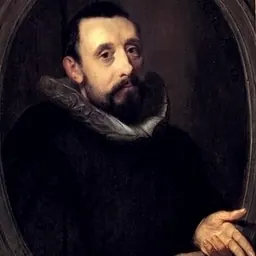
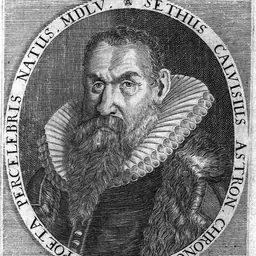
Same field, nearest in time
Contemporaries
People whose lives overlapped Thomas Robinson's




Frequently asked questions
Who was Thomas Robinson?
English composer
When was Thomas Robinson born?
Thomas Robinson was born in 1560 in England.
When did Thomas Robinson die?
Thomas Robinson died in 1601.
What was Thomas Robinson's occupation?
Thomas Robinson was a composer and lutenist.
What nationality was Thomas Robinson?
Thomas Robinson was British.
Sources & further reading
· DBpedia: Thomas Robinson (composer)
Cite this page
APA: Biography.guide. (2026). Thomas Robinson. https://biography.guide/thomas-robinson/
MLA: "Thomas Robinson." Biography.guide, https://biography.guide/thomas-robinson/.
Chicago: "Thomas Robinson." Biography.guide. https://biography.guide/thomas-robinson/.
Data last updated: 2026-09-20 · Spot an error? Report a correction.
Page generated 2026-09-27 05:20 UTC