
About Thomas Ridgeway Gould
Lived 1818 – 1881 (aged 62–63). Thomas Ridgeway Gould was an American sculptor.
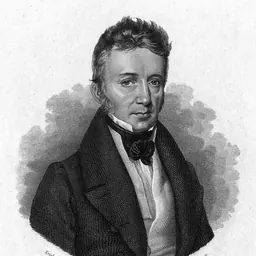
Thomas Ridgeway Gould (November 5, 1818 – November 26, 1881) was an American neoclassical sculptor active in Boston and Florence.
Biography Gould was born in Boston on November 5, 1818. He was at first a merchant with his brother in the dry-goods business, but studied sculpture under Seth Wells Cheney starting in 1851 and in 1863 exhibited two large heads of Christ and Satan at the Boston Athenæum. As a result of the American Civil War, he lost his moderate fortune, and in 1868 moved with his family to Florence, Italy, where he devoted himself to study and work.
His West Wind, originally sculpted in 1870, stirred controversy in 1874 when it was denounced as a copy of Canova's Hebe, with the exception of the drapery, which was modelled by Signor Mazzoli. Animated newspaper correspondence followed this charge, and it was proved groundless. Gould declared that his designs were entirely his own, and that not a statue, bust, or medallion was allowed to leave his studio until finished in all points on which depended their character and expression.
West Wind was later shown in the Philadelphia Centennial Exposition in 1876, and all told Gould subsequently made seven copies in two sizes. He also created statues of Kamehameha the Great, Cleopatra, Timon of Athens, Ariel, and John Hancock (now in the town hall of Lexington, Massachusetts).
Gould visited Boston in 1878, where he executed a number of portrait busts, including those of Emerson (now in the Harvard University library), John Albion Andrew, Seth Wells Cheney, and Junius Brutus Booth. Two alti-rilievi representing Steam and Electricity, displayed within the Boston Herald building, were among his last works. His statue of John Bridge, now on the Cambridge, Massachusetts commons, was completed by his son. Gould died in Florence, Italy on November 26, 1881. His body was returned to Forest Hills Cemetery for burial in the family plot, where it is commemorated with one of his own creations, Ascending Spirit.
Works He produced portrait busts of Emerson, John A. Andrew, and Junius Brutus Booth. Christ (a bust) Satan (a bust) Kamehameha the Great in Honolulu and in Kapaau, Hawaii West Wind, St. Louis Mercantile Library, St. Louis; Memorial Art Gallery of the University of Rochester, Rochester, New York; Orlando Museum of Art The Ghost in Hamlet, 1877, Memorial Art Gallery of the University of Rochester, Rochester, New York John Hancock (Lexington town hall) John Bridge, Cambridge Common (Mass.), completed by his son
Gallery
Don’t just read it —
keep it.
Full-length biographies made to live with: read them, listen on the way to work, watch them tonight.
- E-book
- Audio
- Video
Instant download · yours to keep · every purchase keeps this site free
Important facts
People in Thomas Ridgeway Gould's life
Named in this biography and alive at the same time

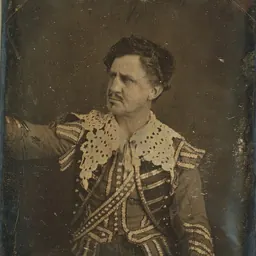
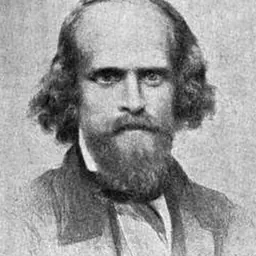
Related people
Same field, nearest in time
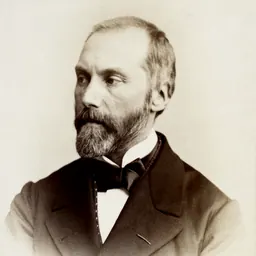


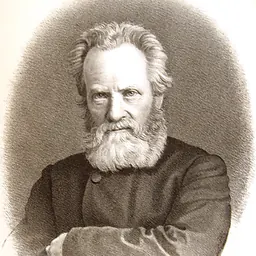


Contemporaries
People whose lives overlapped Thomas Ridgeway Gould's



Frequently asked questions
Who was Thomas Ridgeway Gould?
American artist (1818–1881)
When was Thomas Ridgeway Gould born?
Thomas Ridgeway Gould was born in 1818 in Boston.
When did Thomas Ridgeway Gould die?
Thomas Ridgeway Gould died on 26 November 1881 in Florence.
What was Thomas Ridgeway Gould's occupation?
Thomas Ridgeway Gould was a sculptor.
What nationality was Thomas Ridgeway Gould?
Thomas Ridgeway Gould was American.
Sources & further reading
· Wikipedia: Thomas Ridgeway Gould
· DBpedia: Thomas Ridgeway Gould
Cite this page
APA: Biography.guide. (2026). Thomas Ridgeway Gould. https://biography.guide/thomas-ridgeway-gould/
MLA: "Thomas Ridgeway Gould." Biography.guide, https://biography.guide/thomas-ridgeway-gould/.
Chicago: "Thomas Ridgeway Gould." Biography.guide. https://biography.guide/thomas-ridgeway-gould/.
Data last updated: 2026-09-20 · Spot an error? Report a correction.
Page generated 2026-09-27 05:08 UTC