
About Thomas Norton
Lived 1433 – 1513 (aged 79–80). Thomas Norton was an English writer, poet and alchemist.
Thomas Norton (b. <1436 – d. c. 1513) was an English poet and alchemist best known for his 1477 alchemical poem, The Ordinal of Alchemy.
Biography Thomas Norton was born to a merchant, mayor and sheriff of Bristol, called Walter Norton (fl. 1392-1421). In the Ordinal, he says he was one of the three alchemists in England who worked together at the time of the change of the coin under Sir Hugh Bryce (1464) and that he was a full alchemist at barely 28, which means that he cannot have been born after 1436. Norton was present to sign the transfer of some property in Wiltshire in 1454 and must have been of age by then, so an earlier date of birth is more likely. He was born "undir a crosse in thende of shirys three", possibly in Colerne, on the border of Wiltshire, Somerset, and Gloucestershire.
Norton is believed to have studied under one of the most prominent alchemists of his time, George Ripley, writing that he "learned all the secrets of Alkimy" through his words. Norton is known to have studied alchemy in the service of King Edward IV, becoming a gentleman of Edward's privy chamber, past at least 1466. Perhaps to compensate for being partly cut out of his father's will, Norton began the Ordinal in 1477.
Norton was rewarded with land confiscated from the rebels upon Edward IV's return from exile in 1471. In March 1479,
The Ordinal of Alchemy Content
In the beginning of the poem, Norton lambasts the naivete of others who have bastardized the ideas of the ancient masters of alchemy. He tells us to read his book multiple times to get the best out of it, hinting at the esoteric hiding of his name in how he describes that "chaunging of some one sillable May make this Boke unprofitable". He also gives us something of a biography, professing that he began his study of alchemy at a young age and learned "the seacrets of Alkimy" from the adept alchemist George Ripley. He describes that on two occasions he made an "elixir of life" only for it to be stolen away from him by the greed of others - first by his valet, and the second time by a merchant's wife.
Notably, the book contains several verses satirising certain alchemical or hermetic connections to the Middle English poet Geoffrey Chaucer, who had written The Canon's Yeoman's Tale, a work satirizing alchemists. Inadvertently, this played a large part in the Renaissance conception of Chaucer as an alchemist, which was later abandoned as it was found to be untrue. Similarly, in 1652 Elias Ashmole in his Theatrum Chemicum Britannicum identifies Norton:
Both of these men were drawing from the rather esoterically hidden message found in the Ordinal - where, by connecting the syllables from the first lines of the first 7 chapters of the book, a message is found. This message being: "To Mais Nor Ton Of Brise To", or as Maier and Ashmole interpreted it "Thomas Norton of Bristol".
Authorship controversy
Norton was first identified as the author of the 'Ordinal' in 1617 and has since become the widespread identification of the work's author. However, in 1932, two scholars, M. Nierenstein and P. F. Chapman, criticised this identification (which they named "the Maier-Ashmole hypothesis") under the grounds that, beyond the esoteric link drawn by Maier and Ashmole, very little contemporary evidence seemed to link Norton to the Ordinal. This criticism received little attention in its time and a 1957 article by historian J. Reidy roundly criticised the article, arguing conclusively in favour of the 'Maier-Ashmole hypothesis' by citing various contemporary pieces of evidence that imply that Norton was a significant alchemist and very likely wrote the Ordinal.
Thomas Norton's Ordinal became a very influential alchemical text in the 17th century, with its Latin translation in Michael Maier's Tripus Aureus. It was reprinted in English as the premier text in Elias Ashmole's Theatrum Chemicum Britannicum, along with various engravings of illuminations from Ashmole's manuscript of the work (see below), perhaps based on the British Library MS.
Don’t just read it —
keep it.
Full-length biographies made to live with: read them, listen on the way to work, watch them tonight.
- E-book
- Audio
- Video
Instant download · yours to keep · every purchase keeps this site free
Important facts
People in Thomas Norton's life
Named in this biography and alive at the same time
Related people
Same field, nearest in time

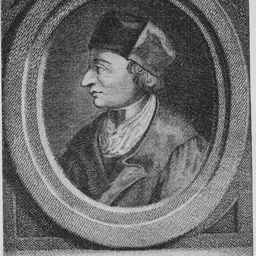
Contemporaries
People whose lives overlapped Thomas Norton's
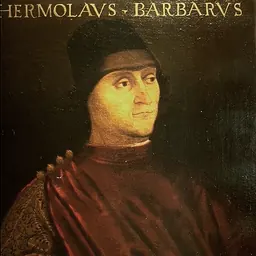
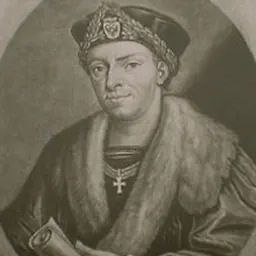
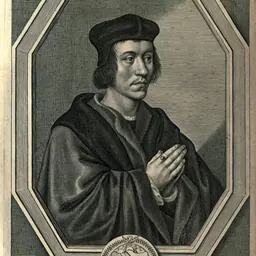

Frequently asked questions
Who was Thomas Norton?
English poet and alchemist
When was Thomas Norton born?
Thomas Norton was born in 1433 in Wiltshire.
When did Thomas Norton die?
Thomas Norton died on 30 November 1513 in England.
What was Thomas Norton's occupation?
Thomas Norton was a writer, poet and alchemist.
What nationality was Thomas Norton?
Thomas Norton was English.
Sources & further reading
· DBpedia: Thomas Norton (alchemist)
Cite this page
APA: Biography.guide. (2026). Thomas Norton. https://biography.guide/thomas-norton-writer/
MLA: "Thomas Norton." Biography.guide, https://biography.guide/thomas-norton-writer/.
Chicago: "Thomas Norton." Biography.guide. https://biography.guide/thomas-norton-writer/.
Data last updated: 2026-09-22 · Spot an error? Report a correction.
Page generated 2026-09-27 05:28 UTC