
About Thomas Morton
Lived 1575 – 1647 (aged 71–72). Thomas Morton was an English explorer, jurist and fur trader.
Thomas Morton (c. 1579 – 1647) is known today for building the first Maypole in America; it was cut down after two years by the Puritans. He also was an early colonist in North America from Devon, England. He was a lawyer, writer, and social reformer known for studying American Indian culture, and he founded the colony of Merrymount, located in Quincy, Massachusetts. He is the author of New English Canaan, an anti-Puritan work which could be considered the first book banned in America, as it was banned by the Puritans in colonial times.
Life and career
Mount Wollaston Only two years after the founding of Plymouth Colony, Thomas Morton took a three-month exploratory trip to America in 1622, but was back in England by early 1623 complaining of intolerance among ruling elements of the Puritan community. He returned in 1624 as a senior partner in a Crown-sponsored trading venture aboard the ship Unity with his associate Captain Wollaston and 30 indentured young men. They began trading for furs on a spit of land belonging to the Algonquian tribes. They called their location Mount Wollaston.
Wollaston and Morton immediately began selling liquor and firearms to the Indians, disregarding the laws of Plymouth Colony.
Disappointed in their lack of success, Captain Wollaston went to Virginia in 1626 with some of the indentured men to sell their contracts to others. He appointed another man in charge. Morton, seeing his chance when the new leader was away, got the remaining men drunk, then convinced them to remove the new leader and follow him before they too were sold to others. They locked out Wollaston’s appointed leader, leaving Morton in command of the colony, which he renamed Merrymount.
William Bradford, Governor of Plymouth Plantation, described a few years later what happened next:
The Maypole Bradford continued:
(Morton's "detraction . . . of some persons" continued in his New England Canaan, (1637), when he uses "crude . . . nicknames" for Governor Bradford and Miles Standwich — "Joshua Temperwell" and Captain Shrimp". )
Morton the Trader The Puritans major charge against Morton was that he sold guns to the Native Americans. Here Morton was a conscientious businessman, not only selling the weapons but teaching how to use them, too conscientious for Governor Bradford.
Bradford again:
Banishment by the Puritans
Morton's religious beliefs were criticized by the Puritans of nearby Plymouth Colony as little more than a thinly disguised form of heathenism. The leaders of Plymouth charged him with having sexual relations with local Indian women and drunken orgies in honor of Bacchus and Aphrodite
Morton's group performed a second Mayday ritual in 1628 by erecting an Maypole topped with deer antlers around which he and his followers caroused drunkenly. The Plymouth militia under Myles Standish took the town the following June with little resistance, chopped down the Maypole, and arrested Morton for supplying guns to the Indians. He was given a trial in Plymouth, then marooned on the deserted Isles of Shoals off the coast of New Hampshire until an English ship could take him to England. The Merrymount community survived without Morton for another year, but was renamed Mount Dagon by the Puritans, after the sea god of the Philistines.
New English Canaan
In 1637, Morton published his three-volume New English Canaan, a denunciation of Puritan government in the colonies and their policy of building forts to guard themselves against Indian attack. He described the Indians as a far nobler culture and a new Canaan under attack from the "New Israel" of the Puritans.
Sedition trial and death Morton returned to New England during the English Civil War where he was arrested for being a Royalist agitator. He was put on trial for his role in revoking the Plymouth Colony's charter and on charges of sedition. By September, he was imprisoned in Boston. His trial was delayed through winter but his health began to fail, so the Puritans granted him clemency. He ended his days among the planters of Maine, and he died in 1647 at age 71. Jack Dempsey produced an edited edition of Morton's book, including a biography of Morton, which was published in 1999.
Evaluation In 1628, Plymouth Colony Governor William Bradford famously declared Morton a "Lord of Misrule."
On October 12, 1812, John Adams wrote the following to Thomas Jefferson about Morton's book:
Morton's The New English Canaan has been described as "an important work of early American environmental writing", as well as the first book banned in America. Harrison T. Meserole describes Morton as "America's first rascal". Ed Simon argues that Morton "remains a powerful disruptive presence in the common founding myth of American identity."
In literature Nathaniel Hawthorne's story "The May-Pole of Merry Mount" in his Twice-Told Tales (1837) is a brief story of the last day of revelry around the May Pole and it’s suppression and destruction by Puritan forces that night, showing that "As the moral gloom of the world overpowers all systematic gaiety, even so was their home of wild mirth made desolate amid the sad forest."
J. L. Motley's Merry Mount (1849) is based on Morton's colonial career. Merry Mount is a 1934 opera with libretto by Richard Stokes and music by Howard Hanson utilizing the details from Hawthorne's brief tale in an otherwise completely original tragic story about the clash between newly arrived Cavaliers and Puritans in the new Puritan settlement. Wildly popular at its Metropolitan Opera premiere, it had 50 curtain calls, and was performed eight additional times that season, but it has only been revived a very few times since then. Some of the music survives in Merry Mount Suite'', assembled by Hanson in 1937 and available in several recordings.
Don’t just read it —
keep it.
Full-length biographies made to live with: read them, listen on the way to work, watch them tonight.
- E-book
- Audio
- Video
Instant download · yours to keep · every purchase keeps this site free
Important facts
People in Thomas Morton's life
Named in this biography and alive at the same time

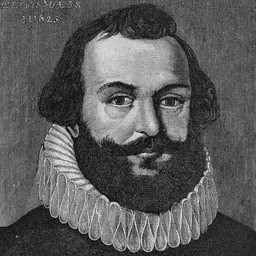

Related people
Same field, nearest in time

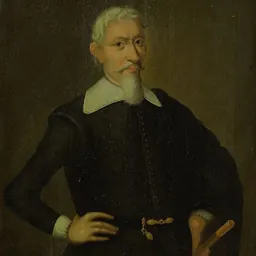

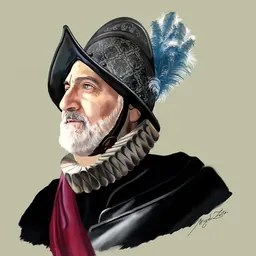
Contemporaries
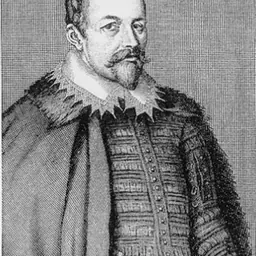
People whose lives overlapped Thomas Morton's



Frequently asked questions
Who was Thomas Morton?
Early American colonist from Devon, England
When was Thomas Morton born?
Thomas Morton was born in 1575 in Devon.
When did Thomas Morton die?
Thomas Morton died in 1647.
What was Thomas Morton's occupation?
Thomas Morton was an explorer, jurist and fur trader.
What nationality was Thomas Morton?
Thomas Morton was English.
Sources & further reading
· DBpedia: Thomas Morton (colonist)
Cite this page
APA: Biography.guide. (2026). Thomas Morton. https://biography.guide/thomas-morton-explorer/
MLA: "Thomas Morton." Biography.guide, https://biography.guide/thomas-morton-explorer/.
Chicago: "Thomas Morton." Biography.guide. https://biography.guide/thomas-morton-explorer/.
Data last updated: 2026-09-22 · Spot an error? Report a correction.
Page generated 2026-09-27 05:07 UTC