
About Thomas Molony
Lived 1865 – 1949 (aged 83–84). Thomas Molony was a British judge and barrister.
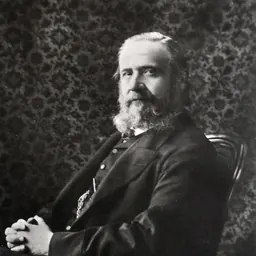
Sir Thomas Francis Molony, 1st Baronet, PC(Ire), KC (1865–1949) was the last Lord Chief Justice of Ireland. He was also the only judge to hold the position of Lord Chief Justice of Southern Ireland although he did not hold that position under that title.
Early career and politics
Molony qualified as a barrister in 1887 and became a Queen's Counsel in 1899. He served as Solicitor-General for Ireland (24 June 1912 to 10 April 1913) when he was appointed Attorney General for Ireland (10 April 1913 to 20 June 1913). Later in 1913, Molony was made a judge of the High Court for Ireland and from 1915 sat as a judge of the Court of Appeal for Ireland. He was also appointed to several governmental inquiries, notably one on certain shootings including that of Francis Sheehy-Skeffington in the wake of the 1916 Irish Easter Rising.
In terms of his own politics, Molony has been described as “a Home Ruler of the old stamp". He was opposed to the partition of Ireland. When the Government of Ireland Act 1920 was being drafted he declined an invitation to travel to London to advise on proposals relating to the creation of a separate judiciary for what was to be Northern Ireland. In correspondence with government officials, he expressed his particular disappointment that unlike previous Home Rule Bills, it was now proposed that the Irish judiciary would be divided. He opined that this would impose unnecessary expense, lead to duplication of administrative expenses and that the proposals were “detrimental to the dignity and authority of the Bench...and would tend to...prolong the separation of the two parts of Ireland, which it is hoped ultimately to re-unite".
Defending his title
Molony was appointed the Lord Chief Justice of Ireland in 1918 under Letters Patent from the King under the Great Seal of Ireland. At the time of his appointment, this was the second highest judicial posting in Ireland, second only to that of the Lord Chancellor of Ireland. However, Molony's position was shortly to be under attack. In 1920 the British Government began drafting Home Rule legislation which ultimately led later that year to the Government of Ireland Act. The draft legislation proposed that the Lord Chief Justice of Ireland would become the Lord Chief Justice of Southern Ireland. Molony “expressed disquiet at the apparent proposal to lessen the dignity and prerogatives of his own office". The leadership of the judiciary in the emerging Irish Free State now fell to Molony. That same year, the Irish Civil War began. The Four Courts were burnt down. It was not an easy time to be a judge with violence raging and a new Irish government coming into power whose members had themselves shortly before been rebels. Molony made an effective and dignified attempt to proceed with business as usual and uphold the laws of the land.
Molony adopted a tough stance. The penalty of capital punishment was regularly handed down by his judiciary during the Irish Civil War. Indeed, even after that War, Molony handed down more death sentences than would have been usual in peacetime – four such sentences were handed down in the four weeks towards the end of 1923, two on the same day, 12 December.
One of the more notable events of his judicial leadership was that he administered the Oath of Office to the first Governor-General of the Irish Free State, Tim Healy.
He was president of the Statistical and Social Inquiry Society of Ireland between 1920 and 1924.
Retirement
In May 1924, together with most other members of the Irish judiciary associated with the ancien régime, Molony retired as the Irish government established its own court system under the Courts of Justice Act 1924. The office of Lord Chief Justice of Ireland and indeed of Lord Chief Justice of Southern Ireland were abolished. His successor as leader of the judiciary was the first Chief Justice of the Irish Free State, Hugh Kennedy. Molony had an audience with the King on 14 July 1924 upon relinquishing his appointment as Lord Chief Justice of Ireland. He was created a Baronet, of the City of Dublin, in the 1925 New Year Honours.
Molony retired to England but was made Vice-Chancellor of Trinity College Dublin in 1931. Molony died on 3 September 1949 and is buried in Gap Road Cemetery Wimbledon.
His family consisted of his wife Pauline, only daughter of Mr. Bernard Rispin, of Dublin, and three sons and three daughters. His eldest son, Hugh Francis Molony, born in 1900, was a graduate in engineering of Trinity College Dublin and succeeded his father to the baronetcy. His second son, Sir Joseph Molony, was a noted barrister.
Coat-of-arms
Don’t just read it —
keep it.
Full-length biographies made to live with: read them, listen on the way to work, watch them tonight.
- E-book
- Audio
- Video
Instant download · yours to keep · every purchase keeps this site free
Important facts
People in Thomas Molony's life
Named in this biography and alive at the same time



Related people
Same field, nearest in time
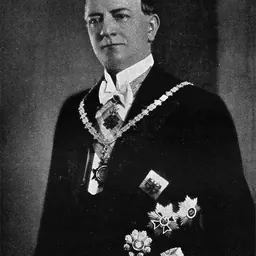

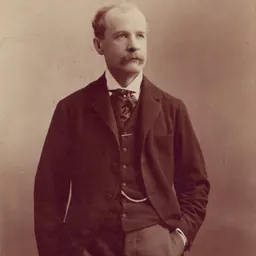
Contemporaries
People whose lives overlapped Thomas Molony's
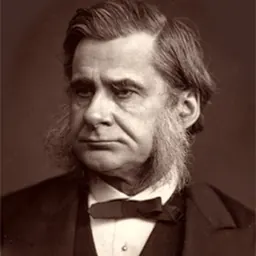

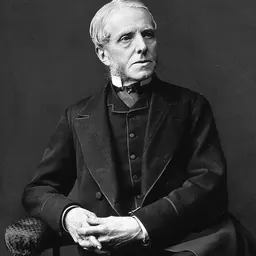


Frequently asked questions
Who was Thomas Molony?
Irish judge (1865–1949)
When was Thomas Molony born?
Thomas Molony was born in 1865.
When did Thomas Molony die?
Thomas Molony died in 1949.
What was Thomas Molony's occupation?
Thomas Molony was a judge and barrister.
What nationality was Thomas Molony?
Thomas Molony was British.
Sources & further reading
Cite this page
APA: Biography.guide. (2026). Thomas Molony. https://biography.guide/thomas-molony/
MLA: "Thomas Molony." Biography.guide, https://biography.guide/thomas-molony/.
Chicago: "Thomas Molony." Biography.guide. https://biography.guide/thomas-molony/.
Data last updated: 2026-09-20 · Spot an error? Report a correction.
Page generated 2026-09-27 05:26 UTC