
About Thomas M'Clintock
Lived 1792 – 1876 (aged 83). Thomas M'Clintock was an American pharmacist and abolitionist, known for Abolitionism.
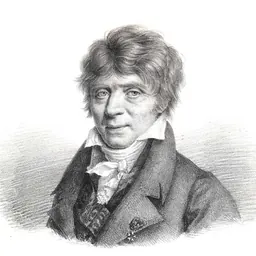
Thomas M'Clintock (March 28, 1792 – March 19, 1876) was an American pharmacist and a leading Quaker organizer for many reforms, including abolishing slavery, achieving women's rights, and modernizing Quakerism.
Life He was born on March 28, 1792 in Delaware, the son of Thomas and Mary Allen M'Clintock. Thomas's father was a Presbyterian, and his mother a Quaker, although their marriage resulted in her being removed from the Quaker rolls for marrying out of meeting.
Thomas became a druggist or pharmacist, which at the time would have been achieved through an apprenticeship. Thomas became a Quaker by commitment in 1811. At age twenty-two, Thomas began working as a druggist, opening his own store in Philadelphia, and six years later, in 1820, he married Mary Ann Wilson in Burlington, New Jersey. They began their life together in Philadelphia, where they lived for the first seventeen years of their marriage, and where Thomas M'Clintock began his involvement in abolitionism. During their years there, Thomas and Mary Ann had six children, five of whom lived to adulthood.
That same year M'Clintock was an instrumental force in the Hicksite Schism. This separation among the Quakers resulted from disagreements as to what role doctrine should play in the church, how much one should participate in social activism, and other factors. His extensive knowledge of early Quaker theology was used to prepare arguments against Orthodox Quakers. His arguments caused so much tension that even ten years later, in 1836, he and his family chose to move to Waterloo, New York.
While there, the M'Clintocks more actively aligned themselves with William Lloyd Garrison and his American Anti-Slavery Society. The M'Clintocks participated in petition campaigns, anti-slavery fairs, hosted numerous anti-slavery speakers and were founding members of the Western New York Anti-Slavery Society. In 1843, Thomas was elected to the board of managers of the American Anti-Slavery Society and later served as a vice president for a number of years. M'Clintock actively championed abolition, temperance, and Native American rights. Thomas and his wife organized anti-slavery petitions, gave refuge to black children, and continued the Free Produce movement.
Several issues created divisions within the Hicksite branch of the Quakers in the 1840s, including whether ministers and elders should be able to discipline members, whether Quakers should be allowed to mix with non-Quakers in reform organizations, and the status of women within the organization. The M'Clintocks played important roles in the 1848 schism of Hicksite Quakers in western New York and the subsequent formation of the Yearly Meeting of Congregational Friends. Thomas M'Clintock wrote the new organization's Basis for Association, which specified that the organization would have no ministers, that no member would be subordinate to another, and that men and women would meet together with equal powers, not separately. Members were not bound by creed or doctrine, and membership was open to non-Quakers.
Thomas's wife, Mary Ann, was a major force in organizing the Seneca Falls Convention, the first women's rights convention. She attended the famous tea party in the Hunt house where the idea for a convention was first discussed. The original Declaration of Sentiments was then written at the M'Clintock house by Elizabeth Cady Stanton, Mary Ann and probably Elizabeth M'Clintock and Mary M'Clintock. Thomas may have been involved in those discussions, but there is no direct record of that. He did chair one of the sessions of the subsequent convention and gave a speech in support of the declaration. The entire M'Clintock family was involved in this convention, and they helped to organize a follow-up convention, the Rochester Women's Rights Convention of 1848, two weeks later in Rochester, New York.
Don’t just read it —
keep it.
Full-length biographies made to live with: read them, listen on the way to work, watch them tonight.
- E-book
- Audio
- Video
Instant download · yours to keep · every purchase keeps this site free
Important facts
Family & relationships
People in Thomas M'Clintock's life
Named in this biography and alive at the same time
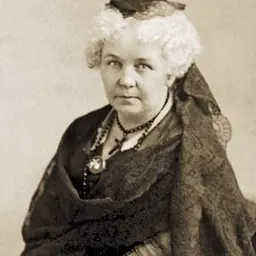

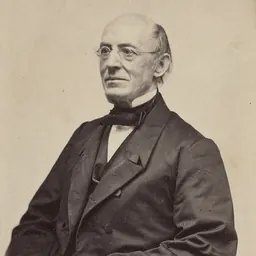
Related people
Same field, nearest in time




Contemporaries
People whose lives overlapped Thomas M'Clintock's



Frequently asked questions
Who was Thomas M'Clintock?
American abolitionist (1792-1876)
When was Thomas M'Clintock born?
Thomas M'Clintock was born on 28 March 1792 in Delaware.
When did Thomas M'Clintock die?
Thomas M'Clintock died on 19 March 1876 in Philadelphia.
What was Thomas M'Clintock's occupation?
Thomas M'Clintock was a pharmacist and abolitionist.
What was Thomas M'Clintock known for?
Thomas M'Clintock was known for Abolitionism.
What nationality was Thomas M'Clintock?
Thomas M'Clintock was American.
Sources & further reading
· Wikipedia: Thomas M'Clintock
Cite this page
APA: Biography.guide. (2026). Thomas M'Clintock. https://biography.guide/thomas-m-clintock/
MLA: "Thomas M'Clintock." Biography.guide, https://biography.guide/thomas-m-clintock/.
Chicago: "Thomas M'Clintock." Biography.guide. https://biography.guide/thomas-m-clintock/.
Data last updated: 2026-09-22 · Spot an error? Report a correction.
Page generated 2026-09-27 05:28 UTC