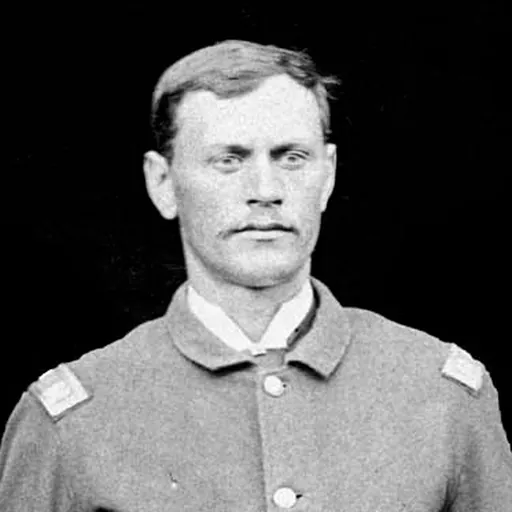
Thomas L. Sloan
Native American lawyer and activist
About Thomas L. Sloan
Lived 1863 – 1940 (aged 76–77).
Thomas L. Sloan at Hampton Institute, c.1889Thomas Louis Sloan (14 May 186310 September 1940) was a Native American lawyer and activist. Sloan worked alongside his partner, Hiram Chase, for much of his career. Sloan has a history of activism dating back to his teenage years. In 1911, he helped found the Society of American Indians. In addition, he established the first Indian-owned law office in Washington D.C. in 1912. Sloan was an activist for the citizenship of all Native Americans. At the age of 17, Sloan and his future law partner Hiram Chase were deemed troublemakers and imprisoned in an agency blockhouse for protesting agents of cheating the tribe financially.
Both Sloan and Chase participated in the Peyote religion which Sloan originally opposed. Peyote was a combatant against alcoholism within the Omaha tribe and attracted the young and educated members of their tribe.
Before attending Hampton Institute, Sloan had also spent time enlisted in the U.S. Cavalry and served a tour in the Navy.
Sloan believed Native Americans could find the most protection through American Law, and he never gave up on his work until his death in 1940, at the age of 77. Sloan served in the government on the Omaha-Winnebago reservation until he moved back to practicing private law, working specifically on cases involving Native Americans. By 1911, Sloan appeared in federal courts regularly and also acted as a liaison helping tribal leaders navigate the government bureaucracy. In 1894 and 1901, Congress passed an act that allowed Native Americans to use the Circuit Courts to claim allotments that they were entitled to, but had not been awarded. Sloan, H. C. Brome, Charles E. Clapp, and Anderson & Keefe represented 25 cases of people who claimed allotments from the Act of 1882. They were told they were ineligible, appealed and were still told that they would be unable to receive the allotments. However, Thomas Sloan did successfully fight and gain his allotments despite initial rulings that he was ineligible because his grandmother had received allotments in 1830. Sloan's strong defense of peyote led to some people fearing him, especially missionaries, and some worried that this would reflect negatively on the SAI.
Sloan served as an advisor and witness for Harry Black Bear who had been charged for the distribution of peyote. Originally the jury found Black Bear guilty, but his attorney appealed it to another judge who overturned the earlier decision. Black Bear's attorney and local press give Sloan's testimony credit for being the reason behind the judge's decision.
Sloan was also nominated, in 1912, for the role of Commissioner of Indian Affairs, a position in the Bureau of Indian Affairs (BIA). However, Sloan's morality was largely called into question by The New Republic. They wrote a series of disputed articles accusing him of committing fraud. The articles claimed he convinced a woman to adopt a child to will her land to. In the dispute for the women's land Sloan allegedly advised both sides of the dispute (the adopted child and relatives who had formerly been in the will), that way he would gain money from either side winning. When the relatives won back their original inheritance, Sloan received a portion of it.
American Indian Federation (AIF) Thomas Sloan was also a member and leader of the American Indian Federation. Sloan echoed the call of other members of the AIF to abolish the BIA and thought that the Indian Reorganization Act would fail. He testified during the House Committee on Indian Affairs' hearings on the subject in February 1935. Sloan argued that the only way for Indians to develop was for them to be able to handle problems on their without government supervision. He claimed that as long as the BIA existed that supervision would always exist.
After the Federation failed to overturn the IRA or abolish the BIA in the hearings, the organization splintered. A majority went on to support a new "Settlement Bill"; however, Sloan was among many of the original leadership of the AIF that opposed the bill.
Business Eight years after the supreme court case Sloan v. US, as noted above, he opened a law office in Washington D.C., which was the first law firm owned by a Native American. Sloan poured a lot of effort in growing the firm. In the end, it represented individuals from many tribes, investigated certain reservations, and helped advise the councils of many tribes. Sloan pressured the government to prioritize helping the Indians instead of ignoring them or putting them off. He owned a flour mill.
Don’t just read it —
keep it.
Full-length biographies made to live with: read them, listen on the way to work, watch them tonight.
- E-book
- Audio
- Video
Instant download · yours to keep · every purchase keeps this site free
Important facts
People in Thomas L. Sloan's life
Named in this biography and alive at the same time


Contemporaries
People whose lives overlapped Thomas L. Sloan's




Frequently asked questions
Who was Thomas L. Sloan?
Native American lawyer and activist
When was Thomas L. Sloan born?
Thomas L. Sloan was born in 1863.
When did Thomas L. Sloan die?
Thomas L. Sloan died in 1940.
Sources & further reading
Cite this page
APA: Biography.guide. (2026). Thomas L. Sloan. https://biography.guide/thomas-l-sloan/
MLA: "Thomas L. Sloan." Biography.guide, https://biography.guide/thomas-l-sloan/.
Chicago: "Thomas L. Sloan." Biography.guide. https://biography.guide/thomas-l-sloan/.
Data last updated: 2026-09-22 · Spot an error? Report a correction.
Portrait: Wikimedia Commons · author & licence
Page generated 2026-09-27 05:04 UTC