
About Thomas Kinkade
Lived 1958 – 2012 (aged 54). Thomas Kinkade was an American painter and writer.
Early life William Thomas Kinkade was born in 1958 in Sacramento County, California. He grew up in the town of Placerville with a single mother. She was so poor that they often could not afford heating or lighting. He graduated from El Dorado High School in Placerville in 1976, and attended the University of California, Berkeley and ArtCenter College of Design in Pasadena.
Some of the people who mentored and taught Kinkade prior to college included Charles Bell and Glenn Wessels.
Career For the summer of June 1980, Kinkade traveled across the United States with his college friend James Gurney. The two finished their journey in New York and secured a contract with Guptill Publications to produce a sketching handbook. In 1982, they produced a book, The Artist's Guide to Sketching, Recurring features of Kinkade's paintings are pastel colors and brilliant illumination of the scene. Rendered with idealistic values of American scene painting, his works often portray bucolic and idyllic settings including gardens, streams, stone cottages, lighthouses, and Main Streets. His hometown of Placerville (where his works are much displayed) was the inspiration for many of his street and snow scenes. He also depicted various Christian themes, including the cross and churches. His country scenes rarely depict people and he was frequently asked questions about that.
Kinkade said he was emphasizing the value of simple pleasures and his intent was to communicate inspirational messages through his paintings. A self-described "devout Christian" (even giving all four of his children the middle name "Christian" ), he believed that he gained inspiration from his religious beliefs and his work was intended to include a moral dimension. Many pictures include specific chapter-and-verse allusions to Bible passages.
In 2009, he painted a portrait of the Indianapolis Motor Speedway for the cover of that year's race program which included details in the crowd, hiding among them the figures of Norman Rockwell and Dale Earnhardt. He also painted the farewell portrait for Yankee Stadium. Concerning the Indianapolis Motor Speedway painting, Kinkade said: The passion I have is to capture memories, to evoke the emotional connection we have to an experience. I came out here and stood up on the bleachers and looked around, and I saw all the elements of the track. It was empty at the time. But I saw the stadium, how the track laid out, the horizon, the skyline of Indianapolis and the Pagoda. I saw it all in my imagination. I began thinking, 'I want to get this energy—what I call the excitement of the moment—into this painting.' As I began working on it, I thought, 'Well you have this big piece of asphalt, the huge spectator stands; I've got to do something to get some movement.' So I just started throwing flags into it. It gives it kind of a patriotic excitement. (Thomas Cole, Home in the Woods, 1847) Artist and Guggenheim Fellow Jeffrey Vallance has spoken about Kinkade's devout religious themes and their reception in the art world:
Essayist Joan Didion is a representative critic of Kinkade's style:
Authenticity Kinkade's production method has been described as being "a semi-industrial process in which low-level apprentices embellish a prefab base provided by Kinkade." He reportedly designed and painted all of his works, which were then moved into the next stage of the process of mass-producing prints. It is assumed he created most of the original, conceptual work that he produced. Kinkade employed studio assistants to help create multiple prints of his famous oils. Thus while it is believed that he designed and painted all of his original paintings, the ones collectors were likely to own were printed factory-like and touched up with manual brush strokes by someone other than Kinkade.
Kinkade is reportedly one of the most counterfeited artists, in large part because of advances in affordable, high resolution digital photography and printing technology. Additionally, mass-produced hand-painted fakes from countries such as China and Thailand abound in the U.S. and around the globe. In 2011, the Kinkade studio said that Kinkade was the most collected artist in Asia but received no income from those regions because of widespread forgery.
Business
Kinkade's works have been sold by mail order and in dedicated retail outlets. Some of the prints feature light effects which are painted onto the print surface by hand by "skilled craftsmen," touches that add to the illusion of light and the resemblance to an original work of art, and which are then sold at higher prices. Licensing with Hallmark and other corporations has made it possible for Kinkade's images to be used extensively for other merchandise including calendars, jigsaw puzzles, greeting cards, and CDs. By December 2009, his images also appeared on Walmart gift cards.
Kinkade was reported to have earned $53 million for his artistic work during the period 1997 to May 2005. Around 2000, there was a national network of several hundred Thomas Kinkade Signature Galleries; however, they began to falter during the 2007-2009 recession. During June 2010, his Morgan Hill, California manufacturing operation, which reproduced the art, filed for Chapter 11 bankruptcy protection, listing nearly $6.2 million in creditors' claims.
Criticism and controversy Reception Although Kinkade was among the most commercially successful painters of the 1990s, his work has been criticized. Soon after news of his death in April 2012, author Susan Orlean termed it the death of a "kitsch master". Also during April 2012, journalist Laura Miller lampooned Kinkade's work as "a bunch of garish cottage paintings".
Kinkade was criticized for the extent to which he commercialized his art, for example, by selling his prints on QVC, a home shopping TV network. Some academics expressed concerns about the implications of Kinkade's success in relation to Western perceptions of visual art. In 2009, Nathan Rabin of The A.V. Club wrote, "To his detractors, he represents the triumph of sub-mediocrity and the commercialization and homogenization of painting ... perhaps no other painter has been as shameless or as successful at transforming himself into a corporation as Kinkade." Among such people, he is known more as a "mall artist" or a "chocolate box artist" than as a merited painter. Rabin later said that Kinkade's paintings collectively are "a maudlin, sickeningly sentimental vision of a world where everything is as soothing as a warm cup of hot chocolate with marshmallows on a cold December day".
Business practices Kinkade's company, Media Arts Group Inc., was accused of unfair dealings with owners of Thomas Kinkade Signature Gallery franchises. In 2006, an arbitration board awarded Karen Hazlewood and Jeffrey Spinello $860,000 in damages and $1.2 million in fees and expenses due to Kinkade's company "[failing] to disclose material information" which would have discouraged them from investing in the gallery. The award was later increased to $2.8 million with interest and legal fees. The plaintiffs and other former gallery owners also made accusations of being pressured to open additional galleries which were not viable financially; being forced to accept expensive, unsalable inventory; and being undersold by discount outlets the prices of which they were not allowed to match. Kinkade denied the accusations, and Media Arts Group had defended itself successfully in previous suits by other former gallery owners. He himself was not singled out in the finding of fraud by the arbitration board.
Former gallery dealers also charged that the company used Christianity to take advantage of people. "They really knew how to bait the hook," said one ex-dealer who spoke on condition of anonymity. "They certainly used the Christian hook." One former dealer's lawyer said, "Most of my clients got involved with Kinkade because it was presented as a religious opportunity. Being defrauded is awful enough, but doing it in the name of God is really despicable." On June 2, 2010, Pacific Metro, the artist's production company, filed for Chapter 11 bankruptcy, one day after defaulting on a $1 million court-imposed payment to the aforementioned Karen Hazlewood and Jeffrey Spinello.
Personal conduct The Los Angeles Times reported that some of Kinkade's former colleagues, employees, and even collectors of his work said that he had a long history of cursing and heckling other artists and performers. The Times wrote that he openly fondled a woman's breasts at a sales event in South Bend, Indiana and alleged his proclivity for ritual territory marking by urination, once relieving himself on a Winnie the Pooh figure at the Disneyland Hotel in Anaheim while saying, "This one's for you, Walt."
In 2006, John Dandois, Media Arts Group executive, recounted a story that on one occasion six years previously, Kinkade became drunk at a Siegfried & Roy magic show in Las Vegas and began shouting "Codpiece! Codpiece!" at the performers. Eventually he was calmed by his mother.
Related projects and partnerships Kinkade was selected by a number of organizations to celebrate anniversaries, including Disneyland's 50th anniversary, Walt Disney World's 35th anniversary, Elvis Presley's purchase of Graceland 50 years previously, the 25th anniversary of its opening to the public, and Yankee Stadium's farewell 85th season in 2008. Kinkade also paid tribute to Fenway Park.
Kinkade was the artist chosen to depict the historic Biltmore Estate house; he also created the commemorative portrait of the 50th running of the Daytona 500 during 2008.
Charities and affiliations Kinkade donated to non-profit organizations concerned with children, humanitarian relief, and the arts including Make-a-Wish Foundation, World Vision, Art for Children Charities, and the Salvation Army. During 2002, he partnered with the Salvation Army to create two charity prints, The Season of Giving and The Light of Freedom. Proceeds from the sale of the prints were donated to the Salvation Army for their relief efforts at the World Trade Center site and to aid the victims of the September 11 attacks and their families in New York City, Pennsylvania, and Washington, D.C. More than $2 million was donated as a result of the affiliation.
In 2003, Kinkade was chosen as a National Spokesman for the Make-A-Wish Foundation, and during the 20 Years of Light Tour in 2004, he raised more than $750,000 granting 12 wishes for children with life-threatening medical conditions.
In 2005, the Points of Light Foundation, a nonprofit organization dedicated to engaging more people more effectively in volunteer service to help solve serious social problems, named Kinkade as "Ambassador of Light". He was the second person in the Foundation's 15-year history to be chosen as Ambassador, the first being the organization's founder, former President George H. W. Bush.
Archbishop Mitty High School of San Jose dedicated the "Thomas Kinkade Center for the Arts" in 2003. Kinkade was reportedly a Church of the Nazarene member.
Awards and recognition Kinkade received many awards for his works including multiple National Association of Limited Edition Dealers (NALED) awards for Artist of the Year and Graphic Artist of the Year. His art was named Lithograph of the Year nine times. In Dana Spiotta's 2011 novel Stone Arabia, the main character's boyfriend, an art teacher at a private school in Los Angeles, gives Kinkade pieces, which are described as "deeply hideous" and "kitschy", to others as gifts, explaining his rationale for that by saying, "Well, he is America's most successful artist and a native Californian as well." At another point he says, "His name has a trademark—see?' and he would point to the subscript that appeared after his name." Mat Johnson's 2011 novel Pym includes a parody of Kinkade named Thomas Karvel, "the Master of Light".
A self-produced movie about Kinkade, Thomas Kinkade's Christmas Cottage, was released on DVD in late November 2008. The semi-autobiographical story examines the motivation and inspiration behind his most popular painting, The Christmas Cottage. Jared Padalecki plays Kinkade and Marcia Gay Harden portrays his mother. Peter O'Toole plays young Kinkade's mentor, who tells him, "Paint the light, Thomas! Paint the light!." In "Mother", a fifth season episode of Veep, an HBO series, Selina Meyer discusses her mother, Mee-Maw, with her daughter, Catherine. Selina makes a disparaging comment about Mee-Maw, and Catherine asks: "Mom, why would you want to paint Mee-Maw in such a negative light?" Selina answers, "Oh, Catherine, Thomas-__-Kinkade couldn't paint Mee-Maw in a positive light!"
Bob Odenkirk references Thomas Kinkade on his 2014 comedy album, Amateur Hour. On the track "The Kids", Odenkirk includes Kinkade's paintings in a litany of things he encourages his children to appreciate when in reality he wants them to reject them when they are older. In June 2012, a month after Kinkade's death, Bob Odenkirk's brother, Bill, wrote a poem, "Lights Out", in acknowledgement of his passing.
In 2025, the indie band Coma Cinema released the single "Thomas Kinkade's Grand Delusion" about the life and work of the artist.
Personal life Kinkade and Nanette Willey married in 1982 and they had four daughters, all named for famous artists.
Death and legacy Kinkade died at his home in Monte Sereno, California in 2012, at age 54. He is buried at Madronia Cemetery in Saratoga, California.
Kinkade's family initially said that he appeared to have died of natural causes. In corroboration with the autopsy, according to Amy Pinto-Walsh, his girlfriend of 21 months, Kinkade had been at home drinking alcohol the night before his death. Pinto-Walsh said that the artist "died in his sleep, very happy, in the house he built, with the paintings he loved, and the woman he loved." After Kinkade's death, his wife sought a restraining order against his girlfriend to prevent her from publicly releasing information and photos with respect to Kinkade, his marriage, his business, and his personal behavior that "would be personally devastating" to Kinkade's wife. By December 2012, Nanette Kinkade and Amy Pinto-Walsh announced they had reached a private agreement in the matter.
A documentary about Kinkade's life, Art For Everybody, was released in 2023. It includes coverage of his unpublished work, which "experiments with forms and styles and frequently depict[ed] the darkness that lurked inside of him. In several images, dark brooding figures rendered in charcoal seem haunted." The documentary "complicate the [Kinkade] narrative."
Don’t just read it —
keep it.
Full-length biographies made to live with: read them, listen on the way to work, watch them tonight.
- E-book
- Audio
- Video
Instant download · yours to keep · every purchase keeps this site free
Important facts
People in Thomas Kinkade's life
Named in this biography and alive at the same time


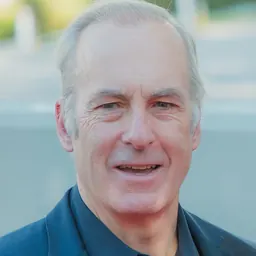





Related people
Same field, nearest in time
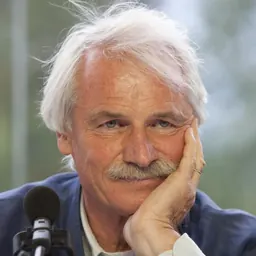
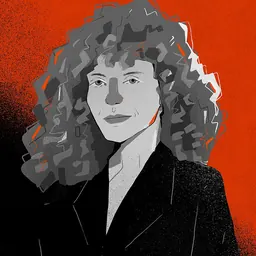

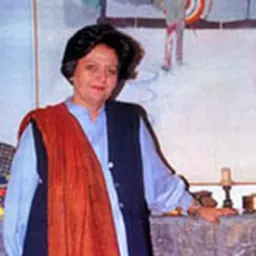
Contemporaries
People whose lives overlapped Thomas Kinkade's


Frequently asked questions
Who was Thomas Kinkade?
American painter (1958-2012)
When was Thomas Kinkade born?
Thomas Kinkade was born on 19 January 1958 in Sacramento.
When did Thomas Kinkade die?
Thomas Kinkade died on 6 April 2012 in Monte Sereno.
What was Thomas Kinkade's occupation?
Thomas Kinkade was a painter and writer.
What nationality was Thomas Kinkade?
Thomas Kinkade was American.
Sources & further reading
Cite this page
APA: Biography.guide. (2026). Thomas Kinkade. https://biography.guide/thomas-kinkade/
MLA: "Thomas Kinkade." Biography.guide, https://biography.guide/thomas-kinkade/.
Chicago: "Thomas Kinkade." Biography.guide. https://biography.guide/thomas-kinkade/.
Data last updated: 2026-09-20 · Spot an error? Report a correction.
Page generated 2026-09-27 05:30 UTC