
Thomas J. Kelly
Irish nationalist
About Thomas J. Kelly
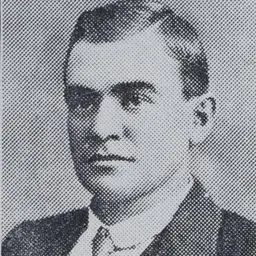
Lived 1833 – 1908 (aged 74). Thomas J. Kelly was an Irish fenian.
Thomas Joseph Kelly (6 January 1833 – 5 February 1908) was an Irish revolutionary and leader of the Irish Republican Brotherhood (IRB), a secret organisation with the objective of establishing an Irish republic independent from the United Kingdom. Kelly was the nominal leader of the failed Fenian Rising of 1867. He had previously also been an officer in the Union Army during the American Civil War, serving mainly with the 10th Ohio Infantry "The Bloody 10th".
Biography Early life The son of a farmer and public house owner, Patrick Kelly, and Margaret Divilly, Thomas Joseph Kelly was born in Mountbellew, County Galway, in 1833. Having received a better than average education, it was originally intended that he should become a priest and attended St. Jarlath's College in Tuam. At school, he came to be influenced by his teacher Michael Joseph MacCann (1824–1883) who, in 1843, wrote "O'Donnell Abu", a ballad about Rory O'Donnell, 1st Earl of Tyrconnell. This influence kindled patriotism in Kelly.
Emigration to the United States After serving an apprenticeship in the printing trade in Loughrea, at the age of eighteen, he emigrated to New York City, arriving on the ship Castillian on 27 March 1851, where he worked as a printer, and joined the Printer's Union in New York City. He joined the National Guard in New York and received basic military training. He later joined the Emmet Monument Association, an Irish-American Irish republican group.
In 1857, Kelly went to Nashville, Tennessee, where he worked as a foreman for the S. W. Publishing House. Soon afterwards he started the Nashville Democrat, which supported the presidential campaign of Stephen A. Douglas in the Presidential election of 1860. Following the outbreak of the American Civil War, Kelly, a supporter of the Union, chose to leave Nashville for the North. In doing this, he lost his savings and printing business.
American Civil War En route to join the famous Irish 69th Infantry Regiment, he heard about the Irish 10th Ohio Infantry, and enlisted with them for its initial three months, and then re-enlisted for an additional three years. He served in Company "C", where his military knowledge and ability was soon recognized and he was promoted to sergeant. By the end of the summer of 1861 he was functioning as first sergeant of Company "C". Although shot in the jaw at the Battle of Carnifex Ferry in Western Virginia, 10 September 1861, he volunteered to return to duty before the end of the year. Part of his jaw and three teeth were destroyed by a bullet that lodged in the muscles of the left side of his neck, from which it was removed surgically. It has been suggested that the goatee beard, which appears in all of his pictures was grown to hide what could have been a disfiguring scar. During this period his regimental commander requested his reassignment back to the 10th Ohio, in order that he might take command of one of the regiment's manoeuvre battalions.
Irish Republican Brotherhood
After the end of the war, Kelly learned about the establishment of the Irish Republican Brotherhood (IRB) and joined the movement in New York. Kelly's military experience immediately made him of value to the organisation. The Fenian Brotherhood quickly dispatched him to Ireland in April 1865 to inspect the military capability of the IRB there. Kelly's valuable reports back to HQ led the IRB to "promote" Kelly to Colonel within the IRB. Kelly's authority continued to grow when, on 24 November 1865, he was able to arrange the rescue of IRB President James Stephens from Richmond Prison in Dublin. Following this, Kelly became Stephen's deputy and intermediary between Stephens and the American Fenians.
Within days of the raid on Chester Castle, armed skirmishes began to be carried out by Fenians across Munster. By early March, small uprisings started around Dublin too and Kelly sent a proclamation of an Irish Republic to the press. However, these actions were sporadic and their impacts were limited; when it became apparent that the co-ordinated rising that had been planned was not transpiring, most rebels simply went home. The rising failed as a result of lack of arms and planning, but also because of the British authorities' effective use of informers, as most of the Fenian leadership had been arrested before the rebellion took place. O’Sullivan Burke's promised shipment of arms from Liverpool did arrive in Ireland, but the time they had the rising had already effectively been put down. Though they gave their names as Martin Williams and John Whyte, they were soon identified and charged with more serious offences. Seven days later, Kelly and Deasy were being transferred from the courthouse to the county jail on Hyde Road, Manchester, when about thirty supporters attempted to free them. During the attack, police sergeant Charles Brett, was killed, but Kelly and Deasy managed to escape. Three men arrested in connection with the attack were later executed, and thereafter known as the Manchester Martyrs. Both Kelly and Deasy escaped to the United States and were never recaptured. Kelly later obtained employment in the New York Custom House.
Following Kelly's return to New York, he continued to associate with the Irish Republican Brotherhood but did not seek the same prominence he once had. In 1871, he was secretary to the committee which welcomed the "Cuba Five", a group of released Fenian prisoners, to New York.
In 1869 Kelly married Catharine Gillogly, a native of Ohio with whom he had five children. Catharine died in 1891, and Kelly would go on to marry her sick nurse Anna Dunne in 1891, with whom he had two further daughters. He and his second wife, Anna Frances (née Dunne) (May 1860 – September 1913) are buried in Woodlawn Cemetery in the Bronx, New York City. In 1967, on the centenary of the Fenian Rising, a commemorative plaque was placed at Kelly's ancestral home in Mountbellew.
Don’t just read it —
keep it.
Full-length biographies made to live with: read them, listen on the way to work, watch them tonight.
- E-book
- Audio
- Video
Instant download · yours to keep · every purchase keeps this site free
Important facts
People in Thomas J. Kelly's life
Named in this biography and alive at the same time





Related people
Same field, nearest in time
Contemporaries
People whose lives overlapped Thomas J. Kelly's



Frequently asked questions
Who was Thomas J. Kelly?
Irish nationalist (1833–1908)
When was Thomas J. Kelly born?
Thomas J. Kelly was born on 6 February 1833 in Mountbellew.
When did Thomas J. Kelly die?
Thomas J. Kelly died on 5 February 1908 in New York City.
What was Thomas J. Kelly's occupation?
Thomas J. Kelly was a fenian.
What nationality was Thomas J. Kelly?
Thomas J. Kelly was Irish.
Sources & further reading
· DBpedia: Thomas J. Kelly (Irish nationalist)
Cite this page
APA: Biography.guide. (2026). Thomas J. Kelly. https://biography.guide/thomas-j-kelly-fenian/
MLA: "Thomas J. Kelly." Biography.guide, https://biography.guide/thomas-j-kelly-fenian/.
Chicago: "Thomas J. Kelly." Biography.guide. https://biography.guide/thomas-j-kelly-fenian/.
Data last updated: 2026-09-20 · Spot an error? Report a correction.
Page generated 2026-09-27 05:19 UTC