
Thomas J. Carroll
American priest
About Thomas J. Carroll
Lived 1909 – 1971 (aged 61).
Father Thomas J. Carroll (August 6, 1909 – April 24, 1971) was a Catholic priest and a pioneer in treatment for people who became blind later in their lives. He was also a leader in implementing liturgical renewal in the Catholic church after Vatican II and took an active part in the civil rights movement.
Early adult life Father Thomas Carroll graduated from the College of the Holy Cross in 1932 and from St. Johns Seminary in Brighton, Massachusetts, in 1938.
He was ordained May 20, 1938, by Bishop Francis Spellman.
U.S. liturgical movement Liturgy is a rite or body of rites prescribed for public worship. Rev. Thomas J. Carroll was a pioneer and leader in the Liturgical Movement in the U.S. He was the president of the New England Regional Unit of the National Liturgical Conference, and founded a newsletter "the Mediator". He was president of the National Liturgical Conference from 1946 to 1949, and was on both the executive committee and the Advisory Council.
Work with the blind In addition to his work on Liturgical reform, he is best known for his work with the blind, especially those who become blind as adults. He was a pioneer in rehabilitation for the blind and in the specific area of Orientation and Mobility (O&M). In 1938, Carroll's first assignment after ordination was as the assistant director of the Catholic Guild for The Blind, an agency of the Archdiocese of Boston, Massachusetts.
In October 1944, he was appointed chaplain of St. Raphael's Hall in Newton, Massachusetts. He was auxiliary chaplain working with blinded serviceman at the U.S. Army's Ophthalmological Center located at Valley Forge, Pennsylvania, and at the Avon Old Farms Convalescent Hospital in Connecticut from 1944 to 1947.
In 1945, the U.S. Army established the "Honorary Civilian Advisory Committee, Program for the War Blinded of the United States Army". Members included Robert Irwin (Chairman of the committee), Colonel Baker (Canada), Reverend Thomas Carroll, Joseph G. Cauffma, Dr. Roma S. Cheek, Dr. Gabriel Farrell, Philip N. Harrison, R. Henry P. Johnson, Mrs. Lee Johnson, W.L.McDaniel, Eber L. Palmer, Peter J. Salmon. The committee was disbanded in 1946, but the members, plus three additional members, then became the VA's Committee on the Blinded Veteran with the permission of General Omar Bradley, the new head of the VA. He introduced the fencing program at the Carroll Center in 1954 with Larry Dargle. They then brought in Eric Sollee in 1968. Eric Sollee took over in 1972 and continued to teach there for four decades.
In 1953, in the United States there were only 40 full-time mobility restoration experts. Recognizing a lack of sufficient experts, Father Carroll helped to organize the first conference on mobility restoration at his family's home near Gloucester, Massachusetts. This three-day conference gathered thirty experts in a range of fields regarding blind activities. During the conference, the non-blind experts (five were blind) were blindfolded for two hours. Speaking of this experience, Carroll said, "We recognized immediately our feeling of fright, insecurity, groping, and awkwardness. …This shows, in a way that no amount of discussion could, how great is the need for coordinated scientific mobility training." As a result of this conference, a Committee on Mobility Restoration was formed. Dr. A.B.C. Knudsen, director of the Veteran's Administration physical medicine and rehabilitation, one of the attendees, advocated for a national program, patterned after the Army's program for rehabilitation of the blind.
In 1954, under Father Carroll's direction and based on his experience with blinded servicemen, the Guild founded St. Paul's Rehabilitation Center for newly blinded adults on the Guild's grounds. Prior to this, the Guild consisted of St. Raphael's Hall, which was primarily a safe haven for elderly blind women. At St. Paul, all of the blind, including the elderly, were taught to do as much as they could for themselves. The name of the hall (as part of St. Paul's) was changed to St. Raphael's Geriatric Adjustment Center for the Blind and the Visually Handicapped.
In 1957 to 1958, Father Carroll stayed at the Rusk Institute of Physical Medicine and Rehabilitation in New York for surgery on and rehabilitation of his leg following a traffic accident. At the beginning of these 13 months, Dr. Howard Rusk told him that it would be about a ten-day stay. In it, he characterized blindness in terms of 20 losses, and as the 'death' of the sighted individual.
The Greater Pittsburgh Guild for the Blind located in Bridgeville, Pennsylvania, was created under the influence of Father Carroll. In 1959, the Catholic Guild for the blind was dissolved and replaced by the non-sectarian Greater Pittsburgh Guild where "... we continue the Carroll Revolution" using his book Blindness: What it is, What it Does and How to Live with it as their textbook.
In 1959, the American Foundation for the Blind funded a national conference to establish the criteria for selecting O&M personnel. This group included the people who had helped to develop Orientation and Mobility (O&M) training procedures for the visually impaired: Richard Hoover, Father Carroll, Frederick Jervis, and other practitioners and administrators. He helped to organize Boston clergy to participate in the Selma to Montgomery march in 1965 including "Turnaround Tuesday", as is seen in the referenced video.
Author In addition to his book Blindness which was translated into several languages, he also wrote free verse. Among his published poems were: "Lines written on the death of Reverend Jame Reeb", "To Paul Dever" (former Governor of Massachusetts), and "Search for Identification" (on the death of Malcolm X). the National Rehabilitation Association's Outstanding Achievement Award in 1960, the Migel Medal of the American Foundation for the Blind (AFB), the Leslie Dana award from the St. Louis Society for the Blind (awarded annually since 1925), and the Bell Greve Memorial award of the National Rehabilitation Association. and the Father Carroll Award given alternate years. In addition, the BVA has a speech in his memory at the annual Father Carroll luncheon at their national convention.
Additional Awards: War Department – Appreciation of Patriotic Service – 9/2/47 Blinded Veterans Association – Certificate of Appreciation 5/16/53 Holy Cross – Honorary Degree 6/8/56 Commission of Standards and Accreditation – Outstanding Achievement Award – 4/30/58 Massachusetts Council of Organizations for the Blind – Bay State Award – 5/58 Commonwealth of MA – 3/59 Ma Chapter of Rehabilitation Association – Certificate of Meritorious Service 5/10/60 Rehab Centers and Facilities – Associate Member 6/61 President's Committee on Employment of the Physically Handicapped – 1959-1960-1961 International Society for Rehabilitation of Disabled – Member of World Commission of Rehabilitation – 2/28/61 Department on Labor – Advisory Committee on Sheltered Workshops 7/1/66 Klocke Martin Award – American federation of the Catholic Workers for the Blind – 10/67 Royal Society of Health 9/10/68 American Public Health Association – Fellow – 11/69 President's Committee on Employment of the Physically Handicapped 1969, 1970, 1971 Bell Greve Memorial Award – 1980
Don’t just read it —
keep it.
Full-length biographies made to live with: read them, listen on the way to work, watch them tonight.
- E-book
- Audio
- Video
Instant download · yours to keep · every purchase keeps this site free
Important facts
People in Thomas J. Carroll's life
Named in this biography and alive at the same time



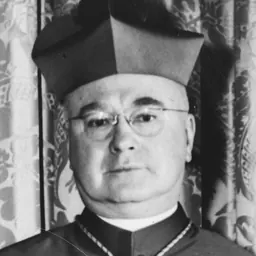
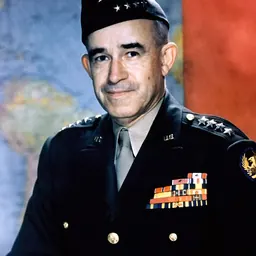


Contemporaries
People whose lives overlapped Thomas J. Carroll's

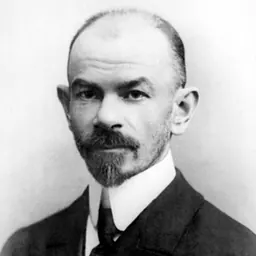


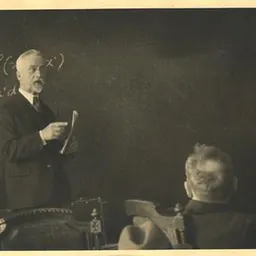
Frequently asked questions
Who was Thomas J. Carroll?
American priest (1909–1971)
When was Thomas J. Carroll born?
Thomas J. Carroll was born on 6 August 1909 in Gloucester.
When did Thomas J. Carroll die?
Thomas J. Carroll died on 24 April 1971.
Sources & further reading
· Wikipedia: Thomas J. Carroll
Cite this page
APA: Biography.guide. (2026). Thomas J. Carroll. https://biography.guide/thomas-j-carroll/
MLA: "Thomas J. Carroll." Biography.guide, https://biography.guide/thomas-j-carroll/.
Chicago: "Thomas J. Carroll." Biography.guide. https://biography.guide/thomas-j-carroll/.
Data last updated: 2026-09-20 · Spot an error? Report a correction.
Page generated 2026-09-27 05:26 UTC