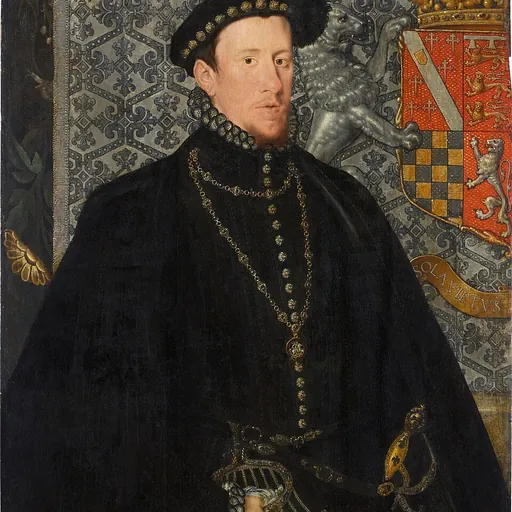
About Thomas Howard, 4th Duke of Norfolk
Lived 1536 – 1572 (aged 36). Thomas Howard, 4th Duke of Norfolk was an English politician.
Thomas Howard, 4th Duke of Norfolk, (10 March 1536 or 1538 2 June 1572), was an English nobleman and politician. He was a second cousin of Queen Elizabeth I and held many high offices during the earlier part of her reign.
Early life, family, and religion
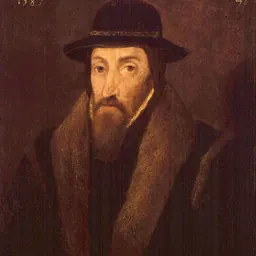
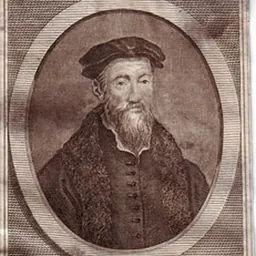
John Foxe. After educating Howard, the priest became a valued personal friend of the Duke, even though the Duke himself was a Catholic
Thomas was born on 10 March 1536 (although some sources cite his birth in 1538) at Kenninghall, Norfolk, being the first or second of five children of Henry Howard, Earl of Surrey, and his wife Lady Frances de Vere. His paternal grandparents were Thomas Howard, 3rd Duke of Norfolk, and Lady Elizabeth Stafford. His maternal grandparents were John de Vere, 15th Earl of Oxford, and Lady Elizabeth Trussell. His siblings were Jane born in 1533 or 1537, Henry born in 1540, Katherine born in 1543, and Margaret born in 1547, shortly after their father's execution. Between his maternal and paternal families, the religious differences were notable: his maternal grandfather was a supporter of the Reformation and was the first Protestant earl of Oxford, whereas his paternal grandfather was the premier Roman Catholic nobleman of England although he had complied with the changes in the governance of the Church of England brought about by Henry VIII, and served the King in suppressing rebellion against those changes.
Thomas' father, the Earl of Surrey, a Roman Catholic but with reformist leanings, was heir to the 3rd Duke, and thereby destined to become the future 4th Duke; but that changed at the end of 1546 when Surrey quartered the royal arms of Edward the Confessor on his own coat of arms, incurring the fury of Henry VIII. Through his great-grandfather John Howard, 1st Duke of Norfolk (1483 creation), Surrey was a descendant of Thomas of Brotherton, 1st Earl of Norfolk, the sixth son of King Edward I; and the arms of the Howard ancestor Thomas de Mowbray, 1st Duke of Norfolk (1397 creation), show that Surrey was entitled to bear Edward the Confessor's arms; but to do so was an act of pride, and provocative in the eyes of the Crown. Henry VIII was also possibly influenced by the Seymours, who were enemies of the Howard family, supporters of Protestantism and related to Henry's son Prince Edward, since the Prince was the son of Henry's third wife Jane Seymour. Henry, who was increasingly unwell, became convinced that Surrey and his father planned to usurp the crown from Edward in order to reverse the Reformation and return the English Church to papal jurisdiction. He ordered the arrest of the Duke and his son, both of them being tried for high treason and later sentenced to death; Surrey was executed on 19 January 1547. After Surrey's death, his sister Mary Howard, Dowager Duchess of Richmond, took over the care of his children and John Foxe, the Protestant martyrologist was employed to be their tutor, at the suggestion of Lord Wentworth. Charles Howard, a first cousin from Surrey born the same year as Thomas, also studied and brought up with the children at Reigate. Despite losing his position as tutor six years later, Foxe remained an important recipient of Thomas' patronage for the rest of Howard's life. In May of that same year, the manors of Gaywood and Rising were returned to Howard. In July, Thomas became first Gentleman of the Chamber to Philip.
Following his grandfather's death on 25 August 1554, Thomas succeeded him as 4th Duke and hereditary Earl Marshal of England. Howard had been preparing over the previous months to gradually take charge of the vast family inheritance received, although because he was still a minor at the time of his grandfather's death, guardianship of the new Duke was left in the hands of Queen Mary. Despite this, Howard was able to make some decisions such as organising his grandfather's funeral and burial in St Michael the Archangel's Church, Framlingham, and making the necessary arrangements for the guardianship of his sisters. Bassingbourne Gawdy, one of the lawyers in charge of the succession to Howard's estates, rode post haste to London with letters for Lord Chancellor Gardiner and returned as speedily as he could to Norwich. The escheator of Norfolk held a formal inquisition to survey the great Howard inheritance, of fifty-six manors, and 'many other considerable estates', which passed for the present into the hands of the Crown, until Thomas came of age. His younger siblings would also receive 1,000 marks each on coming of age, or marriage, according to the terms of their grandfather's will. Once he came of age in March 1557, Howard was able to administer all his estates, becoming one of the richest landowners in England.
In September 1554, Thomas arranged for the marriage of his sister Katherine to Henry Berkeley, 7th Baron Berkeley; this took place at Howard's mansion at Kenninghall.
Queen Mary died in November 1558 and was succeeded by her Protestant half-sister Elizabeth I. Howard was a second cousin of Elizabeth through her maternal grandmother, Lady Elizabeth Howard, sister of the 3rd Duke and mother of Anne Boleyn, and he was trusted with public office despite his family history and being Catholic.
Thomas Howard, 4th Duke of Norfolk painted by Hans Eworth, C. 1562.
As Earl Marshal, Howard was in charge of organising Elizabeth's coronation on 15 January 1559 and the celebrations afterwards. Shortly after ascending the throne, the Queen made Norfolk a Knight of the Garter. Although favoured by Elizabeth, Norfolk was jealous of the greater measure of confidence she placed in Robert Dudley, Earl of Leicester. Furthermore, Howard considered William Cecil, Elizabeth's Secretary of State, to be "Low Born". In November 1559, Howard was appointed Lieutenant-General of the North, a position previously held by Henry Neville, 5th Earl of Westmorland, Norfolk's cousin, and which the Duke reluctantly accepted, probably seeing it as a means of distancing himself from the disputes he had with some members of the court. He was given command of the army that would intervene in Scotland to support the Lords of the Congregation, a group of Protestant nobles opposed to the pro-French government of the regent, Mary of Guise, mother of Mary, Queen of Scots, who was then living in France. By his side were placed a man of military experience, James Croft, and the diplomat and politician Sir Ralph Sadler, both with vast knowledge of Scottish political affairs. Howard immediately left for the north, arriving at Berwick in early January 1560. His duty was to provide forces for the defence of the town against a possible French attack, to open up communications with the leader of the Congregation, James Hamilton, Duke of Châtellerault and cautiously aid them in their measures against the regent. Norfolk was one of the negotiators of the Treaty of Berwick, signed in February 1560 and by which the Congregation invited English assistance, and was able to return to court after Cecil and his collaborators arrived in Edinburgh in July of the same year to sign the Treaty of Edinburgh which ended English assistance.
Having recently lost his third wife, and despite having presided over the York commission, Norfolk began planning his marriage to Mary. For both parties, it would have been their fourth marriage; Howard had been widowed three times while Mary had been widowed twice and her third husband, James Hepburn, 4th Earl of Bothwell, had escaped to Continental Europe in search of support to try to restore his wife to the Scottish throne, but ended up a prisoner in Denmark. Both Howard and Mary were descended from the House of Plantagenet. Furthermore, the former Scottish monarch had a strong claim to the English crown as a descendant of Henry VII, the first monarch of the reigning Tudor dynasty, through her paternal grandmother Margaret Tudor and already considered herself the rightful queen of England, on the grounds that Elizabeth had been declared illegitimate following the annulment of the marriage of her parents, Henry VIII and Anne Boleyn in 1536. Most English Catholics also considered Elizabeth to be illegitimate, as her parents' marriage was never validated by the Holy See. Because the English monarch had no direct heirs, having never married, Mary's claim to the throne, who was Catholic, represented a serious threat to the continuity of the Protestant religious policies enacted by the Elizabethan government. Both the Scottish statesman William Maitland of Lethington and the Bishop of Ross, John Lesley, Mary's chief adviser and agent, were in favour of the Duke's marriage to the former Scottish queen, and Mary herself consented to it, and made steps to procure her own divorce or annulment.
Thomas Howard was initially reluctant to bring about political and religious change. At first he showed little sympathy for Mary, but during recesses from the conference in York, Maitland met privately with Norfolk, suggesting to the Duke the possibility of marrying Mary, as well as a possible future marriage between Howard's daughter, Margaret and the infant King James VI. Norfolk saw in this proposal not only the means to solve the succession crisis which had plagued England ever since Elizabeth's accession, given her reluctance to marry and produce an heir, but also an opportunity for his own social aggrandisement. Mary's marriage to the leading English nobleman would help the former Scottish monarch to strengthen her claim to the throne, and in 1569 might have helped enable her return to Scotland. If Mary, who shared the same religious beliefs as Norfolk (both were Catholics), married the Duke, she would not be able to marry a foreign prince, even if he was also Catholic.
In 1569, the plan for Mary to marry the Duke of Norfolk made some sense, and offered advantages for English policy if Mary was to returned to Scotland. At the heart of its "commodity" was the observation that if Mary married the Duke, she would not be able to marry a foreign prince. Mary drafted proposals for the Parliament of Scotland. A commission for her divorce in 1569 prepared at Wingfield Manor in May 1569 stated that Bothwell's divorce from Jean Gordon was invalid, and there was a degree of affinity between Mary and Bothwell. The commission was witnessed by Lord Boyd, John Beaton, James Borthwick, Secretary Raulet, and James Boyd of Kippis. According to Laurence Banister, Norfolk's servant, Howard considered Mary's marriage to Bothwell was invalid, because Bothwell was still married to Jean Gordon.
However, Regent Moray was becoming lukewarm about Mary's return. In July 1569, Lord Boyd brought Mary's proposal or commission for a divorce to a meeting of the Scottish Privy Council and Estates at Perth. William Maitland of Lethington and James MacGill debated the issue, MacGill contended she should have no answer. The convention held a vote and decided by a large majority against pursuing the divorce.
Meanwhile, Queen Elizabeth seems to have been unaware of any plan for Mary and Norfolk to marry until as late as 9 September 1569, when Cecil wrote to William Drury at Berwick, describing her "vehemency" and ordering him to go to Scotland and speak with Moray about the project. Regent Moray met Henry Carey at Kelso in September 1569, and said that when he was at York and Hampton Court he had mentioned Mary's marriage as a possibility to Norfolk, if Bothwell was executed or Mary lawfully divorced. Moray said he had not made any further moves, but he knew that Mary's supporters were keen and a messenger called Thomas Flemming had spread exaggerated rumours. Hunsdon was then sent as a formal diplomat to Scotland to assure Moray that Elizabeth would not allow the marriage. Hunsdon was to discuss Mary's possible return if a number of Scottish aristocrats were held as hostages in England to guarantee her safety.
Norfolk and the former Scottish sovereign communicated through letters and presents. Mary sent Norfolk a gift of a pillow she had embroidered with the motto Virescit vulnere virtus (virtue flourishes from its wounds) with an image of knife cutting down a vine and her coat of arms. A surviving embroidery among the Oxburgh Hangings reproduces the emblem. The Duke, through Lord Boyd, sent Mary a diamond as a token of his affection and fidelity. Mary, grateful for the gift, wrote to Norfolk in December 1569 that "I took the diamant from my lord Boyd, which I shall kepe unseene about my neck till I give it agayn to the owner of it and me both." In November 1586, Mary sent Norfolk's diamond to the Spanish ambassador Bernardino de Mendoza, writing that it had been Norfolk's pledge of faith or troth to her (dont le seu duc de Norfolk m'obligea sa foi) and she had worn it always since.
A marriage to Mary would have given the Duke a political advantage at court, as he was by now a rival of Elizabeth's favourite, Dudley, and an enemy of Cecil. The marriage scheme was supported by most of the Catholic nobility, and some assumed that the Duke was willing to lead a revolt against Elizabeth. In November 1569 the Rising of the North broke out, organised by Charles Neville, 6th Earl of Westmorland, brother-in-law and also second cousin of Norfolk, and Thomas Percy, 7th Earl of Northumberland after they misinterpreted Norfolk’s sudden withdrawal from court as a sign that they should rebel. Howard briefly participated in the revolt, hoping that if he succeeded, he would achieve the release of Mary, who was then being held in Tutbury Castle. The rebels hoped to receive military aid from Spain, as well as possibly from France. It is still debated whether the rebellion actually aimed to overthrow Elizabeth, and whether Mary even knew about it beforehand. After initial successes, Westmorland and Northumberland retreated northward and finally dispersed their forces, fleeing into Scotland when Elizabeth sent an army under Thomas Radclyffe, 3rd Earl of Sussex, to quell the rebellion. Norfolk tried to stop the revolt when he saw that it was going to fail, but Elizabeth ordered his arrest after receiving news that the rising had taken place.
Norfolk was a prisoner in the Tower of London until August 1570 when he was released for lack of evidence, and also because he confessed his intentions and begged the Queen for mercy. Thomas' intention to marry Mary, although objectionable to Elizabeth, was not a sufficient reason to charge him with treason, and also at that time there was insufficient evidence against Howard since he was not directly involved in the revolt in the north. began preparing the Plot based on the Bull Regnans in Excelsis issued by Pope Pius V in February 1570, which excommunicated Elizabeth and urged Catholics to do all they could to depose her. The Spanish intelligence service was going to participate. Howard had already come into contact with Philip II of Spain regarding a proposed invasion of England with troops commanded by Fernando Alvarez de Toledo y Pimentel, 3rd Duke of Alba, who was based in the Spanish Netherlands.
Secret Vatican documents and Spanish General Archive of Simancas documents confirm that Howard was privately declared himself a Catholic to secure the support of the Pope and Philip II. Knowing that Pius V would not authorize the marriage between Mary and a Protestant (the Pope had already expressed his displeasure with Mary's marriage to the Protestant Earl of Bothwell), Ridolfi acted as an intermediary by personally traveling to Rome to present to Pius with letters and verbal assurances—authorized by Norfolk—stating that the Duke was a secret Catholic who had only conformed to the Church of England for political survival. The Pope, although remaining cautious because both Howard and Mary had already been married three times respectively, gave his approval to the marriage project and plot, seeing it as an opportunity to try to restore Catholicism in England if Elizabeth fell and the Duke and Mary ascended to the throne.
After some hesitation, Howard placed himself at the head of the conspirators; and in return for his services he asked the Spanish king "to approve of my own marriage with the Queen of Scots.“.
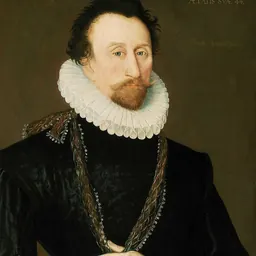
In March 1571, the Elizabethan government's intelligence network warned that a plot against the Queen's life was being prepared. By gaining the confidence of Spain's ambassador to England, John Hawkins learned the details of the conspiracy and notified the government so as to arrest the plotters. Elizabeth was also sent a private letter warning by Cosimo I de' Medici, Grand Duke of Tuscany, who had learned of the plot against her. Charles Baillie, Ridolfi's messenger, was arrested on c.12 April 1571 at Dover for carrying compromising letters, and by the use of torture and prison informers such as William Herle, he was forced to reveal the cipher of the messages he carried.
On 29 August, Norfolk's secretaries William Barker and Robert Higford entrusted to Thomas Browne, a Shrewsbury drapers merchant, what was purported to be a bag of silver coin for delivery to Laurence Bannister, one of Norfolk's officials in the north of England. Browne grew suspicious of the bag's weight, opened it, and discovered 600 pounds in gold from the French ambassador, destined for Scotland on Mary's behalf, and ciphered letters. Because he knew Norfolk was under suspicion, Browne reported his find to Cecil. Higford and Barker were interrogated, the letters were partly deciphered, and a search for the cipher key at Howard House uncovered a ciphered letter from Mary hidden under a doormat. Norfolk's servants were arrested and interrogated, and confessions were extracted from them by threats or application of torture. Sir Thomas Smith and Thomas Wilson were sent to confront Norfolk, who claimed the money was for his own private purposes. The deciphered letter, however, proved that he was lying. Unaware of his servants' confessions or the survival of letters which, contrary to his instructions, had not been burnt, he denied the charges against him. Norfolk was imprisoned in the Tower on 5 September.
Laurence Bannister testified on favour of Norfolk, clarifying that the Duke's brother, Henry, was the one who really intended to marry the former Scottish queen. widow of Sir Henry Dudley and daughter of Thomas Audley, 1st Baron Audley of Walden, and his second wife Elizabeth Grey. Thus Margaret was a first cousin of Mary FitzAlan and in order for the marriage to be valid under Catholic canon law, a dispensation had to be requested from Pope Paul IV, due to the close relationship between Thomas' first wife and Audley. Howard sent lawyers to Rome to negotiate for the dispensation, but the Holy See was notorious for its delays where dispensations were concerned. These delays, added to the fact that in November of the same year Queen Mary died and was succeeded by Queen Elizabeth, who began to restore Protestantism, led to the marriage being celebrated without the dispensation. It was ratified by Parliament in March 1559. Margaret brought as dowry to her marriage with Howard the entirety of the extensive properties that she had inherited from her father in Essex, including the magnificent Audley End residence.
Norfolk's children by his marriage to Margaret were:
Lady Elizabeth Howard (1560–?), who died in early childhood. She was buried in St Michael the Archangel's Church, Framlingham. Thomas Howard, 1st Earl of Suffolk (1561–1626), who firstly married his step-sister, Mary Dacre, without issue. He married secondly Katherine Knyvet c. 1583 and had issue. Lady Margaret Howard (1562–1591), who married Robert Sackville, 2nd Earl of Dorset, and had issue. Lord William Howard of Naworth Castle and Henderskelfe Castle (now the site of Castle Howard) (1563–1640), who married his step-sister Elizabeth Dacre and had issue. The Earls of Carlisle are direct descendants of Lord William.
At Christmas 1563, Margaret, anxious to be reunited with her husband, left Audley End, despite being still weak from the birth of her fourth child a few days before. During the journey she fell ill with a respiratory condition that worsened as the days passed, and she died in Norwich on 9 January 1564. The Duchess was buried in the first instance in St. John the Baptist's Church in Norwich, although shortly afterwards her remains were moved to St Michael the Archangel's Church, Framlingham, where her tomb is located, richly decorated with heraldic quarters and her funerary effigy, which is displayed with the peerage robes.
Third wife Portrait of Elizabeth Leyburne attributed to Hans Eworth, c. 1560
Shortly after Margaret's death, Norfolk married Elizabeth Leyburne (15364 September 1567), widow of Thomas Dacre, 4th Baron Dacre of Gillesland, and daughter of Sir James Leyburn. They had no living children.
Norfolk's three sons by his first two wives, Philip, Thomas and William, married, respectively, Anne, Mary, and Elizabeth Dacre. The Dacre sisters were the daughters of Elizabeth Leyburne by her marriage to Thomas Dacre and were therefore stepsisters to Norfolk's sons.
Elizabeth died in September 1567, shortly after giving birth to a baby, whose sex is not known and who also died. She was buried at St. Mary's Church, Kenninghall.
Family tree Through his maternal and paternal lineages, Howard was related to the most important families of the English and Welsh nobility. Through his ancestor Jacquetta of Luxembourg, he was related to the House of Luxembourg, descended from Italian nobility (Orsini family) and from French nobility. Through his maternal great-great-grandfather, Sir John Donne, Howard was a descendant of Owain Glyndŵr, the last native prince of Wales.
Depictions Thomas Howard appears as a character in the Philippa Gregory novels The Virgin's Lover and The Other Queen, and in the novel I, Elizabeth by Rosalind Miles. A villainized version of the Duke, played by Christopher Eccleston, is in the 1998 film Elizabeth. Another version of the Duke is in the BBC mini-series The Virgin Queen, played by Kevin McKidd. In the Channel 4 documentary Elizabeth (2000) presented by David Starkey, the Duke is portrayed by actor John Gully.
Don’t just read it —
keep it.
Full-length biographies made to live with: read them, listen on the way to work, watch them tonight.
- E-book
- Audio
- Video
Instant download · yours to keep · every purchase keeps this site free
Important facts
Family & relationships
People in Thomas Howard, 4th Duke of Norfolk's life
Named in this biography and alive at the same time
Related people
Same field, nearest in time
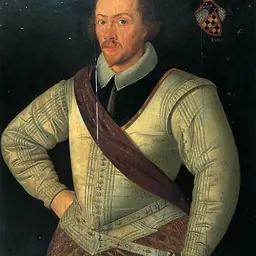
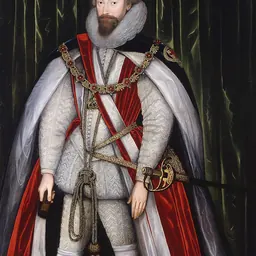
Contemporaries
People whose lives overlapped Thomas Howard, 4th Duke of Norfolk's
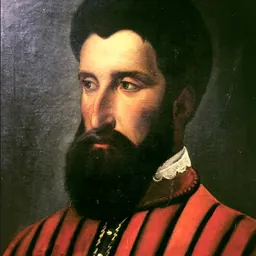
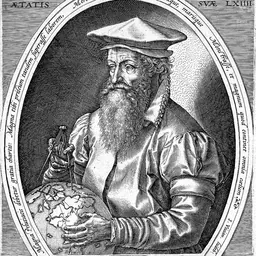
Frequently asked questions
Who was Thomas Howard, 4th Duke of Norfolk?
English politician and nobleman (1536–1572)
When was Thomas Howard, 4th Duke of Norfolk born?
Thomas Howard, 4th Duke of Norfolk was born on 10 March 1536 in Kenninghall, Norfolk.
When did Thomas Howard, 4th Duke of Norfolk die?
Thomas Howard, 4th Duke of Norfolk died on 2 June 1572 in Tower Hill.
What was Thomas Howard, 4th Duke of Norfolk's occupation?
Thomas Howard, 4th Duke of Norfolk was a politician.
What nationality was Thomas Howard, 4th Duke of Norfolk?
Thomas Howard, 4th Duke of Norfolk was English.
Sources & further reading
· Wikipedia: Thomas Howard, 4th Duke of Norfolk
· DBpedia: Thomas Howard, 4th Duke of Norfolk
Cite this page
APA: Biography.guide. (2026). Thomas Howard, 4th Duke of Norfolk. https://biography.guide/thomas-howard-4th-duke-of-norfolk/
MLA: "Thomas Howard, 4th Duke of Norfolk." Biography.guide, https://biography.guide/thomas-howard-4th-duke-of-norfolk/.
Chicago: "Thomas Howard, 4th Duke of Norfolk." Biography.guide. https://biography.guide/thomas-howard-4th-duke-of-norfolk/.
Data last updated: 2026-09-30 · Spot an error? Report a correction.
Portrait: Wikimedia Commons · author & licence
Page generated 2026-10-04 14:17 UTC